Written by: Estexper Medical Editorial Team
Medically reviewed by: Yahya Ozel, MD
Traveling to Turkey for bariatric surgery can be an important decision for international patients. One of the first practical questions is whether it is safe or appropriate to make the journey alone. A patient’s suitability depends on the planned procedure, general health, preoperative assessment, discharge condition, travel arrangements and access to reliable help after surgery.
In Short
Traveling alone to Turkey for bariatric surgery may be possible for some patients, but it requires a reliable support and emergency plan. The key considerations are your individual medical assessment, help during early recovery, access to urgent care, safe travel timing and follow-up arranged in your home country. A qualified clinician should assess whether solo travel is appropriate for your circumstances.
There is no universal evidence-based rule stating that every bariatric patient must travel with a companion. However, traveling alone creates additional responsibilities during the early postoperative period. You may need assistance with transportation, communication, medication collection, discharge instructions and urgent medical care. Before choosing to travel alone, you should have a detailed plan agreed with your bariatric surgeon and a qualified healthcare professional at home.
At Estexper Clinic, international patients should discuss their individual circumstances during the consultation process and ensure that their treatment and recovery arrangements are understood before travelling.
Can You Have Bariatric Surgery in Turkey Without a Companion?
Some patients may be able to travel alone if they are medically suitable and have dependable support arranged locally. This support should not rely only on informal promises or occasional contact. It should be clear who will help you from the airport, accompany you to appointments, assist with discharge and remain available if a problem develops.
The important question is not simply whether you can fly to Turkey alone. It is whether you will have safe and reliable assistance throughout the early recovery period. Your surgeon may recommend travelling with a companion depending on your medical history, the type of bariatric surgery, any other health conditions and how you are progressing after the operation.
Traveling alone may be less suitable if you have significant medical conditions, limited mobility, difficulty understanding medical instructions, anxiety about managing independently or no dependable person available locally. A qualified physician should assess whether surgery and travel are appropriate for you.
Why Support Matters After Bariatric Surgery
Bariatric surgery is not completed when you leave the hospital or clinic. Recovery includes dietary progression, prescribed medication, hydration, vitamin and mineral supplementation, monitoring for complications and communication with the surgical team. These tasks can be more difficult when you are tired, uncomfortable or unfamiliar with the local healthcare system.
A support person or arranged local service may help with:
- Transport between the airport, accommodation, clinic and hospital
- Understanding discharge information and communicating with medical staff
- Collecting medication and recommended supplements
- Preparing or obtaining appropriate food and fluids
- Attending follow-up appointments
- Contacting the operating team if symptoms change
- Obtaining urgent assistance if you cannot manage independently
Support does not replace medical care, and a companion cannot prevent complications. Its purpose is to reduce avoidable practical problems and help you obtain professional assessment promptly when necessary.
Safety Considerations Before Travelling to Turkey
Confirm the surgeon and hospital arrangements
Before booking treatment, ask for clear information about the surgeon’s qualifications, the hospital or surgical facility, infection-control arrangements, emergency services and who will provide care if a complication occurs. Accreditation may provide useful information, but it does not guarantee complication-free treatment.
You should also understand whether the operating surgeon or another qualified clinician will be available during your stay, how urgent concerns are handled outside office hours and which hospital would receive you if further treatment were needed.
Check the clinic’s communication process
International patients should know how to contact the medical team in an emergency and which languages are supported. Do not rely solely on a booking coordinator or messaging application. Ask for written instructions and confirm that you can communicate with qualified clinical staff when necessary.
Review insurance carefully
Travel insurance may exclude planned medical treatment abroad, complications from elective surgery or care required after returning home. Ask specifically about medical expenses, emergency treatment, cancellation, additional accommodation and repatriation. Obtain written confirmation rather than assuming that a standard travel policy will cover your circumstances.
Prepare complete medical records
The Centers for Disease Control and Prevention advises medical travellers to obtain complete medical documentation in English and understand how complications will be managed after returning home. Your records should include the procedure performed, operative report, discharge summary, medication list, allergies, relevant test results and contact details for the surgical team.
Planning the Journey and Your Stay
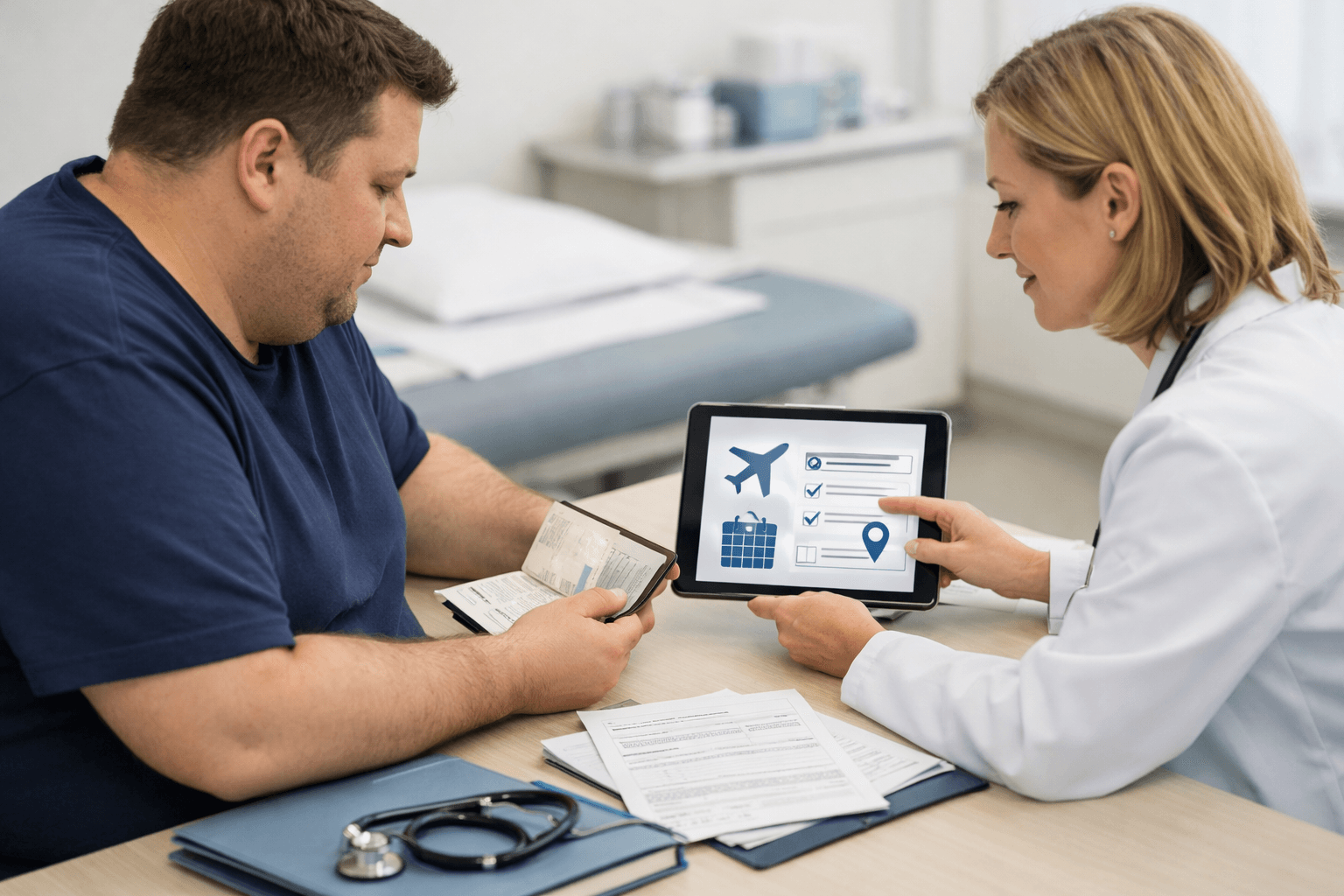
Good preparation is especially important when travelling alone. Arrange airport transportation in advance and choose accommodation that allows easy access to the clinic or hospital. Consider whether you will be able to manage stairs, luggage, meals and personal tasks after discharge.
Keep essential documents, medication instructions and emergency contact details accessible. Carry prescribed medication in its original packaging and ask your surgeon whether any medication should be adjusted before or during travel. Do not make changes without professional advice.
Your itinerary should allow time for medical review before departure from Turkey. The exact timing of air travel should be decided by your treating clinician. Surgery and prolonged immobility during a flight are both associated with venous thromboembolism risk, and sitting for a long period after surgery may add to that risk. Ask specifically about your fitness to fly, mobility, hydration and any measures recommended for you.
Do not treat a return flight as a fixed date that cannot be changed. If your recovery is slower than expected or your doctor advises further observation, delaying travel may be safer than trying to follow an original schedule.
What Recovery May Involve
Recovery after bariatric surgery requires following the dietary plan provided by your clinical team. The progression of foods and fluids, medication use and supplement requirements should be explained before discharge. You should know who to contact if you cannot follow the plan or develop symptoms that concern you.
Longer-term care is also essential. Bariatric guidelines emphasize preoperative nutritional assessment, postoperative vitamin and mineral replacement, biochemical monitoring and continuing dietary and medical follow-up. These requirements can be difficult to coordinate when the surgeon is in another country, so planning should begin before surgery.
Before travelling, arrange follow-up with a qualified bariatric or medical team in your home country. Share the proposed operation and expected monitoring requirements with that team in advance. Ask whether they can review your records, perform laboratory testing and help manage nutritional or other postoperative concerns.
Warning Signs and Access to Urgent Care
You should know how to obtain urgent medical care in Turkey and after returning home. If you develop concerning or worsening symptoms, do not wait for a routine appointment or delay care because you are travelling. Contact the surgical team or seek urgent assessment according to the instructions provided to you.
A clear emergency plan should include the name and address of the hospital that can assess you, the clinic’s emergency contact number, your insurance information and a person who can help communicate with healthcare professionals. If travelling alone, make sure someone knows where you are staying and how to reach you.
The CDC notes that medical travellers should understand how complications will be managed after surgery and should not postpone evaluation when problems occur during travel or after returning home.
How to Decide Whether Solo Travel Is Appropriate
Before making a decision, discuss the following questions with your surgeon:
- Am I medically suitable for bariatric surgery and international travel?
- What support will I need immediately after discharge?
- Can I travel alone based on my health and expected recovery?
- How will I contact the surgical team outside normal appointment hours?
- What is the plan if I need urgent assessment or additional treatment?
- When can I safely fly, based on my individual condition?
- Which healthcare professional will provide follow-up in my home country?
- Which nutritional tests, supplements and appointments will be required?
If the answers are vague, difficult to obtain or dependent on assumptions, your arrangements may not yet be ready. A safe plan should be written, practical and understood by everyone involved.
Potential Benefits and Limitations of Travelling Alone
Travelling alone may provide privacy, flexibility and independence. Some patients may also prefer to make their own decisions without asking a family member or friend to accompany them. However, these advantages must be balanced against the practical challenges of recovering in another country.
Without a companion, you may find it harder to manage transport, communication, medication and unexpected changes to your itinerary. You may also have less immediate help if you feel unwell or need to attend an emergency department. A planned local support service can reduce some of these difficulties, but it should be verified in advance and should not be presented as a substitute for clinical care.
Frequently Asked Questions
Is a companion legally required for bariatric surgery in Turkey?
There is no single evidence-based rule that every bariatric patient must travel with a companion. The decision depends on your medical condition, the procedure, your discharge status and the arrangements available to you. Your surgeon should assess your individual situation.
Can I return home alone after bariatric surgery?
That depends on your recovery and medical clearance. Air travel after surgery may involve additional risks, including venous thromboembolism associated with surgery and prolonged sitting. Your treating clinician should assess whether and when you are fit to fly.
What documents should I take home?
Ask for an operative report, discharge summary, medication list, allergies, relevant test results, postoperative instructions and contact details for the treating team. Records should be complete and preferably available in English so they can be shared with healthcare professionals at home.
Do I need follow-up in my home country?
Yes. Bariatric surgery requires ongoing dietary, nutritional and medical follow-up. Arrange care with a qualified local bariatric or medical team before travelling to Turkey, including a plan for laboratory monitoring and management of vitamin or mineral needs.
Is bariatric surgery in Turkey unsafe?
Available evidence does not establish a reliable overall complication rate for bariatric surgery in Turkey or for all Turkish providers. Reviews do report concerns involving preoperative optimization, continuity of care and complications treated after patients return home. These findings should encourage careful provider verification and follow-up planning rather than support assumptions about every clinic.
Final Checklist for Solo Bariatric Surgery Travel
- Medical suitability assessed by a qualified physician
- Surgeon and hospital credentials verified
- Emergency arrangements explained in writing
- Reliable airport, accommodation and local support organized
- Insurance exclusions and repatriation terms checked
- Medication and supplement plan understood
- Complete medical records requested in English
- Home-country follow-up arranged before surgery
- Travel timing confirmed by the treating clinician
- A clear plan prepared for urgent symptoms
Travelling alone to Turkey for bariatric surgery may be possible for some patients, but it should never be treated as a simple holiday itinerary. The safest approach combines careful medical assessment, dependable support, an appropriate travel plan, complete documentation and continuity of care after you return home. If any part of that plan is uncertain, discuss it with your surgeon before committing to treatment or travel.
Medical References
- Medical Tourism — Centers for Disease Control and Prevention, CDC Yellow Book.
- Medical Tourism — American Society for Metabolic and Bariatric Surgery.
- A systematic review of patient and clinician experiences of bariatric tourism — PubMed and peer-reviewed medical literature.
- British Obesity and Metabolic Surgery Society Guidelines on perioperative and postoperative biochemical monitoring and micronutrient replacement for patients undergoing bariatric surgery—2020 update — British Obesity and Metabolic Surgery Society, Obesity Reviews.
- Medical tourism in bariatric surgery — PubMed and peer-reviewed medical literature.
- Complications and costs to the UK National Health Service due to outward medical tourism for elective surgery: a rapid review — PubMed and BMJ Group.