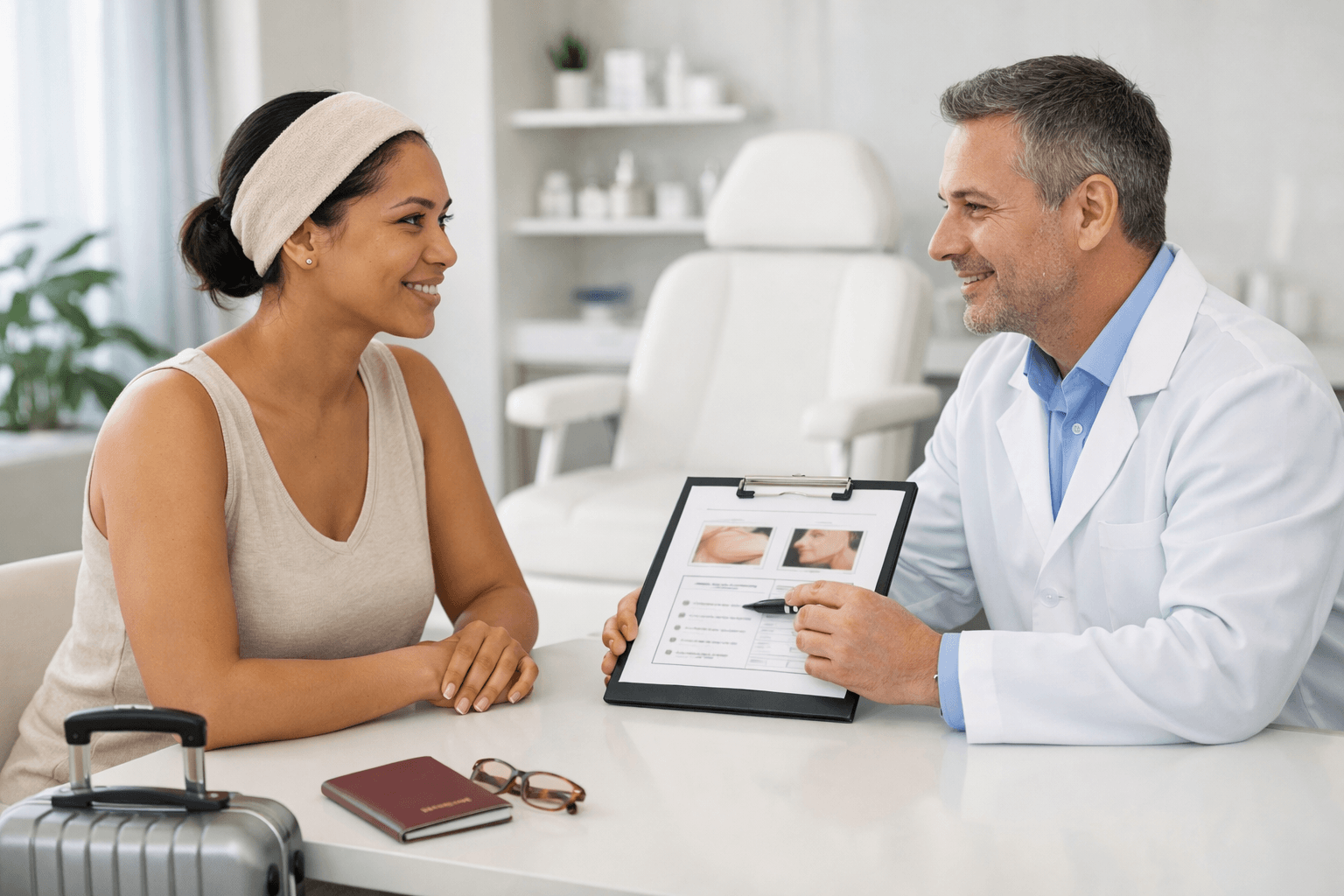
Many international patients ask whether they can travel alone to Turkey for plastic surgery. The short answer is that there is no universal rule requiring every patient to bring a companion. However, traveling alone may increase practical and medical challenges, especially during the first days after anesthesia or a major procedure.
Your decision should be based on the type of surgery, expected mobility, pain control, discharge requirements, travel plans, and the availability of reliable support in Turkey. A qualified physician must determine whether you are medically suitable for the procedure and whether independent travel is appropriate in your individual case.
At Estexper Clinic, we encourage international patients to consider the complete treatment journey—not only the operation itself. Safe planning includes preoperative assessment, verified medical care, adequate recovery time, safe transport, clear communication, and follow-up after returning home.
Is It Possible to Travel Alone to Turkey for Plastic Surgery?
Yes, some patients may be able to travel to Turkey alone, particularly when the procedure is suitable for outpatient or short-stay care, the patient is medically fit, and dependable local assistance is available. Nevertheless, being technically allowed to travel alone does not always mean that it is the safest or most comfortable option.
After surgery, you may experience tiredness, swelling, discomfort, restricted movement, temporary weakness, or difficulty managing routine activities. Anesthesia and pain medication can also affect alertness and judgment for a period determined by your treating team. Depending on the procedure, you may need assistance getting to accommodation, preparing food, obtaining medication, or attending follow-up appointments.
For these reasons, the need for a companion should be assessed individually. A companion could be a family member or friend, while some patients may instead rely on a properly arranged local coordinator, professional caregiver, or accommodation service. Any local support should be confirmed in advance and should not replace medical supervision.
When Traveling Alone May Be More Difficult
Traveling without a companion may be less suitable when the planned procedure is extensive or when recovery is expected to affect walking, self-care, or the ability to travel independently. It may also be challenging if you have significant medical conditions, limited mobility, anxiety about treatment abroad, or difficulty communicating in the local language.
Additional caution is appropriate when:
- The procedure involves general anesthesia or sedation.
- You may need help standing, walking, bathing, dressing, or preparing meals.
- You are expected to remain under observation before discharge.
- You will need drains, dressings, wound care, or medication management.
- Your accommodation is far from the clinic or difficult to access.
- You have no reliable person to contact in an emergency.
- You plan to fly home soon after surgery.
The treating surgeon and anesthetic team should explain the discharge criteria and whether you need an adult escort. Some facilities may have their own policies regarding discharge after anesthesia. These requirements should be confirmed before booking flights or accommodation.
Why International Travel After Surgery Requires Careful Planning
Surgery and long-distance air travel can each increase the risk of blood clots in the legs or lungs. The Centers for Disease Control and Prevention advises that air travel may need to be delayed after major surgery, but the appropriate timing depends on the procedure, your health, your recovery, and the surgical team’s instructions.
Flying soon after surgery may also make it harder to respond if bleeding, wound problems, infection, or unexpected pain develops. On a flight, you may have limited access to medical care and may be sitting for a prolonged period. Travel plans should therefore be discussed with your surgeon before surgery, rather than decided only after the operation.
International treatment can also create continuity-of-care challenges. If a complication develops after you return home, your local clinician may need complete records, operative details, medication information, and clear instructions from the Turkish team. The CDC and professional plastic-surgery guidance both emphasize the importance of arranging follow-up care before traveling abroad.
How to Prepare If You Plan to Travel Alone
1. Have a pretravel medical assessment
Discuss your complete medical history, current medication, allergies, previous operations, and any relevant health conditions with the surgeon and your usual clinician. Ask whether your health and the proposed procedure make independent travel reasonable.
Your pretravel assessment should also cover the expected recovery period, activity restrictions, warning signs, travel timing, and whether you need tests or medical clearance. Do not withhold information because you are concerned that surgery may be postponed. Accurate information helps the medical team plan more safely.
2. Verify the surgeon and facility
Patients considering medical tourism should independently research the surgeon’s qualifications, the facility where the operation will take place, the anesthesia arrangements, and the plan for managing complications. Standards and available treatments can vary between medical facilities, so promotional information alone should not be the basis for a decision.
Ask who will perform the surgery, where it will take place, who provides anesthesia, and how you can contact the medical team outside routine appointment hours. You should also understand what is included in the treatment plan and which services may require separate arrangements.
3. Confirm your discharge and local support plan
Before traveling, obtain a written plan covering the expected length of stay, discharge criteria, medication instructions, dressing or wound-care requirements, and scheduled follow-up appointments. Ask whether the clinic requires a companion after anesthesia or during the first night.
If you are traveling alone, arrange safe airport transfers and transport to every appointment. Confirm that your accommodation has lift access if needed, a suitable bathroom, a place to rest, and easy access to assistance. Do not assume that a hotel or transfer provider can provide medical care unless this has been explicitly arranged.
4. Plan for communication
Make sure you can communicate important health information clearly. Keep emergency contact details, the clinic’s telephone number, your accommodation information, and your medical history in an accessible format. If translation assistance is needed, arrange it in advance.
It is also sensible to identify a trusted person at home who can remain available by telephone or video call. This person should know your itinerary and understand how to contact the clinic or emergency services if you become difficult to reach.
5. Arrange appropriate insurance and funds
Standard travel insurance may exclude elective surgery or complications related to treatment abroad. Ask specifically whether your policy covers medical treatment, hospitalization, complications, repatriation, and medical evacuation. Turkey-specific government guidance also advises prospective medical tourists to obtain appropriate insurance and to consider the cost of emergency care.
Keep access to sufficient funds for unexpected treatment, an extended stay, a changed flight, or additional accommodation. Never assume that the original treatment package will cover every complication or revision procedure.
What to Take With You
Keep important information in your hand luggage rather than checked baggage. This may include:
- Passport and insurance documents.
- A list of medications, allergies, and medical conditions.
- Relevant medical records and test results.
- Clinic and surgeon contact details.
- Discharge instructions and appointment information.
- Emergency contact details for someone at home.
- Comfortable clothing that does not interfere with dressings or movement.
Ask the clinic which medications or medical supplies you should bring. Do not start, stop, or change medication without instructions from a qualified healthcare professional.
Recovery and Aftercare in Turkey
Your recovery period should be treated as part of the medical process, not as a holiday schedule. Follow the surgical team’s instructions about rest, movement, bathing, wound care, medication, and follow-up appointments. Avoid planning sightseeing, strenuous activities, or long journeys until your surgeon confirms that they are appropriate.
Even when early recovery appears normal, complications can sometimes become apparent later. Report concerning symptoms promptly to your medical team. Possible warning signs may include increasing pain, heavy bleeding, worsening redness or swelling, fever, wound separation, shortness of breath, chest pain, or sudden leg swelling. These symptoms require urgent medical advice or emergency care, depending on their severity.
When traveling alone, it is particularly important not to ignore symptoms because there is no companion to notice changes or encourage you to seek help. Keep your telephone charged and make sure you know how to access local emergency services.
Returning Home After Surgery
Do not book a return flight based only on the earliest date offered by a package or travel provider. Ask the treating surgeon when flying is medically appropriate for your specific procedure and recovery. The final decision should take account of your examination, mobility, wound condition, clot risk, and any ongoing treatment.
Before leaving Turkey, request complete medical documentation. This should include the procedure performed, operative notes where available, medications, instructions, test results, and the contact information of the treating facility. Ask who will provide advice if a problem develops after you return home.
Arrange follow-up with a qualified clinician in your home country before departure. Local follow-up may be especially important if you develop infection, bleeding, wound separation, fluid collection, or other concerns. A 2023 systematic review of complications after cosmetic surgery abroad identified infection, wound dehiscence, seroma or hematoma, and tissue damage among reported problems, while also highlighting difficulties with follow-up and complication management.
Potential Risks of Traveling Alone for Surgery in Turkey
Traveling alone does not automatically cause a complication, but it can make complications and routine recovery harder to manage. Relevant concerns include:
- Blood clots: Surgery and air travel can both contribute to the risk of deep-vein thrombosis or pulmonary embolism.
- Infection: Medical tourism can involve exposure to different infection-control environments, and infections may require treatment after returning home.
- Bleeding or wound problems: These may require examination, dressings, medication, or additional treatment.
- Communication difficulties: Language barriers can make it harder to understand instructions or explain symptoms.
- Delayed recognition: A person traveling alone may not notice or respond quickly to changes in their condition.
- Limited continuity of care: Follow-up can be difficult when the patient and surgical team are in different countries.
- Unexpected costs: Emergency care, extended accommodation, changed flights, or further treatment may not be included in the original plan.
These risks do not mean that every patient should avoid treatment abroad. They mean that the decision should be made with realistic expectations and a detailed safety plan.
Should You Bring a Companion?
There is no universal evidence-based rule that every plastic-surgery patient must travel with a companion. However, a companion is often practical when you may need help during the first postoperative days, when you have limited mobility, or when you are recovering from anesthesia.
If a personal companion cannot travel, ask whether the clinic can explain safe alternatives. Reliable local assistance should include transportation, communication support, access to the medical team, and help obtaining urgent care when necessary. A person who simply accompanies you to the airport may not provide enough support after discharge.
The most important question is not only, “Can I travel alone?” It is, “Who will help me if I cannot safely walk, communicate, manage medication, or reach medical care?” If you do not have a satisfactory answer, postponing treatment or bringing a trusted companion may be safer.
Questions to Ask Before Booking
- Am I medically suitable for this procedure and for international travel?
- How long should I remain in Turkey before flying home?
- Will I need an adult escort after anesthesia or discharge?
- What help will I need with walking, medication, wound care, or daily activities?
- Where will the surgery and follow-up appointments take place?
- Who should I contact outside normal clinic hours?
- What happens if I develop bleeding, infection, or another complication?
- Will I receive complete medical records before returning home?
- How will follow-up be coordinated with a clinician in my country?
- Does my insurance cover complications and medical evacuation?
Final Advice for International Patients
Traveling alone to Turkey for plastic surgery may be appropriate for some carefully selected patients, but it should never be treated as a simple travel decision. Your procedure, anesthesia, health status, expected recovery, discharge requirements, and access to reliable support all matter.
Before making arrangements, seek an individualized medical assessment, verify the surgeon and facility, plan your recovery locally, obtain suitable insurance, and organize follow-up at home. If the medical team advises that you need a companion or a longer stay, take that recommendation seriously. Your safety and continuity of care should come before convenience or travel plans.
Medical References
- Medical Tourism: Travel to Another Country for Medical Care — U.S. Centers for Disease Control and Prevention.
- Medical Tourism — CDC Yellow Book.
- Complications of Medical Tourism in Aesthetic Surgery: A Systematic Review — Annals of Plastic Surgery / PubMed.
- Briefing Paper: Cosmetic Surgery Tourism — American Society of Plastic Surgeons.
- Health – Turkey Travel Advice — UK Foreign, Commonwealth & Development Office.