Understanding breast augmentation recovery can make the surgical experience more predictable and help you plan time away from work, travel and exercise. Most patients notice that acute pain improves considerably during the first week, but tightness, swelling, altered sensation and fatigue can continue for several weeks.
Recovery is not identical for everyone. Implant placement, surgical technique, general health, pain tolerance and the physical demands of your job can all affect the timeline. Your operating surgeon’s instructions should always take priority over general information, particularly when deciding when to resume exercise, sleep in a different position or travel after surgery.
What happens during breast augmentation?
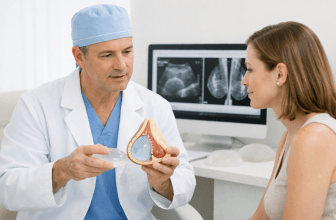
Breast augmentation involves placing implants to increase breast volume or restore fullness. The operation is performed using a surgical technique selected after an assessment of your anatomy, goals and suitability for treatment. Implant position and the details of surgery can influence early tightness, discomfort, swelling and the time needed before normal activities feel comfortable.
Before treatment, a qualified plastic surgeon should discuss your medical history, expectations, available implant options, possible risks and the follow-up plan. Breast implants are not lifetime devices, and future monitoring or additional surgery may be needed. Choosing treatment should therefore involve more than comparing implant sizes or focusing only on the initial recovery period.
How painful is breast augmentation recovery?
Acute pain is generally most noticeable during the first few days. Guidance from the American Society of Plastic Surgeons indicates that this acute pain often subsides after approximately one to five days, while soreness and swelling may remain for several weeks. Cleveland Clinic similarly reports that discomfort commonly decreases after five to seven days.
Many patients describe early sensations as pressure, tightness, pulling or chest soreness rather than severe pain alone. The experience may vary depending on implant placement, the surgical approach and individual sensitivity. It is common for the breasts to feel firm or unusually tight at first, especially while swelling is present.
Your surgeon may recommend prescribed or over-the-counter pain relief, depending on your health and the medicines used during surgery. Do not add medicines, supplements or remedies without checking with your clinical team. A 2023 systematic review and meta-analysis found that regional nerve blocks can reduce postoperative pain and opioid requirements after breast augmentation, but the studies differed in their methods and results. This means that no single pain-control protocol is appropriate for every patient.
When should pain improve?
A typical pattern is that pain is more prominent during the first several days and becomes easier to manage during the first week. Soreness, swelling, numbness, sensitivity or a feeling of pressure may continue after the initial pain has improved. Healing is still taking place even when you begin to feel more comfortable, so pain relief should not be used as the only reason to increase activity.
Contact your surgeon promptly if pain is becoming worse rather than gradually improving, is not controlled by the recommended medication, or occurs with concerning changes such as increasing redness, significant drainage, fever or sudden swelling. Your surgeon should provide specific instructions about which symptoms require urgent assessment.
How should you sleep after breast augmentation?
Sleeping on your back is commonly recommended during early healing. Some surgeons also advise keeping the head and upper body elevated with pillows or a suitable wedge. This position may make it more comfortable to move and can help you avoid direct pressure on the breasts while the incisions and tissues heal.
The length of time you should sleep on your back is procedure-specific. Washington University notes that some surgeons recommend back sleeping for six to 12 weeks after augmentation, but this is not a universal rule. Your surgeon may adjust the advice according to implant position, incision location, swelling and how your recovery is progressing.
Side or stomach sleeping may place pressure on healing tissues and should not be resumed simply because the first few nights have passed. Ask at your follow-up appointment when it is appropriate to change position. If you are travelling internationally for surgery in Turkey, discuss sleeping arrangements in advance and plan accommodation that allows you to rest comfortably with your upper body supported.
When can you return to work?
Return-to-work timing depends mainly on your recovery and the physical demands of your job. Patients with desk-based work may be able to return within several days to two weeks, provided pain is controlled and they can move safely. Cleveland Clinic describes light daily activity and desk work as potentially possible within one to two weeks for many patients.
Physically demanding jobs may require at least three weeks or longer away from work. Jobs involving lifting, pushing, pulling, repeated arm movements or prolonged standing may place greater demands on healing tissues. Your surgeon should confirm when your specific duties are safe to restart.
Planning time off
When arranging recovery, plan for help with transport, shopping, household tasks and childcare during the first few days. You may feel tired even if the operation was uncomplicated. If you are travelling from another country, allow enough time in Turkey for your planned reviews and for your surgeon to assess your early recovery before you return home. Do not base travel plans solely on the shortest possible recovery estimate.
When can you exercise after breast augmentation?
Gentle movement is usually introduced before strenuous exercise. Short, easy walks may be encouraged according to your surgeon’s instructions, but you should avoid overexertion and stop if an activity causes pain, pressure or worsening swelling.
Strenuous exercise, high-impact activity and upper-body training should not be restarted just because your pain has improved. Push-ups, weight training, vigorous cardio and movements that heavily involve the chest, shoulders or arms may require a longer restriction period. Published patient guidance commonly places unrestricted activity at around six weeks, subject to surgical review and individual healing.
Ask your surgeon for a staged plan. The appropriate progression may depend on your operation, implant position, incision healing and symptoms. A supportive postoperative garment may be recommended, while underwire bras are often avoided early in recovery until the surgeon confirms that the incisions and tissues are ready.
When do breast implants settle?
Early breast appearance is not the final result. Immediately after surgery, the breasts may look high, tight, swollen or uneven. One side may settle faster than the other, and the breasts may feel firmer than expected. These early changes do not necessarily indicate a problem.
Swelling and implant position commonly continue to improve over approximately two to three months. Guidance from the American Society of Plastic Surgeons also notes that implants may take about two months or longer to settle. Subtler changes can continue beyond this period as swelling reduces and the tissues adapt.
Try not to judge the final appearance during the first few weeks. Attend the follow-up appointments recommended by your surgeon, take photographs only for useful comparison and report changes that concern you. A qualified physician is best placed to decide whether an appearance is part of normal healing or requires examination.
Breast augmentation recovery timeline
First several days
During the first few days, expect the greatest need for rest and assistance. Pain, pressure, swelling, restricted arm movement and fatigue are common recovery concerns. Follow instructions about medication, dressings, showering, support garments and sleeping position.
First one to two weeks
Pain often becomes substantially easier to manage, although soreness and tightness may remain. Light daily activities may be possible, and some patients can return to desk work during this period. Avoid lifting and strenuous upper-body movement unless your surgeon has specifically cleared it.
Several weeks to around two months
Many patients gradually resume more normal routines, but restrictions may continue for heavy lifting and demanding exercise. Swelling and implant position may still be changing. Follow-up examinations help determine when your activity level can increase safely.
After two to three months
By this stage, much of the early swelling and settling may have improved, although the perceived final result can continue to evolve. Your surgeon can advise whether ongoing asymmetry, firmness, altered sensation or discomfort is expected or needs further assessment.
Aftercare and follow-up
Good aftercare includes following wound-care instructions, attending scheduled reviews and protecting the breasts from unnecessary pressure or impact. Keep your surgeon informed about your medicines, allergies and any health conditions that may affect recovery. Do not alter your care plan based on another patient’s experience, online discussions or a generic timeline.
If you are an international patient considering breast augmentation in Turkey, ask the clinic how postoperative reviews will be arranged, who to contact outside office hours and what happens if you develop symptoms after returning home. Confirm whether you need local medical support, how long you should remain near the clinic and which documents you should take home. Clear communication is particularly important when follow-up will cross national borders.
Risks and when to contact your surgeon
Breast augmentation has potential risks, and recovery cannot be guaranteed to follow an exact schedule. Possible concerns include persistent or increasing pain, infection, bleeding, fluid collection, changes in sensation, wound-healing problems, asymmetry, implant movement or the need for further treatment. Your surgeon should explain the risks relevant to your health and chosen procedure before you consent.
Contact your surgical team promptly about sudden or increasing swelling, worsening pain, significant redness, unusual drainage, fever, breathing difficulty, chest pain or any symptom that feels unexpected. Seek emergency care for severe breathing difficulty, chest pain or other urgent symptoms. The FDA advises patients to understand the possibility of implant complications and future additional surgery, and to report unusual symptoms to a healthcare professional.
Frequently asked questions
Can I return to normal activity when I no longer need pain medication?
Not necessarily. Pain can improve before the internal tissues have fully healed. Exercise and lifting should be resumed according to your surgeon’s schedule and examination, not only according to how comfortable you feel.
Will my breasts look even immediately after surgery?
They may not. Swelling, implant position and differences in healing can make the breasts appear high, tight or temporarily asymmetric. These features often improve as healing progresses, but your surgeon should assess any concerning or worsening change.
How long should I wait before sleeping on my side?
There is no single duration for every patient. Back sleeping is commonly recommended early in recovery, sometimes with the upper body elevated. Ask your surgeon when side sleeping is appropriate for your procedure.
Is breast augmentation recovery the same for every patient?
No. Implant placement, surgical technique, general health, job demands and individual healing all influence recovery. A qualified plastic surgeon should provide a personalized plan after assessing you.
Medical References
- Breast Augmentation Recovery — American Society of Plastic Surgeons.
- Breast Implants: Types, Surgery, Recovery & Risks — Cleveland Clinic.
- Breast Augmentation — Washington University School of Medicine, Division of Plastic and Reconstructive Surgery.
- What to expect after your breast augmentation surgery — American Society of Plastic Surgeons.
- Nerve block efficacy in breast augmentation: A systematic review and meta-analysis — British Journal of Plastic Surgery via PubMed.
- What to Know About Breast Implants — U.S. Food and Drug Administration.
This article provides general educational information and does not replace an examination or individualized advice from a qualified physician. Estexper Clinic patients should follow the specific instructions provided by their operating surgeon.