Is a hair transplant in Turkey safe? The honest answer is that safety cannot be judged by the country or the advertised price alone. Hair transplantation is generally considered a relatively low-risk elective procedure when the patient is appropriately assessed and treatment is performed by qualified clinicians using appropriate clinical standards. However, complications can occur, and international patients must also consider clinic standards, communication, follow-up and the safety of travelling soon after surgery.
At Estexper Clinic, we believe patients should make decisions based on transparent medical information rather than assumptions about destination or package offers. The most important questions are who will assess you, who will perform each surgical step, how the clinic manages complications and how your care will continue after you return home.
Is hair transplantation in Turkey generally safe?
Available medical evidence does not establish that hair transplantation in Turkey is inherently safer or less safe than hair transplantation in another country. Safety depends substantially on the individual clinician, the facility, infection-control procedures, patient selection, surgical technique, graft handling and postoperative care.
Recent reviews describe hair transplantation as generally safe overall, but they also report complications such as pain, swelling, edema, folliculitis, infection, scarring, numbness, graft loss, skin or tissue injury and unsatisfactory cosmetic outcomes. Rare, more serious complications have also been reported. The possibility of complications means that a consultation and medical assessment should come before any booking or travel arrangement.
A clinic’s location, online reviews or low-cost package does not demonstrate clinical quality. Likewise, a high price alone is not proof of safety. International patients should evaluate the complete care pathway, from diagnosis and planning to surgery, recovery and access to help if something does not go as expected.
Who is a suitable candidate?
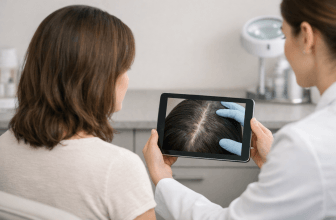
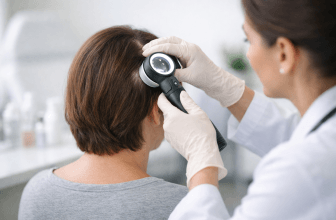
Suitability should be determined by a qualified physician after reviewing your hair loss pattern, medical history, scalp condition, donor hair and expectations. A remote photograph or online form may be useful for an initial discussion, but it should not replace an appropriate clinical assessment.
A responsible consultation should address whether transplantation is suitable for your situation, what result may reasonably be possible and whether the donor area can support the planned procedure. It should also consider the design of the hairline, the number and placement of grafts, the preservation of existing hair and the possibility that future hair loss could affect the overall appearance.
Be cautious if a clinic recommends surgery without asking meaningful questions about your health or without explaining limitations. The aim should be an individualised plan, not an identical package offered to every patient.
What should you check about the clinic and surgeon?
Confirm the treating physician’s qualifications
Ask for the full name, professional role, licence or registration details and relevant experience of the clinician responsible for your care. You should understand who will conduct the medical evaluation, develop the treatment plan, design the hairline, harvest grafts, create recipient sites and manage postoperative care.
The International Society of Hair Restoration Surgery warns that patients should not assume the surgeon shown in advertising will personally perform every surgical step. In some clinics, parts of the procedure may be delegated to other staff. Delegation may have important implications for safety, consent and accountability, so ask for a clear written explanation before agreeing to treatment.
Ask who performs each part of the procedure
Request specific answers rather than general statements such as “our medical team performs the procedure.” Clarify:
- Who evaluates your suitability and medical history?
- Who plans the procedure and approves the graft number?
- Who designs the hairline?
- Who performs graft harvesting and recipient-site creation?
- Who supervises the procedure?
- Who is responsible if a complication occurs?
- Who will provide follow-up after you return home?
These questions are especially important when a clinic promotes a package involving surgery, accommodation, transfers and tourism. Convenience should not replace clarity about medical responsibility.
Review the facility and infection-control standards
Infection-control failures are a recognised risk in medical tourism. Ask where the procedure will take place and whether the facility meets applicable requirements for the planned treatment. You may also ask how instruments are sterilised, how single-use materials are handled and what procedures are followed if infection is suspected.
Do not rely only on photographs of a modern reception area. The relevant issue is whether the clinical environment, equipment and processes support safe care. The clinic should be willing to explain its standards in understandable language.
What medical risks should international patients understand?
Hair transplantation is a surgical procedure involving the transfer of hair follicles from one area to another and a period of healing. Although it is usually performed as an elective procedure, complications can occur. Reported complications include:
- Pain or discomfort during the recovery period
- Swelling or edema, including swelling around the scalp or forehead
- Folliculitis or inflammation around hair follicles
- Infection
- Scarring or changes in sensation such as numbness
- Graft loss or poor graft survival
- Skin or tissue injury, including rare necrosis
- Unsatisfactory density, hairline design or cosmetic appearance
The frequency and severity of complications may be influenced by patient selection, surgical technique, graft handling, follicular-unit density and postoperative care. This is why a technically attractive online result cannot guarantee that the same outcome will be appropriate or achievable for every patient.
Rare complications have also been described in the medical literature. For example, a recent systematic review identified uncommon vascular complications among reported adverse events. Such events may be unusual, but their existence reinforces the importance of having qualified clinical supervision and a plan for urgent assessment if a problem develops.
Why informed consent matters
Before treatment, you should receive understandable information about the proposed procedure, expected recovery, possible complications, alternatives and the likely limitations of treatment. You should have an opportunity to ask questions and should not feel pressured to decide immediately.
Consent documents should identify the clinician or clinical team responsible for treatment and should be available in a language you understand. Ask whether the clinic will provide a copy of your medical records, operative details, medication instructions and photographs. These records can be important if you need assessment after returning home.
Be cautious with promises of guaranteed growth, permanent perfection or a specific cosmetic result. Hair transplantation has biological and technical limitations, and individual suitability must be assessed by a qualified physician.
How should you prepare before travelling to Turkey?
Preparation should begin with medical questions, not with flights. Share relevant information about your health, allergies, medicines, previous procedures and any condition that could affect treatment or healing. Ask whether the clinic needs an in-person consultation before surgery and what information must be reviewed in advance.
Obtain a written treatment plan that explains the proposed procedure, the clinician’s role, the expected aftercare and the arrangements for complications. Confirm what is included in the quoted package and what is not. A package may cover transfers or accommodation without covering additional medical evaluation, treatment of complications or care after you return home.
Communication is another important safety issue. Make sure you can communicate directly with a qualified medical professional, not only with a sales representative or translator. You should be able to understand instructions about wound care, medication, warning signs and follow-up.
Are there travel risks after a hair transplant?
International travel adds considerations that would not apply to a local procedure. Surgery and air travel independently increase the risk of venous thromboembolism, while prolonged sitting during a journey may add to that risk. The appropriate time to fly depends on the procedure, your health, your recovery and the advice of the treating clinician.
Do not treat a clinic’s travel package schedule as medical clearance. Ask the treating surgeon specifically when it is safe for you to fly, what precautions are appropriate and what symptoms require urgent medical attention. If you develop concerning symptoms during or after travel, seek medical care promptly rather than waiting for a routine online review.
Travel plans should also allow enough flexibility for unexpected recovery needs. Flying home immediately after surgery may make it more difficult to attend an in-person review if swelling, infection or another concern develops. Discuss whether the clinic will provide an examination before departure and how urgent problems will be managed after you leave Turkey.
What should aftercare include?
Safe treatment does not end when you leave the clinic. Before travelling, ask for written instructions covering scalp care, washing, activity restrictions, medication and warning signs. You should know who to contact at any time if you have a concern and whether that contact is a clinician who can assess your situation.
Ask how follow-up will be organised if you live abroad. This may include a scheduled remote review, transfer of photographs and medical records, or coordination with a qualified clinician in your home country when an in-person assessment is needed. Online support can be useful, but it cannot replace physical examination when a complication requires direct evaluation.
Find out how the clinic handles delayed concerns, including infection, persistent pain, poor healing or an unsatisfactory cosmetic result. The arrangements should be clear before surgery, not created only after a problem occurs.
Insurance, legal protection and financial questions
Medical tourism may involve limited legal recourse if something goes wrong, particularly when care is provided across borders. Confirm which organisation is responsible for the treatment and where complaints or claims would be handled.
Ask whether the clinic has appropriate professional or malpractice coverage and whether that coverage applies to international patients. Check your own travel insurance carefully, because standard policies may exclude elective treatment abroad or complications related to it. You may need specific medical-travel cover, although policy terms vary and should be reviewed before booking.
Keep copies of your consultation documents, consent forms, receipts, treatment plan, medication list and operative records. These can help another clinician understand what was performed if you need care at home.
Warning signs to consider before booking
No single warning sign proves that a clinic is unsafe, but several concerns together should prompt further questions or a second opinion. Consider delaying your decision if:
- You cannot identify the physician responsible for your treatment.
- The clinic will not explain who performs each surgical step.
- You are offered surgery without a meaningful medical assessment.
- You are pressured to pay quickly or promised a guaranteed result.
- The consent documents are unclear or not available in a language you understand.
- There is no clear plan for complications, records or follow-up.
- Travel dates are fixed without considering medical clearance.
- The package focuses more on tourism and convenience than clinical care.
Questions to ask during your consultation
Before deciding on a hair transplant in Turkey, ask the clinic to answer the following in writing:
- Which qualified physician will assess and treat me?
- Who will perform every major surgical step?
- What findings make me suitable or unsuitable for treatment?
- What complications are relevant to my case?
- Where will the procedure take place?
- How are infection control and emergency arrangements managed?
- What aftercare will I receive before and after returning home?
- When will the surgeon advise me to fly?
- What happens if I develop a complication abroad or after returning home?
- What insurance, records and complaint arrangements apply?
How Estexper Clinic approaches safety
At Estexper Clinic, the starting point should be an individual medical evaluation and a clear discussion of expectations. Patients should understand the proposed plan, the clinician’s role, potential risks and the follow-up pathway before making a decision.
If you are considering treatment in Turkey, use your consultation to ask direct questions and take time to review the answers. A safe decision is not simply about finding the cheapest or most convenient option; it is about confirming appropriate medical assessment, qualified clinical responsibility, suitable facilities, informed consent and continuity of care.
Medical References
- Complications Following Hair Transplantation: A Systematic Literature Review and Meta-Analysis — PubMed; Aesthetic Plastic Surgery.
- Safety Considerations in Hair Restoration Procedures: A Comprehensive Review — PubMed.
- Consumer Advocacy: Seeking Hair Restoration Surgery? — International Society of Hair Restoration Surgery.
- Medical Tourism — CDC Yellow Book 2026.
- Cosmetic surgery abroad — NHS.