Medical review: Estexper Medical Editorial Team
Some patients considering hair restoration in Turkey want to address more than one concern at the same time, such as scalp thinning and patchy beard growth. This raises an important question: can a scalp hair transplant and beard transplant be combined?
In Short
A scalp and beard transplant may be performed in the same treatment plan for selected patients, often using follicular-unit-based techniques such as FUE. However, there is no universal evidence-based protocol for performing both procedures in one session. A qualified physician should assess donor-hair supply, graft needs, health factors, expected operative duration and the aesthetic requirements of both areas before recommending a combined or staged approach.
What Does Combining the Procedures Mean?
A scalp hair transplant involves moving hair follicles from a donor area, commonly on the scalp, to areas affected by hair loss. A beard transplant uses a similar principle: follicular grafts are harvested and placed into facial recipient areas such as the beard, moustache, sideburns or selected areas of the jawline.
Beard reconstruction literature describes the use of scalp hair grafts harvested with FUE or, in some cases, follicular unit transplantation (FUT). The grafts are then implanted into carefully planned facial recipient sites. The surgeon must consider the direction, angle, density and type of hair needed for a natural appearance. Facial areas may require predominantly single-hair grafts, particularly where a refined outline or natural transition is important.
When the scalp and beard are treated within one treatment plan, the surgical team must coordinate two different aesthetic objectives. Scalp restoration usually focuses on restoring or reinforcing areas affected by hair loss, while beard restoration requires attention to facial proportions, hair direction and the desired shape of the beard or moustache.
Can They Be Performed in the Same Session?
They may be performed during the same session in carefully selected patients, but this is not a universal recommendation. A combined procedure may involve a larger total graft count and a longer period in surgery than either treatment alone. It may also place greater demands on the donor area, graft handling and postoperative care.
The available literature does not provide high-quality evidence that a combined scalp-and-beard procedure is always safer, more effective or more efficient than staging the treatments separately. For this reason, a clinic should explain why combining the procedures is appropriate for your specific case and what the alternatives would be.
In some patients, separating the treatments may make it easier to plan the donor supply, limit the extent of one operation or evaluate the early result before proceeding with another area. In other cases, a combined plan may be considered if the required graft number, operative duration and patient factors are judged acceptable. The decision should be made after an appropriate medical assessment, not solely from photographs or a package description.
Who May Be Considered for a Combined Treatment Plan?
Suitability must be determined by a qualified physician. During the assessment, the surgeon may evaluate:
- The cause and pattern of scalp hair loss: The diagnosis and stability of the hair-loss pattern are relevant to long-term planning.
- The condition of the donor area: The surgeon should assess whether enough suitable grafts are available without causing unacceptable donor depletion.
- Beard and facial goals: The desired beard shape, density, moustache design, sideburn coverage and areas of patchiness should be discussed clearly.
- Hair characteristics: Scalp and facial hair can differ in texture, calibre, curl and growth direction. These differences affect graft selection and placement.
- General health: Your medical history, medications, allergies and relevant health conditions should be reviewed before elective surgery.
- Expected surgical burden: The estimated graft number and operative duration should be considered together rather than evaluating each procedure in isolation.
- Ability to follow aftercare instructions: Combined treatment may require careful protection and monitoring of both scalp and facial recipient areas.
A consultation should also address whether the proposed plan is realistic. Hair transplantation can improve coverage or density, but it cannot guarantee a specific appearance. The final result depends on factors including diagnosis, donor supply, graft handling, recipient-site design and individual healing.
How Is the Treatment Planned?
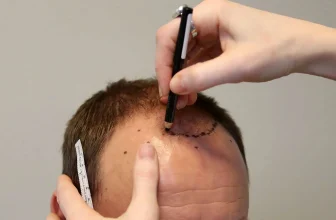
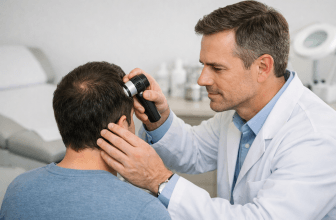
Planning generally begins with an examination of the scalp, donor area and facial hair pattern. The surgeon should discuss the areas to be treated, the intended hairline or beard outline, the approximate graft requirement and whether one or more sessions may be more appropriate.
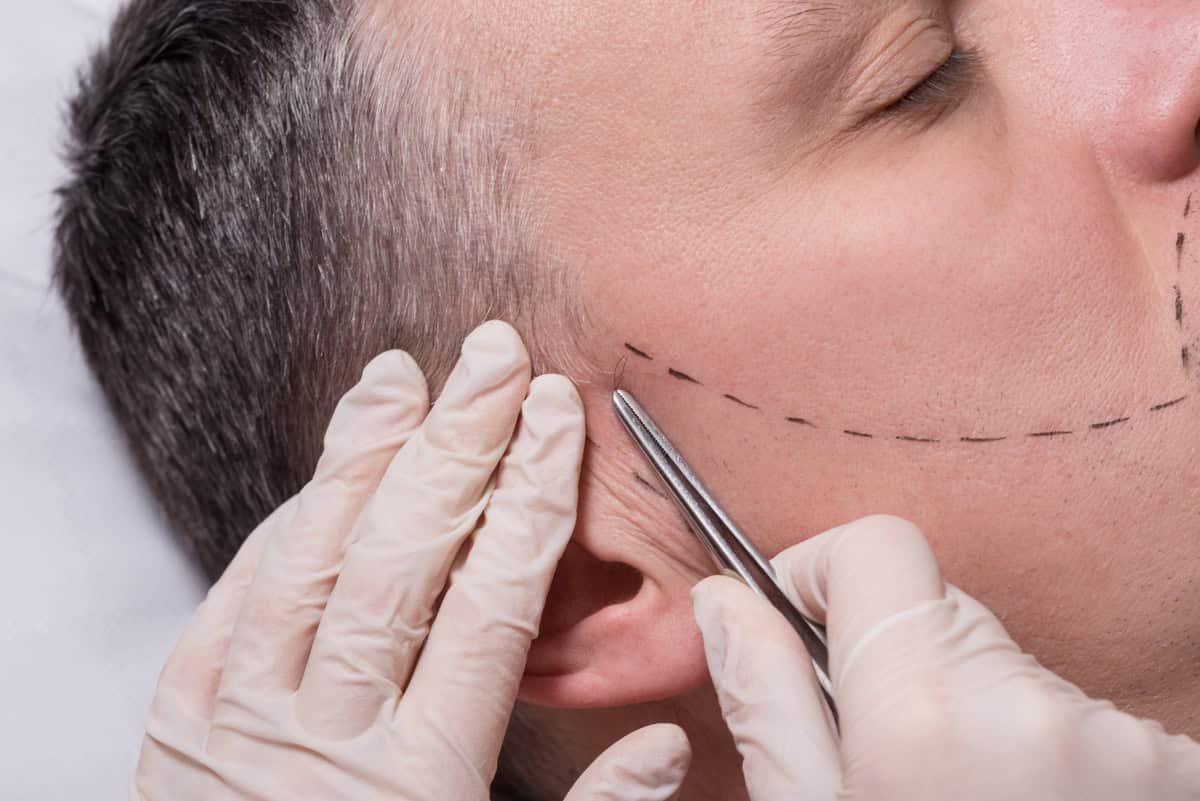
Scalp and beard recipient sites require different design decisions. On the scalp, the surgeon considers the existing hairline, areas of thinning and the direction of native hair. On the face, the angle and direction of each graft are particularly important because facial hair grows across curved surfaces and changes direction in different regions.
Graft selection is also part of the planning process. A natural beard appearance may depend on using suitable grafts, including single-hair units where appropriate. The surgeon should explain whether the donor hair is expected to match the intended facial result and how harvesting for the scalp and beard could affect future treatment options.
Ask who will perform each step of the operation. This includes the medical examination, donor harvesting, graft preparation, recipient-site creation and implantation. You should also confirm the qualifications of the operating physician and how the clinic manages medical supervision throughout the procedure.
What Happens During the Procedure?
Both scalp and beard transplantation may use FUE, in which individual follicular units are removed from a donor area and prepared for implantation. The recipient sites are then created according to the planned design, and the grafts are placed with attention to direction, angle and density.
The precise sequence may vary according to the treatment plan and the surgeon’s technique. A combined procedure requires careful coordination because grafts must be handled appropriately and placed in the correct recipient areas. The scalp and face should not be treated as identical surfaces; each has different aesthetic requirements.
The greater the number of grafts and treatment areas, the more important it is to discuss the expected operative duration and the practical implications of a longer procedure. A responsible plan should balance the desired result with donor preservation, patient comfort, surgical quality and safe monitoring.
Recovery and Aftercare
After a combined transplant, both the scalp and facial recipient areas require protection and observation. Your clinic should provide written, individualized instructions about caring for the treated areas, prescribed medications, activity restrictions and when to contact the medical team.
Temporary discomfort, swelling, redness or bleeding can occur after hair transplantation. Other possible postoperative problems include folliculitis, infection, shock loss, graft loss, persistent redness, pigment changes and scarring. These risks may affect the scalp, the beard area or the donor sites. The likelihood and severity can vary according to patient factors, technique and aftercare.
Because combined surgery involves more than one treatment area, it is especially important to understand how follow-up will work. Ask whether the operating physician will review your progress, how urgent concerns are handled and what support is available after you return home. Do not assume that a general customer-service contact is a substitute for medical follow-up.
Your recovery arrangements may need to account for international travel. Before making travel plans, discuss the expected follow-up arrangements with the clinic and ensure you know how to obtain medical care if concerns arise after returning home. You should also know how the Turkish clinic can share relevant procedure information with a local healthcare professional if needed.
Risks and Limitations
FUE is generally considered minimally invasive, but it remains a surgical procedure. Recognized risks include pain, swelling, bleeding, infection, folliculitis, persistent redness, shock loss, scarring or pigment changes, donor depletion, graft loss and an unnatural appearance.
Combining scalp and beard procedures may increase the overall extent and duration of surgery. It may also require more grafts from the available donor area. If donor resources are used without careful planning, this could limit future treatment options or create an uneven donor appearance. The surgeon should explain how donor preservation will be addressed.
Facial hair restoration also has specific aesthetic challenges. Incorrect angle, direction, spacing or graft selection can make the beard appear unnatural. The surgeon should discuss what can reasonably be achieved and whether the proposed density and shape are compatible with your existing hair and donor supply.
No clinic should describe combined treatment as risk-free or automatically superior. A proper consent discussion should cover the potential advantages, limitations, alternatives and possibility that additional treatment may be considered in the future.
Questions to Ask a Clinic in Turkey
International patients should assess the medical arrangements as carefully as the proposed result. Before committing to treatment, consider asking:
- Which qualified physician will examine me and perform the operation?
- Who will carry out harvesting, graft preparation, recipient-site creation and implantation?
- Does the physician have experience with both scalp and beard restoration?
- How many grafts are proposed for the scalp and beard, and why?
- Is combining the procedures medically appropriate in my case, or would staged treatment be safer or more suitable?
- How will the donor area be protected for possible future treatment?
- What complications should I watch for after surgery?
- Who provides medical follow-up while I am in Turkey and after I return home?
- What infection-control and emergency arrangements are in place at the facility?
- Will I receive complete medical records, including the procedure details and aftercare instructions?
These questions are particularly important when treatment is arranged from abroad. The CDC Yellow Book advises medical-tourism patients to consider issues such as infection, communication, continuity of care, documentation and access to treatment after returning home. General travel-health guidance cannot determine whether a combined transplant is right for you, but it can help you prepare more safely.
Should You Combine or Stage the Procedures?
There is no single answer that applies to every patient. Combining the procedures may be considered when the diagnosis, donor supply, graft requirement, health status and expected operative duration support it. Staging the procedures may be discussed when the total graft number is high, donor resources are limited, treatment goals are complex or the surgeon believes that separate operations would provide a more controlled plan.
The most appropriate choice should be based on medical assessment rather than the promise of convenience. A qualified physician should explain the reasoning behind the recommendation and describe what could change if the procedures are performed separately.
Conclusion
A scalp hair transplant and beard transplant can technically be included in the same treatment plan, and both may use FUE-based techniques. However, the evidence does not establish a universal protocol for performing both procedures in one session. Suitability depends on your health, diagnosis, donor supply, graft needs, operative duration, facial and scalp design requirements and the surgeon’s experience.
If you are considering treatment at Estexper Clinic or another clinic in Turkey, request a thorough medical assessment and a transparent surgical plan. Confirm the physician’s qualifications, who performs each surgical step, how risks are managed and how follow-up will continue after you return home. Individual suitability must always be determined by a qualified physician.
Medical References
- Beard and Moustache Reconstruction. International Journal of Trichology; Association of Plastic Surgeons of India; indexed in PubMed and PMC.
- What’s New in Facial Hair Transplantation?: Effective Techniques for Beard and Eyebrow Transplantation. Facial Plastic Surgery Clinics of North America; indexed in PubMed.
- Complications in Follicular Unit Excision Hair Transplantation: Current Evidence and Practical Approaches. Frontiers in Medicine; indexed in PubMed and PMC.
- A Scoping Review on Complications in Modern Hair Transplantation: More than Just Splitting Hairs. Peer-reviewed medical literature; indexed in PubMed.
- Hair Transplant. NHS.
- Medical Tourism. CDC Yellow Book.