Medical review: Estexper Medical Editorial Team
For many people considering a hair transplant, the scalp is the preferred donor source. However, advanced hair loss, limited scalp donor reserves, or previous procedures may mean that beard or selected body hair is considered as an additional donor source.
In Short
Yes. Beard hair can be used to supplement scalp donor hair in selected scalp-transplant cases, usually through follicular unit excision (FUE). It is generally more useful than other body hair, but it may be thicker, curlier, or otherwise different from scalp hair, so it is often blended with scalp grafts rather than used throughout the scalp. Treatment in Turkey does not independently determine results; suitability and outcomes depend on donor characteristics, treatment planning, technique, and individual healing.
Can beard hair be used for a scalp transplant?
Yes. Beard hair can be used as supplementary donor hair for scalp restoration in selected patients. It is generally considered the most useful nonscalp donor source because it often has stronger and more consistent growth than hair from many other body areas.
Beard grafts are most commonly considered when the scalp donor area cannot provide enough follicles for the planned restoration. This may occur in people with advanced androgenetic alopecia, extensive thinning, a depleted donor area after earlier procedures, or limited scalp density. Beard grafts may also be used to add coverage in areas such as the midscalp or crown.
However, beard hair is not identical to scalp hair. It is often thicker, coarser, and curlier. The texture may be visibly different, particularly when placed in areas where finer, straighter hair would normally grow. For this reason, beard grafts are often blended with scalp grafts rather than used indiscriminately throughout the scalp.
Can chest or other body hair be used?
Hair from the chest, abdomen, arms, legs, or other body areas may also be considered in selected cases. The suitability of these sites varies considerably from person to person. Body hair can differ in density, caliber, curl, growth length, and hair-cycle behavior. These characteristics make body-hair transplantation less predictable than scalp-hair transplantation.
Anterior torso hair, including selected chest areas, has been identified in reviews as one of the more useful nonscalp sources after beard hair. Nevertheless, not every body-hair site is appropriate. Some areas may produce relatively few usable follicles, while others may have a growth pattern that does not provide adequate coverage on the scalp.
Because of this variability, a physician may recommend careful donor-site assessment and, in some cases, a small test procedure before a larger body-hair transplant. A test procedure may help assess donor-hair characteristics after extraction and placement, but it cannot eliminate uncertainty.
Who may be a candidate for beard or body hair?
Nonscalp donor hair is generally considered for patients who meet several important conditions:
- They have a diagnosis that explains the hair loss and a realistic treatment plan.
- The available scalp donor hair is insufficient for the desired restoration.
- The beard or selected body area has enough density and suitable follicle characteristics.
- The patient understands that nonscalp hair may not look or behave like scalp hair.
- The patient accepts that the procedure may improve coverage rather than recreate a full original density.
- The procedure is planned and performed, or directly supervised, by a qualified physician with relevant experience.
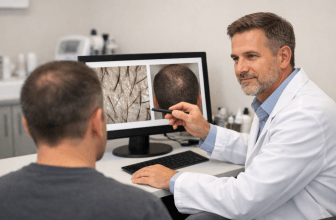
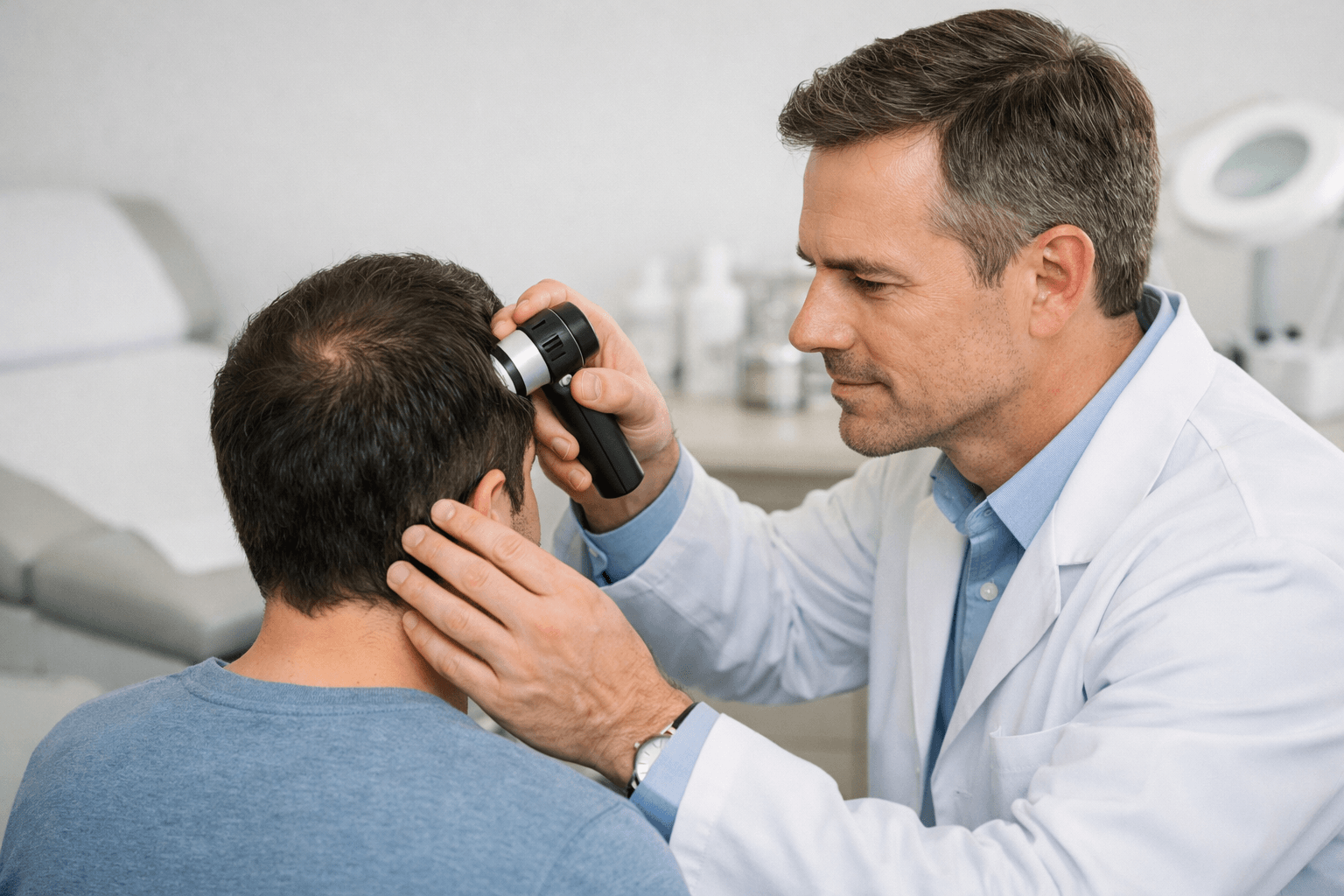
Suitability cannot always be determined from photographs alone. A physician should assess donor density, hair caliber, curl, skin characteristics, the condition of the recipient scalp, and the likely long-term progression of hair loss. The availability of donor hair does not automatically mean that harvesting it is advisable.
Where are beard grafts usually placed?
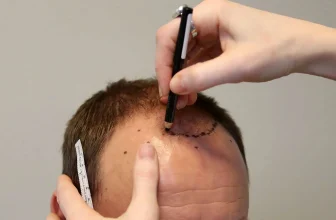
Because beard hair can be coarse or curly, its placement requires careful planning. In many cases, scalp hair is preferred for the frontal hairline and temples because these areas are highly visible and usually require the closest match to native scalp hair.
Beard grafts may be more suitable for the midscalp or crown, where their additional thickness can contribute to visual coverage when blended appropriately with scalp grafts. This is not an absolute rule. The best placement depends on the patient’s existing hair, beard characteristics, recipient-area design, and the physician’s assessment.
Using beard grafts in a natural-looking way requires attention to direction, angle, spacing, and the transition between different hair types. A graft plan that ignores these differences could produce an uneven or artificial texture. During consultation, ask how the clinic intends to combine donor sources and which areas will receive each type of graft.
How is beard or body hair harvested?
FUE is generally the preferred harvesting method for beard and body hair. During FUE, individual follicular units are removed from the donor area using a small extraction instrument and then prepared for placement in the scalp.
Nonscalp FUE can be technically demanding. Follicles may grow at different angles, curve beneath the skin, or have characteristics that make them more vulnerable during extraction. The technique must therefore be adapted to the donor site. Careful handling is important to reduce the risk of follicular transection, which occurs when a follicle is damaged during removal.
The harvested grafts are then placed into the planned recipient areas. The physician should decide how to distribute scalp, beard, and body grafts based on their individual characteristics rather than treating all follicles as interchangeable.
What can patients expect during planning in Turkey?
International patients should receive a detailed consultation before agreeing to treatment. This may involve reviewing medical history, hair-loss progression, previous transplant procedures, medications, donor-area photographs, and treatment goals. An in-person examination is particularly important when beard or body hair is being considered.
Before travelling to Turkey, ask the clinic:
- Which donor areas are being recommended and why?
- How many grafts are expected from the scalp, beard, or body?
- Where will each donor type be placed?
- Who will perform the assessment, extraction, recipient-site creation, and implantation?
- Is a qualified physician performing or directly supervising the medical parts of the procedure?
- What limitations and possible complications apply to the proposed plan?
- Would a smaller test procedure be appropriate?
Turkey is a popular destination for hair transplantation, but the country itself does not guarantee a particular biological outcome. The available evidence on beard and body hair transplantation is international and is not a Turkey-specific outcomes registry or guideline. Results depend on diagnosis, donor characteristics, treatment design, technical execution, aftercare, and individual healing.
Recovery and aftercare
Aftercare should be explained by the treating clinic and followed carefully for both the scalp and the donor area. The beard or body donor site may have temporary redness, sensitivity, crusting, or other local changes after extraction. The scalp recipient area also requires protection and gentle care according to the clinic’s instructions.
Patients should obtain clear written guidance before travelling, including how to wash the treated areas, which activities to avoid, how to manage prescribed medication, and when follow-up review is required. Do not assume that aftercare advice for scalp-only FUE is identical to guidance for beard or body harvesting.
Contact the clinic promptly if you develop symptoms that concern you, such as worsening inflammation, significant pain, discharge, or other unexpected changes. A qualified medical professional should assess any possible complication.
Risks and limitations of nonscalp donor hair
As with other hair-transplant procedures, beard and body hair harvesting involves medical risks. Nonscalp FUE may be associated with graft transection, scarring, changes in skin pigmentation, folliculitis, ingrown hairs, cysts, shock loss, or an unnatural texture or growth pattern.
The donor area may also look different after extraction. Beard harvesting can potentially affect the appearance of the beard, especially if a large number of follicles are removed or if extraction is uneven. Body-hair extraction may leave small marks or pigment changes, although the visibility and persistence of these effects vary.
The main limitation is predictability. Body hair may have a shorter growth length or a different growth cycle from scalp hair. Some follicles may not provide the same coverage or visual effect as scalp grafts. Evidence in this area consists largely of retrospective studies, case series, reviews, and expert guidance rather than high-quality comparative clinical trials. Individual results can therefore vary substantially.
How does beard hair compare with scalp hair?
| Feature | Scalp hair | Beard hair | Other body hair |
|---|---|---|---|
| Usual role | Preferred primary donor source | Supplementary donor source in selected cases | Supplementary source in carefully selected cases |
| Texture | Usually the closest match for scalp restoration | Often thicker, coarser, or curlier | Highly variable by body site |
| Predictability | Generally more predictable | Often more useful than other body sites | Usually less predictable |
| Common planning concern | Preserving donor reserves | Blending texture and avoiding an unnatural appearance | Variable density, growth cycle, and caliber |
Frequently asked questions
Can beard hair replace scalp donor hair?
Usually, no. Beard hair is generally considered an additional source rather than a complete replacement for scalp donor hair. Scalp hair remains preferred when sufficient, suitable donor follicles are available.
Can body hair be used to create a hairline?
It may be possible in selected circumstances, but body hair is not automatically suitable for the hairline. Texture and growth differences can make a mismatch more noticeable. A qualified physician should determine whether the donor hair is appropriate for the planned recipient area.
Is beard hair transplantation suitable for everyone with baldness?
No. Suitability depends on the cause and extent of hair loss, scalp and donor condition, beard density, hair characteristics, previous procedures, and expectations. A direct medical assessment is required.
Does treatment in Turkey guarantee better results?
No. Turkey does not independently guarantee success. International patients should focus on the diagnosis, the physician’s qualifications and involvement, donor-site assessment, transparent consent, treatment planning, and follow-up arrangements.
Should I choose a clinic that offers a large number of grafts?
Not necessarily. A high graft number is not automatically appropriate, particularly when donor reserves are limited. The plan should protect available donor hair and match graft characteristics to the recipient areas.
Making an informed decision
Beard and selected body hair can expand donor options for some patients undergoing scalp transplantation, particularly those with advanced hair loss or limited scalp reserves. Beard hair is generally the most practical nonscalp source, but its thicker or curlier texture must be considered carefully. Other body hair is more variable and may require especially cautious selection.
Before travelling to Turkey, request an individualized evaluation and a clear explanation of the proposed donor sources, recipient areas, risks, expected limitations, and follow-up care. The safest approach is to choose a clinic where a qualified physician performs or directly supervises the medical aspects of treatment and where expectations are discussed honestly.
Medical References
- Using Nonscalp Hair in Scalp Hair Restoration—Theory and Execution. Indian Journal of Plastic Surgery; PubMed/PMC.
- Large-Scale Beard Extraction Enhances the Cosmetic Results of Scalp Hair Restoration in Advanced Androgenetic Alopecia in East Asian Men: A Retrospective Study. Dermatology and Therapy; PubMed/PMC.
- Body Hair Transplant by Follicular Unit Extraction: My Experience With 122 Patients. Aesthetic Surgery Journal; PubMed/PMC.
- Body to Scalp: Evolving Trends in Body Hair Transplantation. Indian Dermatology Online Journal; PubMed/PMC.
- Body Hair Transplant. International Society of Hair Restoration Surgery.
- Beard and Mustache Transplant. International Society of Hair Restoration Surgery.