Written by: Estexper Medical Editorial Team
Medically reviewed by: Dt. Sait Gezer
Many people ask, how long do dentures last? There is no single replacement date for every patient. Denture longevity depends on the denture type and materials, changes in the gums and underlying bone, wear, hygiene, supporting teeth and how the denture functions in daily life.
In Short
Dentures may remain usable for many years, but they should be assessed if they become loose, uncomfortable, worn, damaged or difficult to use. A reline, rebase or repair may help when the rest of the denture remains suitable; replacement may be more appropriate when it is severely worn, unstable, damaged or linked to persistent tissue problems. Dentures in use for more than five years are a useful point for professional review, not an automatic replacement deadline.
At Estexper Clinic, an assessment should focus on how the denture performs in your mouth rather than relying only on its age. This article explains the difference between adjustment, relining, repair and replacement, including what international patients considering dental care in Turkey should expect.
How long do dentures last?
Dentures do not have a universal lifespan. Published studies report widely varying survival estimates, showing that some complete dentures remain in use for considerably longer than commonly quoted short timeframes. One retrospective clinical study reported median survival times of approximately 15.8 years for mandibular complete dentures and 19.4 years for maxillary complete dentures in a particular clinical sample. These figures should not be treated as a guarantee or as a recommended replacement schedule, and maintenance procedures were still frequently needed.
The American College of Prosthodontists recommends evaluating dentures for replacement when they have been in function for more than five years, while emphasizing clinical examination rather than automatic replacement at that point. A denture that is more than five years old may still be usable, but its retention, support, occlusion, appearance, speech and effect on the tissues should be reviewed.
Why dentures stop fitting properly
Loose or uncomfortable dentures are often related to natural changes in the mouth. After tooth loss, the gums and underlying residual bone can change over time. As the shape of the supporting ridge changes, the original fitting surface of the denture may no longer adapt closely to the tissues.
Other factors that can affect fit and function include:
- Wear or flattening of the artificial teeth
- Changes in the bite or contact between upper and lower dentures
- Cracks, fractures or distortion of the denture base
- Lost, loose or degraded denture teeth
- Changes involving supporting natural teeth in a partial denture
- Repeated use of adhesive to compensate for reduced retention
- Inadequate cleaning or damage caused by unsuitable care
A denture that feels loose should be examined rather than permanently managed with increasing amounts of adhesive. Adhesive may provide temporary assistance, but it does not correct a damaged, worn or poorly adapted denture.
Signs that your dentures need professional assessment
Arrange an examination if you notice a gradual or sudden change in the way your denture feels or functions. Important signs include:
- Persistent looseness, rocking or movement while speaking or eating
- Chronic soreness, rubbing or irritation of the gums
- Difficulty chewing foods that were previously manageable
- Changes in speech caused by denture movement or altered tooth position
- Cracks, fractures or a denture tooth that has come out
- Significant wear, flattening or shortening of the artificial teeth
- Increasing reliance on denture adhesive
- Discoloration, odor or difficulty cleaning the denture
- A denture that no longer looks natural or feels comfortable
Persistent irritation should not be ignored. A qualified dental professional can assess the denture, the supporting tissues and, where relevant, the natural teeth supporting a partial denture. Suitability for adjustment, relining, repair or replacement can only be determined after an examination.
What is denture relining?
Relining adds or replaces material on the fitting surface of a denture. Its purpose is to improve adaptation between the denture base and the gums after the shape of the supporting tissues has changed. A reline may be considered when the denture teeth, base and overall design remain acceptable but the fitting surface has become inaccurate.
Relining can sometimes improve retention and comfort without making an entirely new denture. It is not a solution for every loose denture. A reline may be unsuitable when:
- The denture teeth are badly worn
- The base is cracked, fractured or structurally degraded
- The bite is unfavorable
- The denture is unstable for reasons that a new fitting surface cannot correct
- The denture has become unsuitable in appearance or function
Relining versus rebasing
Relining changes the fitting surface while generally retaining the existing denture base and teeth. Rebasing involves replacing the denture base while retaining the artificial teeth when they remain suitable. The appropriate option depends on the condition of the base, teeth, bite and supporting tissues.
Evidence does not establish a universal evidence-based timetable for relining or rebasing. A large Australian population-based observational study found that dentures relined more than 12 months after delivery had longer observed longevity than dentures without a reline. Early relining within the first 12 months was not associated with the same benefit. Because this was an observational study, it does not prove that relining itself caused the difference. The findings support individualized clinical assessment rather than a fixed schedule.
When can a denture be repaired?
Repair is generally considered when the problem is localized and the rest of the denture remains suitable. Depending on the circumstances, a repair may address a fracture, crack or missing denture tooth. Repair can be useful when the denture still has acceptable fit, tooth position, bite, appearance and structural integrity.
Repair may be less appropriate when the denture fractures repeatedly, the base is extensively damaged, the artificial teeth are severely worn or the denture has become unstable. A repair can restore the immediate defect without correcting an underlying fit or wear problem. If discomfort, poor chewing or tissue irritation continues after a repair, a new denture may need to be considered following professional assessment.
Do not attempt to repair a denture with household glue or alter it yourself. Uncontrolled changes can damage the material, affect the bite and make professional treatment more difficult.
When is replacement more appropriate?
Replacement may be recommended when the denture is no longer structurally or functionally suitable. This can include a severely worn denture, a damaged base, recurrent fractures, major instability or poor fit that persists despite appropriate adjustment or relining.
A new denture may also be more appropriate when:
- The artificial teeth are significantly worn or degraded
- The bite cannot be corrected adequately with the existing denture
- The denture causes ongoing irritation or tissue problems
- The denture remains difficult to use for eating or speaking
- The appearance has changed substantially through wear or discoloration
- The denture requires frequent repairs or increasing adhesive use
- The existing design no longer suits changes in the mouth or supporting teeth
Replacement does not mean that every older denture must be discarded immediately. It means the benefits of continuing to maintain the existing denture should be weighed against its condition, comfort, function and effect on tissue health.
What happens during a denture assessment?
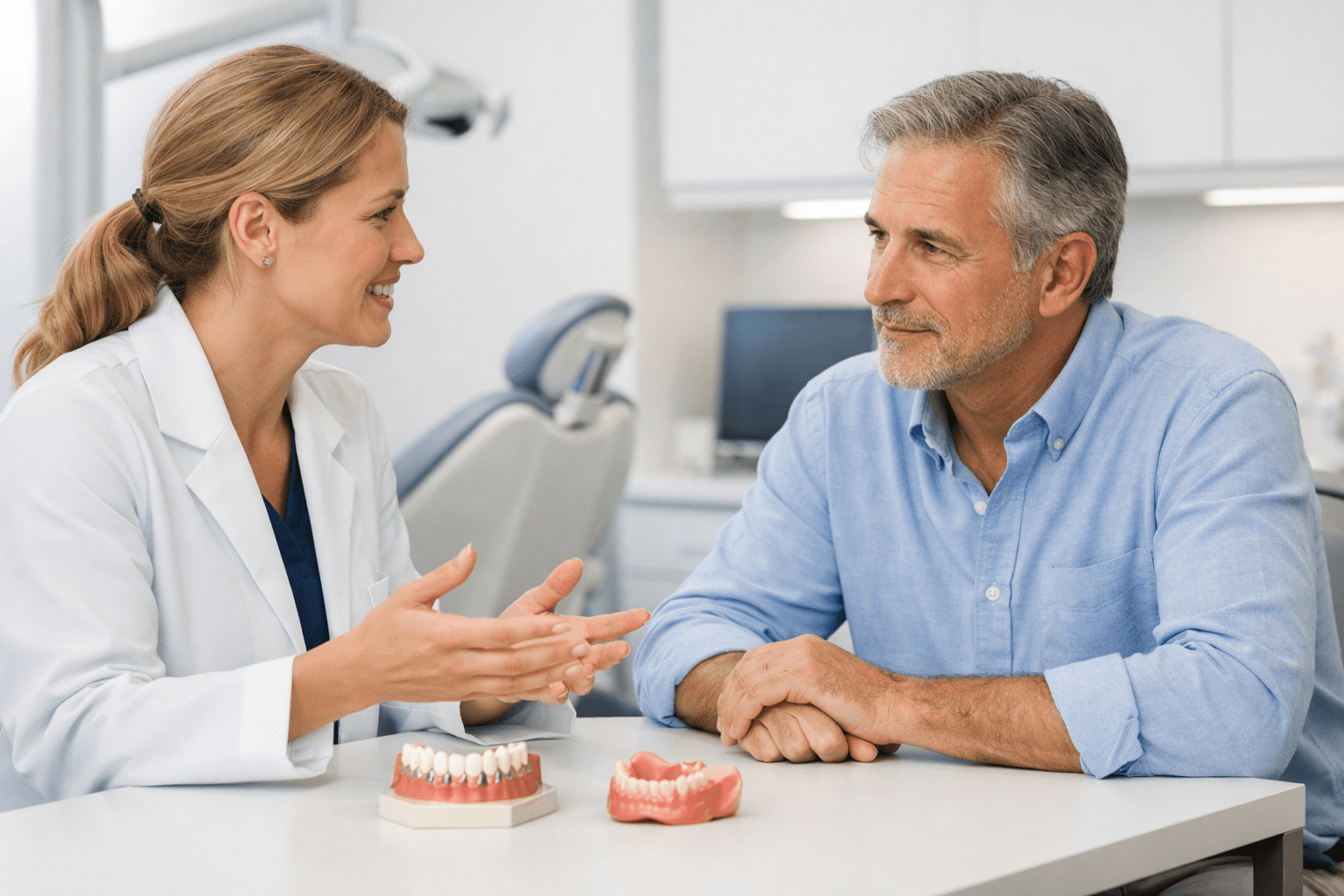
A dental professional will usually review your concerns and examine the denture inside and outside the mouth. The assessment may consider retention, support, stability, the bite, tooth wear, the condition of the denture base, appearance, speech, satisfaction and the health of the oral tissues.
If you are considering treatment in Turkey, send recent dental records or clear photographs before travelling only if requested by the clinic. These materials may help with preliminary planning, but they do not replace an in-person examination. A final decision about relining, repair or replacement should be made after the denture and mouth have been assessed directly.
Preparing for a consultation
Bring your current dentures and, if possible, information about when they were made, repaired or relined. Tell the clinician about soreness, movement, chewing difficulties, speech changes, adhesive use and any recent changes in your mouth. If you have a partial denture, mention any changes involving the natural teeth that support it.
It is also useful to explain your priorities, such as comfort, stability, chewing, speech or appearance. These goals can help guide discussion of whether maintenance or replacement may be suitable.
After relining, repair or replacement
A repaired, relined or new denture may feel different initially, and some patients require professional adjustments. Contact the clinic if you develop persistent soreness, continuing instability, difficulty chewing or speech problems that do not improve.
Follow the cleaning and storage instructions provided by your dental professional. Handle the denture carefully, keep it clean and avoid altering it at home. Regular dental reviews remain important even if the denture feels acceptable, because the supporting tissues and any remaining natural teeth can change over time.
There is no guaranteed interval at which every denture needs relining or replacement. Good care may help preserve a denture, but it cannot prevent all changes in the mouth or all forms of wear. Professional review is the safest way to determine whether maintenance or replacement is appropriate.
Frequently asked questions
Can dentures last 10 years or longer?
Yes, some dentures remain in use for 10 years or longer, and published clinical data show that certain dentures can survive considerably longer. However, longevity varies widely and does not mean that the denture remains ideal throughout that period. Relines, repairs or other maintenance may be needed.
Is a loose denture always a sign that it must be replaced?
No. A loose denture may sometimes be improved with an adjustment, reline or rebase if the teeth, base and bite remain suitable. Replacement is more likely when the denture is worn, damaged, unstable or associated with persistent tissue problems.
How often should dentures be relined?
There is no universally supported schedule for relining. The decision should be based on retention, fit, support, occlusion, comfort, tissue health and the condition of the denture. A dental professional can determine whether a reline is suitable after assessment.
Can a repaired denture be used permanently?
A repair may provide a durable solution when damage is localized and the rest of the denture is suitable. Recurrent fractures, major wear, poor fit or continuing discomfort may indicate that replacement is more appropriate.
Should I replace my dentures after five years?
Five years is a useful point at which to arrange an assessment, not an automatic replacement deadline. The American College of Prosthodontists recommends evaluating dentures that have been in function for more than five years, with the final decision based on clinical findings.
Explore our Cosmetic Dentistry services in Turkey for an overview of treatment options and individual assessment.
TREATMENT OPTIONS
Explore Your Treatment Options
Find out more about our services and discuss which options may suit your individual needs.
YOUR NEXT STEP
Discuss Your Questions With Our Team
Request an individual assessment or ask our team about treatment planning and follow-up arrangements.
Medical References
- Position Statement: The Frequency of Denture Replacement — American College of Prosthodontists.
- Longevity of complete dentures after relines: A 20-year population based retrospective study of 187,227 publicly insured adults — Journal of Dentistry; PubMed.
- Clinical performance of complete dentures: a retrospective study — International Journal of Prosthodontics; PubMed.
- Longevity of Relined or Rebased Dentures: Health Technologies — Canadian Agency for Drugs and Technologies in Health; NCBI Bookshelf.
- Denture care: Looking after your dentures — Cambridge University Hospitals NHS Foundation Trust.