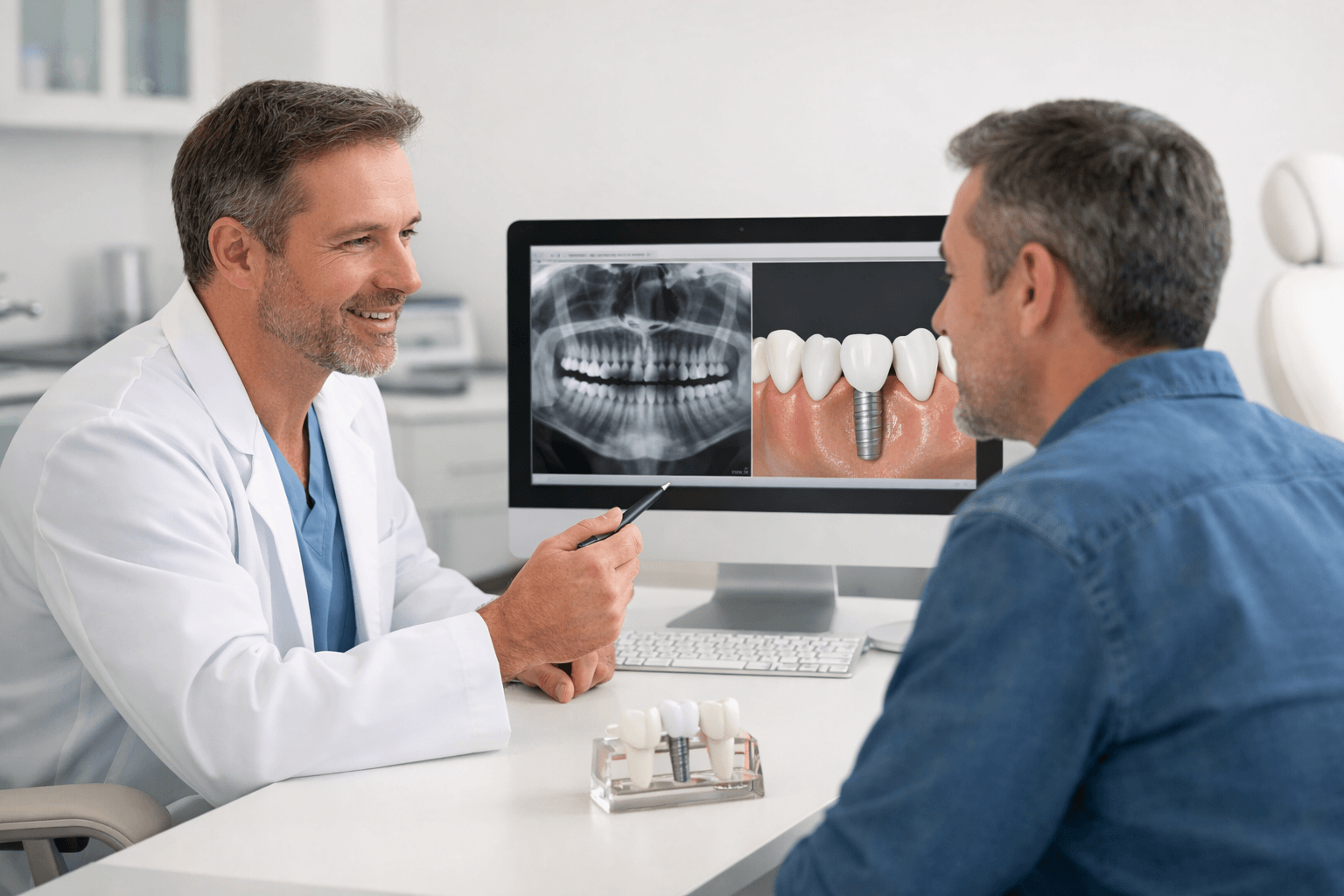
For international patients researching dental treatment abroad, the phrase “same-day dental implants in Turkey” can sound straightforward. In reality, it may describe several different treatment stages, and not every patient can receive implants or a complete set of permanent teeth in one appointment.
Some carefully selected patients may have an implant placed immediately after a tooth is removed and may also receive a provisional crown, bridge or full-arch prosthesis during the same treatment visit. However, the definitive teeth usually require additional healing, planning and clinical checks. Whether an immediate approach is appropriate must be determined by a qualified implant dentist after a detailed examination.
At Estexper Clinic, the priority should be a treatment plan based on your oral health, bone condition, bite, general health and long-term needs rather than a promise of a particular schedule.
What does same-day dental treatment mean?
“Same-day teeth” is a marketing phrase that can refer to different procedures. Understanding the terminology can help you ask more precise questions before travelling to Turkey.
Immediate implant placement
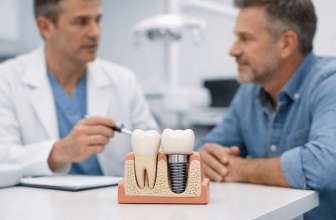
Immediate implant placement means that an implant is inserted into the extraction socket during the same procedure as tooth removal. This does not necessarily mean that a visible tooth is attached immediately. The implant may still need to heal before it can support the final restoration.
Immediate loading
Immediate loading means attaching a provisional crown, bridge or prosthesis to the implant within a short period after placement. The International Team for Implantology defines immediate loading as connecting a prosthesis in occlusion within one week of implant placement.
In some full-arch cases, a temporary fixed prosthesis may be fitted on the day of surgery. This can provide a provisional set of teeth while the implants integrate with the bone. The provisional teeth are not usually the definitive final prosthesis.
Permanent teeth on the same day
Receiving permanent, final teeth on the day of implant surgery is a different claim and should be approached carefully. The implants need time to integrate with the surrounding bone, and the final restoration generally requires later assessment, impressions or digital records, laboratory work and adjustments. A clinic should explain clearly whether its proposed same-day treatment includes temporary teeth, final teeth or only implant placement.
Can everyone receive same-day implants in Turkey?
No. Immediate placement and immediate loading are complex protocols used only when the clinical conditions are suitable. A dentist must assess your teeth, gums, bone, bite and general health before confirming whether this approach is appropriate for you.
Factors that may support immediate treatment include:
- Sufficient bone volume and quality to provide strong primary implant stability.
- An extraction socket with suitable anatomy for implant placement.
- No active acute infection at the treatment site.
- A bite that does not place excessive or unfavorable forces on the provisional restoration.
- Good general and oral health.
- The ability to follow eating, hygiene and review instructions carefully.
Immediate treatment may not be suitable when there is insufficient bone, an active infection, a need for extensive grafting, uncontrolled medical problems, smoking or unfavorable biting forces. These factors do not automatically determine your treatment, but they may make a staged approach more appropriate.
A remote quotation or an online photograph cannot replace a clinical examination. A dentist may need diagnostic imaging and an assessment of the planned extraction site before deciding whether immediate placement or loading is possible.
How is the decision made?
The treatment team should review your dental and medical history, examine your mouth and evaluate the teeth that may need extraction. Imaging is used to assess the available bone and the position of important anatomical structures. Your bite and the amount of force likely to affect the provisional teeth are also relevant.
The dentist should discuss whether your treatment involves:
- Removing one or more teeth and placing implants immediately.
- Attaching a temporary crown or bridge.
- Providing a temporary full-arch prosthesis.
- Allowing the implants to heal before fitting the final restoration.
- Using a conventional, staged implant pathway instead.
Immediate loading can achieve high implant survival in selected cases, and research has reported outcomes comparable with conventional loading in some clinical situations. However, the evidence is based on specific protocols, suitable patients and experienced clinical teams. Results should not be generalized to every patient, jaw, prosthesis or clinic.
What happens during a same-day implant visit?
The exact sequence depends on the number and position of the implants and the condition of your teeth and bone. A typical immediate-treatment pathway may involve an examination and imaging, tooth removal where necessary, implant placement and the fitting of a provisional restoration if sufficient stability is achieved.
For a full-arch case, several implants may be placed to support a temporary fixed prosthesis. The dentist must confirm that the implants have adequate primary stability and that the planned provisional teeth can be designed to manage biting forces. If stability or other conditions are not suitable, the team may decide not to load the implants immediately.
This is why a clinic should avoid presenting same-day treatment as guaranteed before completing an examination. The final decision may need to be made during surgery based on the actual condition of the bone and extraction sites.
What are the temporary teeth like?
Temporary teeth are designed to protect the treatment, restore appearance and, where appropriate, provide limited function while healing takes place. They are not necessarily as strong, refined or durable as the final restoration. Your dentist may recommend a softer diet and special cleaning instructions to reduce pressure on the implants and the provisional prosthesis.
After osseointegration, meaning the biological integration of the implants with the bone, the dentist can reassess the result. The provisional teeth may then be replaced, refined or used as a guide for the definitive prosthesis. The final teeth are made after the clinical team has reviewed healing, implant stability, gum contours, bite and appearance.
Ask in advance what is included in the quoted treatment. Important details include the type of provisional restoration, whether it is fixed or removable, how long it is expected to be used and what happens if it becomes loose or damaged.
How long does the full treatment take?
The surgical visit may be completed in one appointment for a suitable patient, but the complete implant journey usually extends beyond that day. Conventional implant pathways commonly allow a longer healing period before the final crowns, bridges or dentures are fitted. The exact timing depends on the number of implants, the treatment area, healing and the dentist’s protocol.
Immediate loading may shorten the time without teeth or with removable teeth, but it does not remove the need for healing and follow-up. It is also possible that the provisional restoration will need adjustment before the final teeth are made.
International patients should be cautious about booking a return flight immediately after surgery without discussing the expected review schedule. Your dentist should explain how many visits are needed, whether a review is required before travelling home and what arrangements exist if a problem develops later.
Recovery and aftercare
After implant surgery, you will receive instructions about oral hygiene, diet, medication if prescribed and activity. Follow these instructions closely, particularly when provisional teeth are attached. Avoid placing unnecessary pressure on the restoration, and contact the treatment team if you experience a problem such as a loose provisional prosthesis or unexpected symptoms.
Follow-up is an essential part of implant care. The dental team needs to monitor healing, the condition of the gums, the stability of the implants and the function of the provisional teeth. The final restoration should not be treated as a simple replacement that can be fitted without reassessment.
If you return home after treatment in Turkey, arrange in advance how follow-up will be managed. A local dentist may be able to provide urgent assessment, but they may not have access to the original implant system, surgical records or laboratory information. Obtaining complete records before leaving Turkey can make future care easier.
What are the risks and limitations?
Immediate implant placement and immediate loading can be appropriate options, but they involve clinical risks and stricter selection requirements than a routine staged approach. Possible concerns include failure to achieve sufficient implant stability, problems with the provisional restoration, unfavorable bite forces, infection, delayed healing or the need to change the planned treatment.
Smoking, uncontrolled medical conditions, inadequate bone and active infection can affect suitability and healing. Extensive bone grafting may also mean that immediate loading is not appropriate. Your dentist should explain the alternatives if the conditions required for immediate treatment are not present.
Even when the initial treatment is successful, long-term implant care requires good oral hygiene, regular dental reviews and attention to the condition of the restoration. No clinic can responsibly guarantee that every patient will receive permanent teeth on the same day or that complications will never occur.
Same-day implants compared with conventional treatment
A conventional implant pathway usually separates tooth removal, implant placement, healing and fitting of the final restoration into stages. This may take longer, but it can be more appropriate when the socket or bone requires healing, when grafting is needed or when immediate stability cannot be achieved.
An immediate approach may reduce the time spent without a provisional tooth or prosthesis, and selected full-arch patients may receive temporary fixed teeth quickly. However, it requires careful planning and may offer less flexibility when the clinical conditions are unfavorable.
The best option is not necessarily the fastest option. A qualified dentist should compare the benefits, limitations, risks, expected number of visits and follow-up requirements of both approaches before treatment begins.
Questions to ask a dental clinic in Turkey
Before booking treatment, ask for clear written information rather than relying only on advertisements. Useful questions include:
- Does “same-day teeth” mean immediate implant placement, temporary teeth, immediate loading or permanent final teeth?
- What examination and imaging are required before confirming suitability?
- What happens if the implants do not achieve adequate stability during surgery?
- Are the teeth fitted on the day temporary or definitive?
- How long will the provisional restoration normally be used?
- How many appointments are needed in Turkey?
- Who will provide follow-up if I have a problem after returning home?
- Can I receive my implant system details, treatment plan, imaging and clinical records?
- What is included if the provisional restoration needs repair or adjustment?
Medical tourism also requires attention to infection-control standards, communication, travel planning and continuity of care. The Centers for Disease Control and Prevention advises patients travelling abroad for medical or dental care to obtain complete records and plan how follow-up and complications will be managed after returning home.
Frequently asked questions
Can I have an implant immediately after an extraction?
Possibly. Immediate placement may be considered when the extraction site, bone, infection status and bite are suitable. It is not appropriate for every extraction, and an examination is required.
Can I leave Turkey with fixed teeth on the same day?
Some carefully selected full-arch patients may receive a temporary fixed prosthesis on the day of implant surgery. This is not guaranteed and does not usually mean that the definitive final teeth have been completed.
Are same-day dental implants permanent?
The implant itself is intended to be a long-term replacement, but it still needs to integrate with the bone. Teeth attached immediately are generally provisional, and the final restoration is usually made after healing and further checks.
What if I am not suitable for immediate loading?
Your dentist may recommend a staged approach, delayed loading or another plan based on your bone, gums, bite and overall health. A slower treatment plan may provide a more appropriate foundation for the final restoration.
Conclusion
Same-day dental implants in Turkey may be possible for selected patients, particularly when immediate implant placement and immediate loading can be performed appropriately. The phrase does not automatically mean that permanent final teeth will be completed in one day.
A responsible treatment plan should explain the difference between the implant procedure, provisional teeth and the definitive restoration. It should also include a realistic healing schedule, aftercare instructions, complete records and arrangements for follow-up after you return home. Speak with a qualified dentist at Estexper Clinic to determine whether immediate treatment or a conventional staged pathway is suitable for your individual circumstances.
Medical References
- Implant Placement and Loading Protocols – Consensus Statements, International Team for Implantology (ITI).
- Impact of immediately loaded implant-supported maxillary full-arch dental prostheses: a systematic review, Journal of Applied Oral Science; PubMed and PMC.
- Success of immediate loading implants compared to conventionally-loaded implants: a literature review, PubMed.
- Dental Implants, Leeds Teaching Hospitals NHS Trust.
- Medical Tourism – CDC Yellow Book, Centers for Disease Control and Prevention.