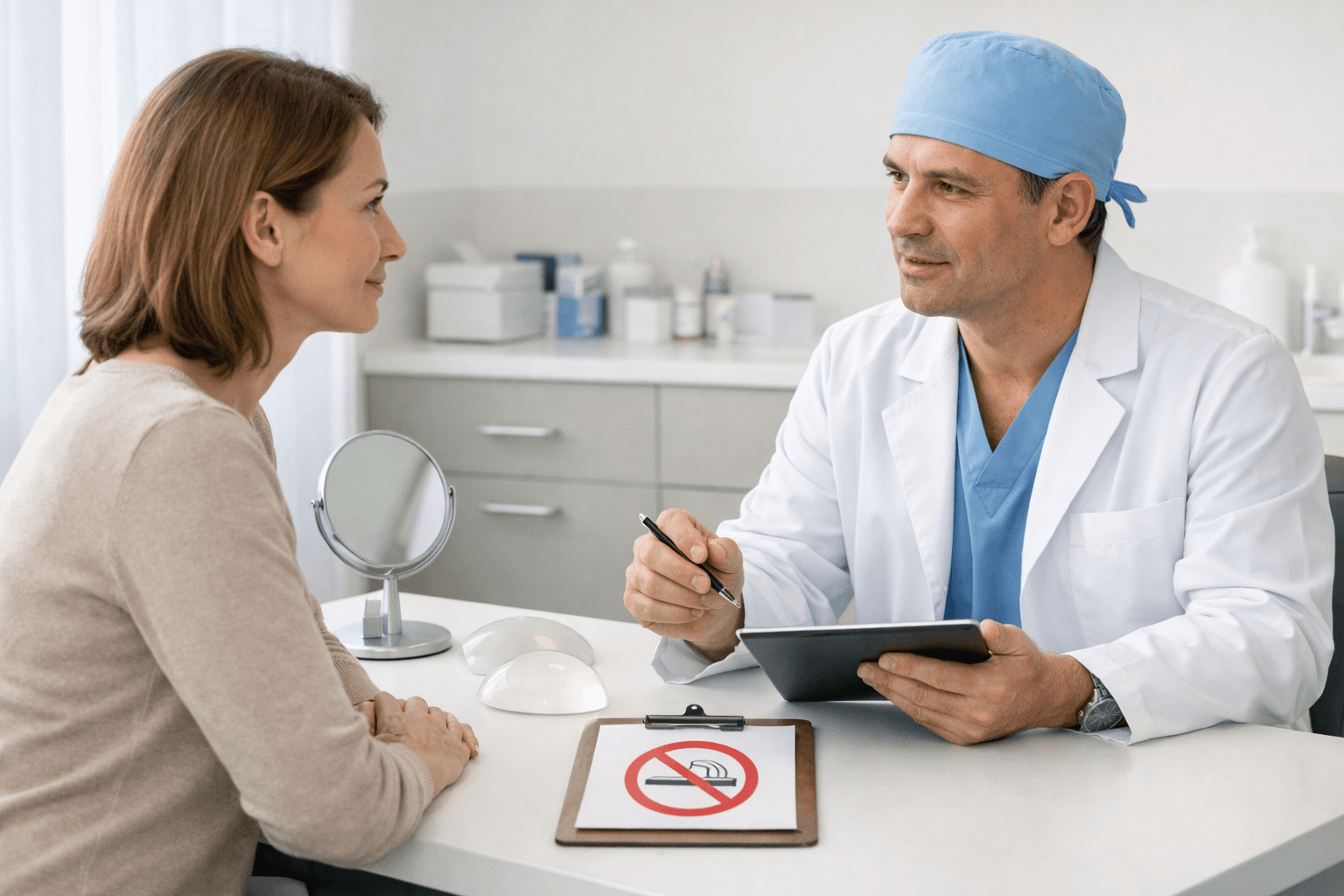
Many international patients ask, “Can smokers have plastic surgery in Turkey?” The short answer is that smoking does not automatically make someone ineligible for cosmetic surgery. However, active smoking can significantly affect surgical safety, healing and recovery. A surgeon or hospital may therefore recommend postponing or declining an elective procedure until the patient has stopped smoking for a required period.
At Estexper Clinic, patient suitability must be assessed individually by a qualified surgeon and the relevant medical team. This assessment should include all tobacco and nicotine use, including cigarettes, heated tobacco products, vaping and nicotine replacement products. Being open about your smoking habits helps the surgeon and anaesthesia team plan care safely.
The evidence discussed in this article applies mainly to plastic surgery internationally and to surgery in general. It does not establish one universal rule for every clinic or hospital in Turkey. Each patient’s eligibility, cessation requirements and travel plan must be confirmed with the treating surgeon and accredited facility.
Why does smoking matter before plastic surgery?
Smoking exposes the body to substances that can interfere with oxygen delivery and circulation. Surgery already places demands on the body, and good blood flow is important for healing incisions and maintaining the health of the skin and other tissues.
Research has associated smoking with a higher risk of several postoperative problems, including:
- Delayed wound healing
- Wound separation or other wound-healing problems
- Surgical-site infection
- Skin or tissue necrosis
- Other complications affecting recovery
A 2024 systematic review and meta-analysis examining 82 studies found that smoking significantly increased overall complication risk for most of the aesthetic procedures studied. The review noted that results were less certain for some procedures, including mastopexy and rhinoplasty, and that bias may have affected some findings. This uncertainty does not mean smoking is risk-free; it means that the level of evidence may differ between operations.
Earlier systematic-review evidence also found associations between tobacco use and complications in procedures such as abdominoplasty, breast reduction and breast reconstruction, including infection, delayed healing and skin necrosis. The exact risk depends on the operation, the patient’s health, the amount and duration of tobacco exposure, and the surgeon’s technique and aftercare plan.
Can a Turkish plastic surgeon refuse or postpone surgery?
Yes. A surgeon may postpone or decline elective plastic surgery when active smoking creates an unacceptable risk. This is not necessarily a permanent exclusion. In many cases, the surgeon may ask the patient to stop smoking for a specified period, complete a medical assessment and demonstrate that they can remain smoke-free during the required recovery period.
There is no single abstinence rule that applies to every patient, operation or hospital. Some surgeons may require a longer period than others, particularly for procedures involving extensive skin undermining, larger wounds or tissue repositioning. The treating surgeon may also require continued abstinence after surgery.
The World Health Organization states that smokers have a significantly higher risk of postsurgical complications and that stopping approximately four weeks before surgery is associated with reduced risk. Stopping earlier may provide additional benefit. Patients should not interpret four weeks as a guaranteed or universal clearance period, because the appropriate timeline depends on the procedure and the individual assessment.
How long should you stop smoking before surgery?
Stopping smoking as early as possible is the safest general approach. Approximately four weeks of cessation before surgery is commonly supported by authoritative guidance as a period associated with lower postsurgical risk, but your surgeon may request more time or set a different requirement.
If your surgery is scheduled soon, do not assume that stopping is pointless. Evidence does not show that quitting shortly before surgery worsens outcomes. Even when the time available is limited, tell the surgical team immediately and ask what steps are appropriate. The team may decide to delay the operation, proceed only after further assessment, or provide specific cessation support.
It is equally important to follow the required smoking-free period after surgery. Wounds continue to heal during recovery, and returning to smoking too soon may undermine the benefits of preoperative cessation. Your surgeon should explain how long you need to avoid cigarettes and other nicotine products.
Does vaping count as smoking?
You should disclose vaping, heated tobacco use, nicotine pouches and any other nicotine exposure. Patients should not assume that vaping is acceptable simply because it does not involve traditional cigarettes. The American Society of Plastic Surgeons addresses both smoking and vaping in its patient guidance, and your surgeon and anaesthesia team need complete information about your use.
If you are considering nicotine replacement therapy or another cessation product, discuss it with the medical team. Whether a product is suitable before or after surgery depends on your circumstances and the policy of the treating surgeon and hospital.
Which plastic surgery risks may be increased in smokers?
Smoking-related concerns are particularly important for operations in which the skin and underlying tissues must heal along an incision or after being lifted, tightened or repositioned. The research package identifies increased complication associations across many commonly studied aesthetic procedures, including abdominoplasty, breast surgery and facelift procedures.
Possible concerns include slower healing, infection and reduced tissue survival. Skin or tissue necrosis can be a serious complication because poorly oxygenated tissue may not recover normally. Smoking may also make wound care more difficult and can contribute to a less predictable recovery.
These risks are not identical for everyone, and a complication is not inevitable. Conversely, a patient should not assume that a less consistent evidence base for a particular operation means there is no concern. Your surgeon must consider your full medical history, the planned procedure and the facility’s safety requirements.
How should smokers prepare for plastic surgery in Turkey?
If you are considering treatment in Turkey, preparation should begin before booking flights or arranging accommodation.
1. Tell the clinic about all tobacco and nicotine use
Provide accurate information about how often you smoke or vape, when you last used nicotine and whether you have tried to quit before. Also mention relevant medical conditions, medications and previous surgical problems. This information is used to assess suitability and plan anaesthesia and postoperative care.
2. Ask for the clinic’s exact cessation policy
Ask how long you must stop before surgery, whether nicotine products are included in the restriction and how long abstinence is required after the operation. Confirm the policy in writing before travelling. A general internet recommendation cannot replace the specific instructions of your surgeon and hospital.
3. Allow enough time for assessment and recovery
Do not plan an overseas operation around the shortest possible stay. You may need a preoperative consultation, medical tests, wound checks and additional reviews before flying home. The required schedule varies according to the procedure and your recovery.
4. Make a quit plan
Speak with an appropriate healthcare professional about evidence-based smoking-cessation support. Tell them that you are preparing for surgery abroad, and coordinate any recommended treatment with the Turkish surgical and anaesthesia teams. Avoid hiding nicotine use because it can affect medical decisions.
What should international patients consider when having surgery in Turkey?
Smoking is only one part of the safety assessment for medical travel. Having plastic surgery abroad creates additional planning considerations, especially if you will return home soon after the operation.
Air travel after surgery may increase the risk of blood clots, and the timing of a safe flight must be discussed with your surgeon. The Centers for Disease Control and Prevention also highlights infection risks, continuity-of-care problems and the importance of arranging follow-up after returning home.
Before travelling, ask who will review you if a problem occurs after discharge, how you can contact the medical team outside normal hours and what records you will receive. You should also identify a suitable healthcare professional near your home who can provide follow-up if necessary. Keep copies of your operative information, discharge instructions and medication details.
Do not fly while feeling unwell or disregard symptoms because you are scheduled to return home. Seek medical advice promptly if you develop concerns such as worsening pain, fever, increasing redness, unusual drainage, wound separation or other unexpected changes. Your own surgical team should provide the specific warning signs and emergency instructions relevant to your procedure.
What happens if you cannot stop smoking before your planned surgery?
Tell the clinic as soon as possible. The safest option may be to postpone the procedure until you meet the surgeon’s cessation requirements. Rescheduling can be disappointing, but elective surgery should not be rushed when modifiable risks have not been addressed.
Do not reduce or conceal your smoking only to obtain approval. The surgical team needs an accurate picture of your health to make a responsible decision. If quitting is difficult, ask for professional support rather than relying on willpower alone. The National Institute for Health and Care Excellence recommends encouraging people referred for elective surgery to stop smoking before the operation.
Frequently asked questions
Can I have a consultation in Turkey if I smoke?
Smoking does not necessarily prevent a consultation, but consultation availability and surgical approval depend on the clinic and the individual assessment. The surgeon must review your smoking status, health history, planned procedure and ability to follow pre- and postoperative instructions.
Is occasional smoking safe before plastic surgery?
Do not assume that occasional smoking is safe. Even limited or intermittent use should be disclosed, and the surgeon may apply the same cessation policy to all tobacco users. The relevant decision depends on your operation and clinical assessment.
Can I smoke after plastic surgery in Turkey?
You should not resume smoking until your surgeon confirms that it is appropriate, and some surgeons may require a defined smoke-free recovery period. Follow the instructions provided by your surgical team rather than relying on a general timeline.
Does stopping smoking guarantee a complication-free recovery?
No. Stopping smoking can reduce risk, but it cannot eliminate all surgical or anaesthetic complications. Outcomes also depend on the procedure, general health, aftercare and factors that may not be fully controllable.
Is rhinoplasty safe for smokers?
The evidence for rhinoplasty was less certain in the 2024 systematic review than for many other studied procedures. This does not establish that smoking is safe for rhinoplasty. A qualified surgeon must determine whether and when the procedure is appropriate for you.
Key takeaways
- Smokers are not automatically excluded from plastic surgery in Turkey.
- Active smoking can increase the risk of delayed healing, infection, tissue necrosis and other complications.
- Many surgeons may postpone or decline elective surgery until the patient has stopped smoking.
- Stopping approximately four weeks before surgery is associated with reduced risk, but individual requirements vary.
- Disclose cigarettes, vaping, heated tobacco and all nicotine products.
- Plan carefully for follow-up, infection prevention and air-travel-related clot risk when having surgery abroad.
The decision to proceed should be made jointly with a qualified plastic surgeon and the accredited medical facility after an individual assessment. If you are considering plastic surgery in Turkey and smoke, contact the clinic early so there is enough time to discuss cessation, medical clearance and safe travel planning.
Medical References
- A Procedure and Complication-Specific Assessment of Smoking in Aesthetic Surgery: A Systematic Review and Meta-Analysis — Plastic Surgery (Oakville) / PubMed Central.
- Current evidence on the role of smoking in plastic surgery elective procedures: A systematic review and meta-analysis — Journal of Plastic, Reconstructive & Aesthetic Surgery / PubMed.
- Tobacco and postsurgical outcomes — World Health Organization.
- Stop smoking interventions and services: Evidence review and recommendations — National Institute for Health and Care Excellence.
- The Care You Deserve — American Society of Plastic Surgeons.
- Medical Tourism: Travel to Another Country for Medical Care — Centers for Disease Control and Prevention.