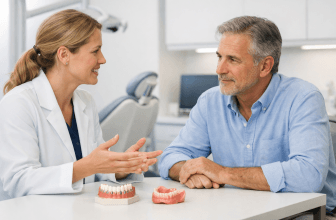
For international patients, one of the first practical questions about dental implants in Turkey is how many days the treatment will take. The answer depends on the condition of your teeth and gums, the number of implants required, whether bone healing is needed, and the treatment plan prepared by your dentist.
Some patients may complete the first phase of treatment during a short stay, while others need a longer treatment schedule involving two separate visits. The surgical appointment itself may not take many days, but the complete process can extend over several months because the implant must integrate with the jawbone before the permanent crown, bridge, or denture is fitted.
This guide explains how international patients can plan their time in Turkey, what may happen during each visit, and which factors can change the expected schedule. A qualified dentist must assess your individual suitability and provide a personalized timeline before you book flights or accommodation.
What Is the Typical Length of Stay for Dental Implants in Turkey?
There is no single schedule that applies to every patient. In general, international dental implant treatment may involve:
- A first visit for examination, imaging, treatment planning, and implant placement
- A healing period at home or in Turkey, depending on the dentist’s instructions
- A second visit for checking healing and fitting the permanent restoration
For a straightforward case, the first visit may require several days rather than just one appointment. This allows time for an initial consultation, diagnostic checks, surgery, and an early review. The second visit is usually planned after the implant has had enough time to heal and integrate with the jawbone.
Some patients may need to stay longer if several implants are being placed, if the treatment involves both arches, or if the dentist needs additional appointments to evaluate healing. A short visit may be possible in selected cases, but it should not be assumed before a full clinical assessment.
Why the Total Treatment Takes Longer Than the Surgery
Dental implant treatment has several stages. The implant is a small medical device placed into the jawbone, where it needs time to become stable. This biological healing process is often called osseointegration. It cannot be shortened simply by arranging more appointments or staying in the country for a few extra days.
The visible part of treatment may include the placement of a temporary tooth and, later, a permanent crown or other restoration. However, the final restoration is normally fitted only when the dentist considers the implant sufficiently stable and the surrounding tissues healthy enough to support it.
This means that a patient may complete the surgical stage during one trip, but still need a later appointment for the final stage. The dentist may also recommend an examination before the permanent restoration is made. The exact timing depends on healing, the type of restoration, and the condition of the mouth.
What May Happen During the First Visit?
Day 1: Consultation and examination
The first appointment usually focuses on understanding your dental needs and confirming whether implants are appropriate. The dentist may review your medical and dental history, examine your teeth and gums, and discuss your expectations.
Diagnostic imaging may be used to assess the jawbone, the position of nearby anatomical structures, and the condition of the area where the implant is being considered. Your dentist may also review any recent dental records or scans that you provide, although new examinations may still be needed after you arrive.
This appointment is important because an online quotation or preliminary treatment idea cannot replace an in-person assessment. The final plan may change if the clinical examination reveals gum disease, insufficient bone, infection, or another factor that affects implant placement.
Day 2: Treatment planning and implant placement
If the dentist confirms that you are suitable and the plan is agreed, implant placement may take place during the first visit. The number of implants and the complexity of the case affect how long the appointment lasts.
After the implant is placed, the dental team will give you instructions about oral hygiene, food, medication if prescribed, and activities to avoid. You may also receive information about temporary teeth if they are part of your plan.
Following days: Early review
An early review may be arranged before you return home. During this appointment, the dentist can check the surgical area and discuss any symptoms or concerns. The timing of this review varies according to the procedure and the dentist’s protocol.
International patients should avoid booking a flight immediately after surgery unless the treating dental team confirms that the timing is appropriate. Allowing flexibility in the itinerary can be helpful if an additional check is needed.
How Long Should You Stay After Implant Placement?
The recommended stay after implant surgery is individualized. It may depend on the number of implants, the extent of the procedure, your general health, and how the surgical area looks during review.
Patients should plan enough time for the dental team to complete the examination, perform the procedure, provide post-operative instructions, and carry out any necessary early follow-up. Staying longer is not a substitute for healing, but leaving too soon may make it harder to attend a recommended review.
Before traveling, ask the clinic for a written schedule that includes the expected appointment days, the earliest suggested return date, and contact arrangements after you go home. You should also ask what to do if you develop increasing pain, swelling, bleeding, fever, or another unexpected symptom after returning to your country.
How Long Until the Permanent Teeth Are Fitted?
The permanent restoration is generally fitted after the implant has had time to heal and become stable. This period differs between patients and may depend on the jaw area, the number of implants, bone quality, and whether the implant was placed in a straightforward or more complex setting.
As a result, many international patients need to plan a second trip to Turkey. During this visit, the dentist may assess the implant, check the gums, take measurements or impressions, and arrange the final crown, bridge, or denture component.
The second visit may require several appointments rather than a single short session. The restoration may need to be tried in, adjusted, and checked for comfort, appearance, and function. The clinic should explain how many days are expected for your particular restoration before you arrange travel.
When Can Treatment Be Completed in One Trip?
In some situations, a dentist may plan implant placement and a temporary restoration during one visit. This does not necessarily mean that the entire implant treatment is finished. A temporary tooth may provide an interim appearance or function while the implant heals, but it may later need to be replaced or upgraded to a permanent restoration.
Whether a patient can complete more stages during one trip depends on clinical suitability. Immediate or same-day restoration is not appropriate for every implant, and the decision should be made by a qualified dentist after examining the patient and assessing implant stability.
Patients should be cautious about treatment plans that promise a fixed number of days without considering individual findings. A responsible plan should explain what is included in the initial visit, what remains to be completed later, and how follow-up will be managed if the schedule changes.
What Can Make the Treatment Timeline Longer?
Several factors may increase the number of days required in Turkey or extend the time before the second visit:
- Multiple implants: Placing several implants may require more planning, treatment time, and follow-up.
- Bone limitations: If the jawbone does not provide suitable support, the dentist may need to consider additional treatment before or alongside implant placement.
- Gum or dental infection: Active infection or gum problems may need attention before implant surgery can safely proceed.
- Medical history: Certain health conditions and medications may affect healing or require coordination with your physician.
- Healing response: The implant must be monitored, and the next stage may be delayed if healing is slower than expected.
- Restoration adjustments: A crown, bridge, or denture may require additional checks to achieve a comfortable fit.
- Travel changes: Flight availability, weekends, public holidays, and unexpected appointment changes can affect the practical length of your stay.
If bone-related treatment or other preparatory care is recommended, the implant timeline may involve more than two visits. Your dentist should explain the sequence and whether each stage can be performed during the same trip.
How Should International Patients Prepare?
Good preparation can make the schedule more predictable. Before traveling to Turkey, send the clinic relevant dental records, a list of medications, information about allergies, and details of any medical conditions. If you have recent imaging, ask whether it is suitable for treatment planning or whether new scans will be required.
Request a written treatment plan that explains the proposed number of implants, the expected stages, the estimated length of each visit, and the likely timing of the follow-up appointment. You should also ask whether the plan includes temporary teeth, permanent restorations, consultations, imaging, and post-operative reviews.
When arranging flights, avoid making the schedule too tight. A flexible booking may be useful if the dentist recommends an additional check or if you need more recovery time. Choose accommodation that allows easy travel to the clinic and provides a comfortable environment for rest after surgery.
It is also important to understand who will provide follow-up care after you return home. Ask whether the clinic will share records with your local dentist and what type of support is available if you experience a concern between visits.
Recovery and Aftercare During Your Stay
Some swelling, tenderness, or discomfort can occur after implant surgery, although the experience varies. Follow the dental team’s instructions carefully, including guidance on cleaning the mouth, eating, physical activity, and any prescribed medication.
Do not place pressure on the surgical area or use a temporary restoration in a way that has not been approved by your dentist. Attend every planned review before leaving Turkey. These appointments allow the dental team to check the area and confirm whether your travel plans remain suitable.
Contact the clinic promptly if symptoms become more severe instead of gradually improving, or if you notice significant bleeding, discharge, fever, or worsening swelling. Seek urgent medical attention if you have uncontrolled bleeding, difficulty breathing or swallowing, or another serious or rapidly developing symptom.
Planning for the Return Visit
The return visit should be arranged according to clinical healing rather than only your preferred travel dates. The dentist may need to confirm that the implant is stable before taking final measurements or fitting the permanent restoration.
Ask the clinic how far in advance the second appointment should be booked and whether a review is required before the final restoration is produced. If you live far from Turkey, consider allowing extra time in your itinerary in case an adjustment is needed.
Your local dentist may also be able to assist with routine monitoring after the treatment, but this should be discussed with both dental teams. Keeping copies of your treatment records, implant details, and restoration information can make future dental care easier.
Frequently Asked Questions
Can I fly home a day after dental implant surgery?
The answer depends on the procedure and your recovery. Some patients may be able to travel relatively soon, while others need a longer observation period. The treating dentist should confirm when it is appropriate for you to fly.
Do I need to stay in Turkey until the implant has healed?
Usually, the full healing period does not require you to remain in Turkey. Many patients return home after the initial recovery and come back later for the permanent restoration. However, the exact arrangement must be agreed with your dentist.
Can my whole treatment be completed in one week?
Some parts of treatment may be completed during a week-long visit, particularly in selected cases. However, implant healing usually continues after you leave, and a later visit may be needed for the permanent restoration. A one-week schedule should never be assumed without a clinical assessment.
What if I need more time than originally planned?
Discuss this possibility with the clinic before traveling. Keep your itinerary flexible, confirm the clinic’s emergency contact process, and avoid scheduling important commitments immediately after your planned return.
Key Points for Planning Your Trip
International patients should think of dental implant treatment as a staged process rather than a single appointment. The first trip may include consultation, imaging, implant placement, and early follow-up. The permanent restoration may require a second visit after the implant has healed.
The most reliable way to estimate your stay is to receive a personalized plan from a qualified dentist after a full examination. Ask for an appointment schedule, allow flexibility for recovery, and confirm how follow-up will be handled both in Turkey and after you return home.
Estexper Clinic can discuss the expected sequence of appointments for your case, but final treatment decisions and timing must be determined by a qualified dentist based on your individual oral and general health.