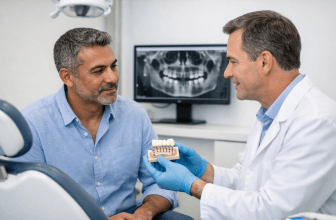
Many people with diabetes wonder whether they can safely replace missing teeth with dental implants. The short answer is often yes: diabetes alone does not automatically rule out implant treatment. However, blood sugar control, gum health, oral hygiene, bone quality, smoking status and general medical condition all influence eligibility and healing.
Dental implants require the jawbone to heal around the implant through a process called osseointegration. Persistent hyperglycemia, or high blood sugar, may affect bone metabolism, blood vessels, immune responses and soft-tissue repair. As a result, poorly controlled diabetes can delay early implant stability, increase inflammation around the implant and make the prognosis less predictable.
This does not mean that every person with diabetes faces the same level of risk. Patients with stable diabetes and good plaque control may achieve suitable outcomes, especially when treatment is planned carefully and supported by regular maintenance. A qualified dentist, implant specialist and the patient’s medical team should assess individual suitability before treatment.
Is diabetes a contraindication to dental implants?
Diabetes is not an automatic contraindication to dental implants. The American Dental Association notes that implant treatment can be considered for people whose diabetes is properly controlled. In contrast, marginally controlled or poorly controlled diabetes may be associated with delayed healing, delayed osseointegration and an unpredictable prognosis.
Evidence from systematic reviews is not completely consistent. Some reviews report broadly comparable short-term implant survival in people with well-controlled diabetes, while larger evidence syntheses find a modestly higher overall risk of implant failure and greater marginal bone loss in diabetic patients. These differences may reflect variations in diabetes control, oral hygiene, smoking, implant location, follow-up duration and other health conditions.
For this reason, eligibility should not be decided by the diagnosis of diabetes alone. The more useful question is whether the patient’s diabetes and oral health are sufficiently stable to support elective surgery and healing.
How does blood sugar affect implant healing?
Dental implant treatment involves healing in both the soft tissues and the jawbone. High blood sugar may interfere with several processes needed for predictable recovery:
- Bone healing: Hyperglycemia may affect bone metabolism and the early integration of the implant with surrounding bone.
- Blood vessel function: Diabetes can influence vascular responses, which may affect the supply of oxygen and nutrients to healing tissues.
- Immune response: Altered immune function may make it more difficult to control inflammation and respond to bacterial plaque.
- Soft-tissue repair: Gum and other oral tissues may heal more slowly when diabetes is poorly controlled.
Clinical reviews have reported slower early osseointegration or reduced early implant stability in poorly controlled diabetes. Some differences may become less noticeable over longer follow-up, but early healing remains an important period. A delayed or incomplete healing response can affect the implant’s prognosis and the timing of later restorative treatment.
Does HbA1c determine whether implants are possible?
HbA1c provides an estimate of average blood sugar over approximately the previous few months and is an important part of pre-treatment assessment. Higher HbA1c levels have been associated in several reviews with increased bleeding on probing, peri-implant inflammation, marginal bone loss and unfavorable inflammatory or bone-related biomarkers.
However, there is no universally validated HbA1c cutoff that automatically determines dental implant eligibility. A single laboratory value should not replace a complete medical and dental evaluation. The dentist may consider the HbA1c result alongside the duration and type of diabetes, current medications, previous healing problems, oral hygiene, gum disease, smoking and diabetes-related complications.
For general elective surgery, the American Diabetes Association’s 2026 standards recommend an A1C goal below 8% within three months of surgery when feasible, together with perioperative glucose monitoring and a general perioperative glucose target of 100–180 mg/dL. These are general surgical recommendations, not a dental-implant-specific eligibility rule. They should not be used as a personal treatment target without advice from the patient’s healthcare team.
Who may be a suitable candidate?
A person with diabetes may be considered for dental implants when several factors are favorable:
- Blood sugar is reasonably stable and is being monitored.
- There is no active or uncontrolled periodontal disease.
- Daily plaque control is good and the patient is willing to attend maintenance visits.
- There is sufficient bone, or any required bone assessment indicates that augmentation may be appropriate.
- Smoking and other modifiable healing risks are addressed.
- Medications and meals can be managed safely around the procedure.
- Medical conditions that could complicate surgery have been reviewed.
People whose diabetes is poorly controlled may be advised to delay elective implant treatment while their medical status is reviewed and improved. The American Dental Association notes that elective dental care may need to be postponed when diabetes is marginally or poorly controlled. This is a risk-management decision, not a permanent rejection of implant treatment.
What should be checked before treatment?
Medical assessment
The dental team should ask about the type of diabetes, current medications, glucose monitoring, recent HbA1c results and any history of hypoglycemia or delayed wound healing. Diabetes-related complications and other medical conditions should also be considered. If necessary, the implant dentist may request input from the patient’s physician or diabetes specialist.
Oral and periodontal assessment
Gum disease and plaque accumulation can increase the risk of inflammation around natural teeth and implants. Before implant surgery, the dentist should assess the gums, remaining teeth, bite, oral hygiene and any signs of infection or inflammation. Long-term plaque control is particularly important because diabetes-associated peri-implant complications appear more likely when supportive care is inadequate.
Bone and implant planning
Imaging and clinical examination help determine whether there is enough bone to place an implant in a suitable position. Bone quality, implant location and the need for augmentation can affect planning. Evidence concerning guided bone regeneration in people with diabetes is limited and rated very low certainty, but available studies suggest that patients with moderate or good glycemic control may achieve comparable horizontal and vertical bone gains to patients without diabetes.
How is dental implant treatment planned for someone with diabetes?
Planning should be individualized rather than based on diabetes status alone. The dentist may coordinate the timing of treatment with the patient’s medical team, particularly when medication schedules, meals or glucose monitoring need special attention.
Patients should provide an accurate medication list and explain how they usually manage their blood sugar. They should not independently stop, change or skip diabetes medication. The dental team should also discuss what to do if the patient feels unwell or experiences symptoms of low blood sugar around the appointment.
If diabetes control is unstable, the dentist may recommend postponing elective surgery until the situation has been reviewed. If gum disease or inadequate plaque control is present, improving oral hygiene and periodontal health may be necessary before implant placement. These steps can help create a more favorable environment for healing.
What is recovery like?
Recovery after implant placement varies according to the number and position of implants, the condition of the bone, the patient’s general health and whether additional procedures are required. Diabetes may make early healing slower or less predictable, particularly when blood sugar is persistently high.
Patients should follow the personalized instructions provided by their dental team and attend planned reviews. The dentist will monitor the soft tissues, implant stability, gum health and surrounding bone. It is important to report unusual or persistent pain, swelling, bleeding, discharge, fever or a feeling that the implant is moving.
Blood sugar management remains important during recovery. The patient’s medical team should provide advice about diabetes medication, meals and monitoring if the normal routine changes.
Aftercare and long-term maintenance
Implants are not maintenance-free. Careful home cleaning and professional follow-up are important for everyone, and may be especially important for people with diabetes. A suitable daily cleaning routine should be demonstrated by the dental team according to the implant design and the patient’s needs.
- Keep plaque under control with the cleaning methods recommended by the dentist.
- Attend periodontal and implant maintenance appointments.
- Continue monitoring blood sugar according to the medical team’s instructions.
- Avoid smoking or discuss cessation support with a qualified professional.
- Report gum bleeding, swelling, bad taste, discharge or implant movement promptly.
Regular follow-up allows the dental team to identify peri-implant inflammation or changes in the supporting bone at an early stage. Good oral hygiene does not remove every risk, but it is an important factor that patients can actively control.
What are the risks of implants with diabetes?
The main concerns include delayed soft-tissue healing, slower early osseointegration, reduced early implant stability, peri-implant inflammation and marginal bone loss. Some evidence also suggests a higher overall implant-failure risk in diabetic patients, although other studies report similar short-term survival in well-controlled diabetes.
The level of risk may be higher when diabetes is poorly controlled or when other factors are present, such as active periodontal disease, inadequate plaque control, smoking, poor bone quality or relevant medical complications. Because the research is mixed and individual circumstances vary, no clinic can guarantee a particular outcome.
What are the alternatives if implants are delayed?
If implant placement is not currently advisable, the dentist may discuss other ways to replace a missing tooth or teeth, depending on the condition of the remaining teeth and the patient’s preferences. Options may include a fixed dental bridge or a removable denture. These alternatives also require professional assessment and ongoing oral hygiene.
In some cases, implant treatment may be reconsidered later after blood sugar, gum health or other modifiable risks have been addressed. The appropriate timing should be decided by the treating dental team together with the patient’s physician when medical coordination is needed.
Considering dental implants in Turkey as an international patient
International patients should arrange a detailed medical and dental assessment before travelling. Share recent HbA1c results, medication information, relevant medical records and details of previous dental treatment with the clinic. Ask who will coordinate care if blood sugar changes or a dental concern develops after returning home.
It is also important to understand the proposed treatment plan, the number of appointments, the type of restoration, maintenance requirements and the follow-up arrangements. If bone augmentation is being considered, ask how diabetes control may affect that part of treatment and what evidence the clinician is using for the recommendation.
Travel planning should not replace medical assessment. A qualified implant dentist should determine whether treatment is appropriate after reviewing the patient’s health, oral condition, imaging and individual risk factors, with physician input when medically needed.
Frequently asked questions
Can people with type 2 diabetes have dental implants?
Many people with type 2 diabetes can receive dental implants when their condition is reasonably controlled and oral health is suitable. Diabetes type alone does not determine eligibility.
Is there an HbA1c level that makes implants impossible?
No universally accepted dental-implant-specific HbA1c cutoff has been established. HbA1c should be interpreted with overall medical status, gum health, oral hygiene and other healing risks.
Does diabetes always cause implant failure?
No. Research is mixed. Well-controlled diabetes may be compatible with favorable short-term outcomes, while poorly controlled diabetes may increase healing and inflammation risks and make the prognosis less predictable.
Should I stop my diabetes medication before implant surgery?
No medication should be stopped or changed without instructions from the prescribing clinician. The dental team and medical team should coordinate any necessary perioperative plan.
Medical References
- Diabetes — American Dental Association.
- Does Glycemic Control Have a Dose-Response Relationship With Implant Outcomes? A Comprehensive Systematic Review and Meta-Analysis — Journal of Prosthodontic Research; PubMed.
- Impact of Hyperglycemia on the Rate of Implant Failure and Peri-Implant Parameters in Patients With Type 2 Diabetes Mellitus: Systematic Review and Meta-Analysis — Journal of the American Dental Association; PubMed.
- Diabetes Mellitus and Dental Implants: A Systematic Review and Meta-Analysis — International Journal of Oral Science; PMC.
- 16. Diabetes Care in the Hospital: Standards of Care in Diabetes—2026 — American Diabetes Association.
- Does Diabetes Mellitus Affect Guided Bone Regeneration Outcomes in Individuals Undergoing Dental Implants? A Systematic Review and Meta-Analysis — Frontiers in Dental Medicine; PubMed.
This article is for general education and does not replace an examination or individualized advice from a qualified dentist and physician.