Medical review: Estexper Medical Editorial Team
Permanent hair loss after a burn, accident, or scalp surgery can be emotionally difficult, especially when the scar is visible or affects the hairline. A hair transplant may help camouflage the area in selected patients. Follicular unit extraction, commonly called FUE, is one technique that may be used to place healthy hair follicles into a stable scalp scar.
In Short
FUE may provide partial hair coverage and camouflage for selected stable scalp scars caused by burns, injury, or surgery. It does not recreate the original follicles or remove the scar, and growth in scar tissue is less predictable than in healthy scalp. Suitability depends on scar stability and quality, donor-hair availability, and an assessment by a qualified physician; some patients need staged reconstruction or more than one transplant session.
However, transplanting hair into scar tissue is not the same as transplanting into healthy scalp. The original follicles in the scar have usually been destroyed and cannot be brought back. Instead, follicles are taken from a healthy donor area and carefully placed to create partial coverage. The final result depends on the size and quality of the scar, the available donor hair, blood supply, surgical technique, and how the tissue heals.
At Estexper Clinic, an assessment should focus on whether transplantation is appropriate, whether another reconstructive step may be needed first, and what level of coverage can realistically be achieved.
What causes hair loss in a scalp scar?
Scalp injuries, burns, and surgical procedures can damage or destroy the hair follicles. When the skin heals with scar tissue, the normal follicular structures may no longer be present. This type of permanent hair loss is often called secondary cicatricial alopecia, or scarring alopecia caused by an external injury or procedure.
A scar may appear as a smooth, shiny, depressed, raised, irregular, or differently coloured area. The skin can also be thinner or firmer than the surrounding scalp. These changes matter because the tissue may have fibrosis, altered thickness, and reduced vascularity. As a result, transplanted grafts may not survive or grow as reliably as they would in healthy skin.
A hair transplant does not recreate the follicles that were lost inside the scar. It provides new follicles from the donor area, which can grow hair and help reduce the visual contrast between the scar and the surrounding scalp.
Can FUE restore hair after burns, injury, or surgery?
FUE can provide useful cosmetic coverage for selected scalp scars after trauma, burns, or surgery. During FUE, individual follicular units are removed from a healthy donor area and inserted into small recipient sites in or around the scar. If the grafts establish themselves, the growing hair may camouflage the scar and improve the appearance of the affected area.
The word restore should be understood carefully. FUE may restore hair coverage, but it does not restore the original scalp follicles or return the scarred skin to its pre-injury condition. Coverage may also be partial rather than complete. Scar tissue is less predictable, and some patients need more than one procedure to build a satisfactory density.
Clinical studies have reported cosmetically useful outcomes, but the available evidence is limited. A small postsurgical scalp-scar study involving 15 patients reported mean graft survival of 80.67% at 12 months. Another series of 37 patients with secondary cicatricial alopecia caused by burns, trauma, or plastic surgery reported surviving-to-transplanted follicular-unit ratios from 64.29% to 95.00%, with a mean of 78.96%. These findings are encouraging, but they come mainly from retrospective case series rather than large comparative trials.
Who may be a candidate for FUE into a scalp scar?
Suitability must be determined by a qualified physician after examining the scar, donor area, medical history, and pattern of hair loss. In general, the following factors are important:
- The scar should be mature and stable. It should not be actively changing, inflamed, infected, painful, or associated with progressive hair loss.
- The donor area should contain adequate healthy hair. FUE requires suitable follicles from another part of the scalp, and the donor supply is limited.
- The cause of hair loss should be clear. A physician may need to exclude a primary inflammatory scarring alopecia before surgery, because active disease can affect treatment planning and graft survival.
- The scar should have enough tissue for implantation. Very thin, severely damaged, irregular, or poorly vascularized skin may require reconstruction before transplantation.
- Expectations should be realistic. The goal may be camouflage and improved coverage, not complete restoration or identical density to normal scalp.
The location also matters. A scar crossing the hairline may require careful design to create a natural transition. A small, well-defined scar may be more straightforward than a large burn area with uneven tissue quality.
When may FUE not be the first step?
Extensive or severely damaged burn scars may not be suitable for immediate hair transplantation. If the skin is too tight, thin, unstable, or poorly vascularized, placing grafts directly into it may produce limited growth or increase the risk of complications.
In these situations, treatment may need to be staged. Scar excision, scalp reduction, tissue expansion, or flap reconstruction may be considered before or alongside transplantation, depending on the individual anatomy and the extent of damage. Hair transplantation may then be used later to refine the hairline or camouflage residual scars.
This does not mean that every large scar requires another procedure. It means that the treatment plan should be based on tissue quality and the goals of reconstruction rather than on the FUE technique alone.
How is FUE for scalp scars planned?
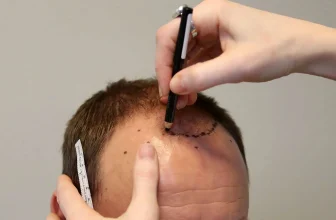
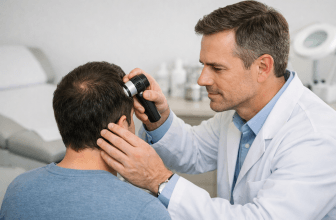
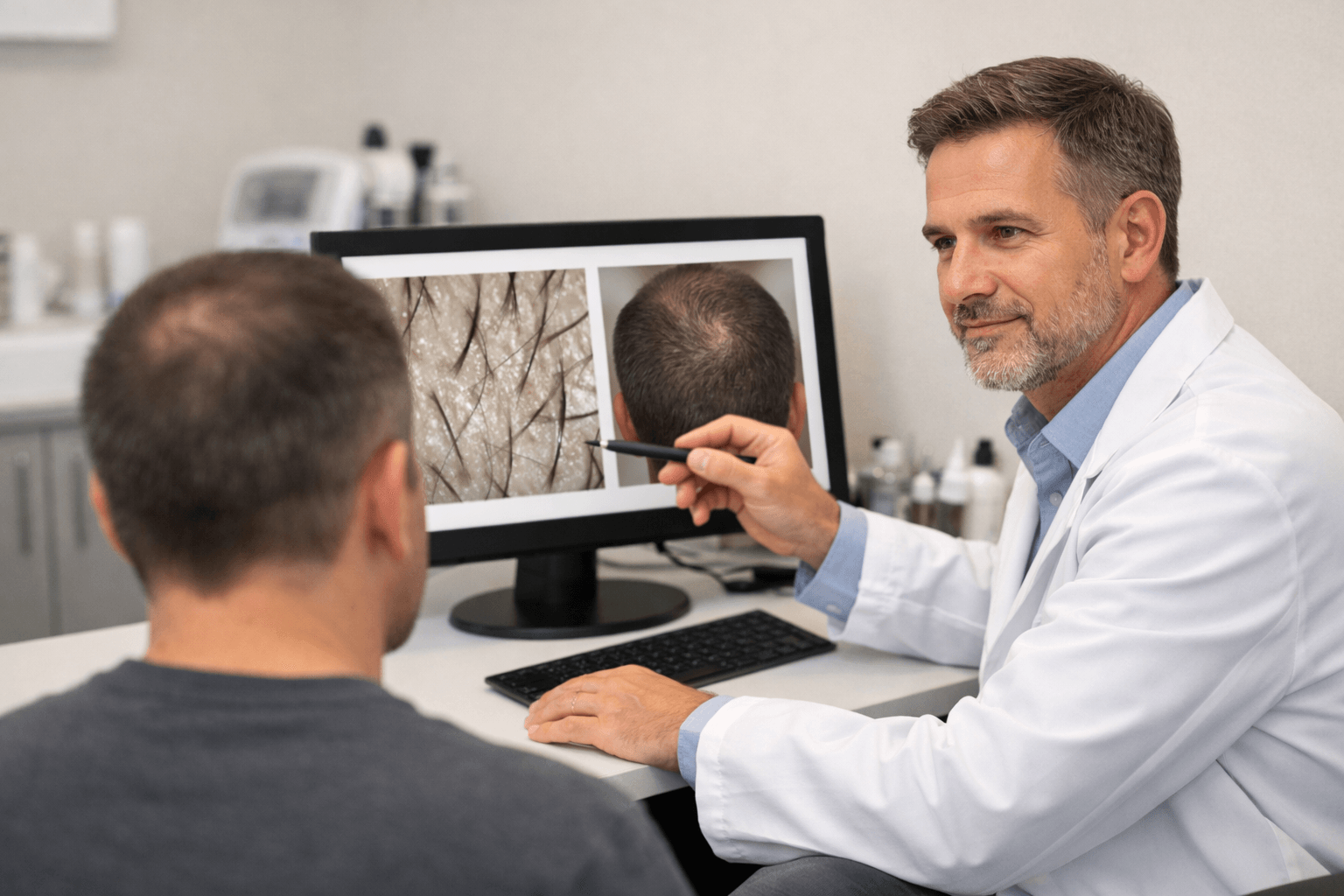
Planning begins with an in-person medical assessment. The surgeon should examine the scar’s size, shape, thickness, texture, vascularity, and relationship to the existing hairline. The donor area is also assessed to determine how many follicles may be safely removed without creating visible thinning.
Photographs and a discussion of the desired hairstyle can help with planning. Patients should explain whether they normally wear their hair short, whether the scar is usually covered, and whether they are seeking a conservative improvement or broader camouflage. These details affect donor management, placement, and expectations.
The physician may recommend treating the scar in one session or dividing the work into stages. Scar tissue may not tolerate the same graft density as healthy scalp, and a staged approach can allow the response to be evaluated before additional grafts are placed.
What happens during the procedure?
In FUE, follicular units are individually extracted from the donor area and prepared for implantation. Small recipient sites are then created in the scar or at its edges, and the grafts are inserted according to the planned direction and distribution of hair.
Scar tissue can make recipient-site preparation and implantation more technically demanding. Fibrosis and changes in skin thickness can affect the angle and depth of recipient sites, while reduced circulation may influence graft survival.
The surgeon may therefore use a more conservative density than would be possible on normal scalp. The objective is to place viable follicles safely and create a natural-looking camouflage pattern. The exact technique, number of grafts, and need for additional sessions must be individualized.
Recovery and aftercare
Aftercare for a scar transplant should follow the treating surgeon’s instructions. The newly implanted grafts need protection while the recipient area heals, and the donor area also requires care because it contains multiple extraction sites.
Patients should receive clear guidance about washing, touching, sleeping position, physical activity, and products that may be used during the early healing period. It is important not to scratch, rub, or disturb the grafts. Follow-up appointments allow the clinical team to assess healing and discuss the progress of hair growth.
Hair growth after transplantation is gradual, and the final cosmetic assessment should not be made too early. Scar tissue may require more patience and may produce less uniform growth than normal scalp. If coverage remains limited, the physician can discuss whether another session is appropriate after the area has been evaluated.
Potential risks and limitations
All surgical procedures have possible risks, and scar transplantation has additional uncertainties because the recipient tissue is abnormal. Potential concerns include poor or uneven graft growth, infection, inflammation, delayed healing, changes in scar appearance, and an unsatisfactory cosmetic result.
There may also be a mismatch between the density or direction of transplanted hair and the surrounding hair. A scar can remain visible even after treatment, particularly when it is large, irregular, depressed, raised, or a different colour from the surrounding scalp.
FUE is often described as avoiding the linear scar associated with strip harvesting, but it is not scar-free. Each extraction can leave a small round donor-site mark. These punctate scars may be difficult to notice at longer hair lengths but can become visible if the hair is cut very short or shaved.
There is no universally standardized protocol for transplanting hair into secondary scalp scars. The evidence is limited and heterogeneous, so results cannot be guaranteed. A consultation should include an honest discussion of possible graft survival, the likelihood of partial coverage, donor limitations, and whether staged treatment may be necessary.
FUE compared with other approaches for scar camouflage
FUE is one option for selected scars, but it is not automatically the best approach for every patient. The choice depends on scar size, tissue quality, donor availability, hair goals, and whether reconstruction is required first.
For extensive burn damage, reconstructive procedures may be considered before hair transplantation to improve the amount or quality of available scalp. For smaller scars, transplantation may be used directly or as part of a staged plan. In some cases, nonsurgical camouflage such as scalp micropigmentation may be discussed, particularly when the goal is to reduce colour contrast rather than add hair. These options do not replace a medical assessment and may not be suitable for every scar.
Considering treatment in Turkey
International patients considering a hair transplant in Turkey should arrange a detailed medical consultation rather than relying only on photographs or a standard package description. Scar tissue varies considerably, and an appropriate plan may require review of the original injury or surgery, previous treatments, current symptoms, and photographs showing the donor and recipient areas.
Ask the clinic who will assess the scar, whether the procedure will be performed by an appropriately qualified physician, how graft survival and possible additional sessions will be discussed, and what follow-up is available after returning home. Patients should also provide a complete medical history and report any pain, inflammation, discharge, progressive changes, or previous problems with wound healing.
Travel planning should allow time for medical evaluation and follow-up instructions. The safest decision is based on individualized suitability, not on a promised number of grafts or a guaranteed result.
Frequently asked questions
Can transplanted hair grow long term in a scalp scar?
Transplanted follicles may provide long-term hair growth if they survive and establish themselves, but growth in scar tissue is less predictable than in healthy scalp. The physician should explain the possibility of incomplete or uneven survival.
Will FUE remove the scar?
No. FUE does not remove or erase the scar. It places hair into or around the scar to reduce its visibility. The scarred skin may remain detectable, especially if it is extensive or has an irregular texture.
How many grafts are needed?
The number depends on the scar’s dimensions, the surrounding hair, the available donor supply, and the amount of density the tissue can safely support. A fixed number cannot be recommended without an examination.
Can an unstable or inflamed scar be transplanted?
Active inflammation, infection, pain, or progressive changes should be assessed before transplantation. The scar generally needs to be clinically stable, and other causes of scarring hair loss should be excluded.
Will one procedure be enough?
Some smaller scars may be treated in one session, but scar tissue may require more than one procedure for adequate coverage. Extensive burn scars may require staged reconstruction and later transplantation.
Medical References
- Hair transplantation for secondary cicatricial alopecia: A Chinese expert consensus — European Academy of Dermatology and Venereology / Journal of the European Academy of Dermatology and Venereology.
- Treatment of Postsurgical Scalp Scar Deformity Using Follicular Unit Hair Transplantation — BioMed Research International / Seoul National University College of Medicine.
- Follicular unit transplantation for the treatment of secondary cicatricial alopecia — Plastic Surgery International / PubMed.
- Hair transplantation in burn scar alopecia — Scars, Burns & Healing / PubMed Central.
- FUE Clinical Practice Guidelines — International Society of Hair Restoration Surgery.
- Complications of Hair Transplant Procedures—Causes and Management — Indian Journal of Plastic Surgery / PubMed Central.