Medical review: Estexper Medical Editorial Team
A high or uneven hairline can change the proportions of the entire face. Receding temples may make the forehead appear wider, while the loss of a natural widow’s peak can make the frontal hairline look less defined. For suitable patients, a hair transplant may selectively lower the hairline, rebuild the temples, or create and preserve a central widow’s peak.
In Short
A hairline lowering hair transplant can be performed in carefully selected patients, but a lower hairline is not automatically safer or more natural. A qualified physician should assess the cause and stability of hair loss, donor-hair availability, facial proportions, scalp characteristics, and the likelihood of future thinning before planning treatment. Conservative, individualized design helps reduce the risk of an unnatural result or using too much donor hair.
Lowering the hairline is not simply a matter of placing grafts as low as possible. The design must look natural now and remain appropriate if additional hair loss occurs later. Donor-hair availability, the cause and stability of hair loss, scalp characteristics, age, facial proportions, and long-term expectations all influence whether treatment is advisable.
This guide explains how hairline lowering works, when it may be suitable, what the procedure involves, and why conservative, individualized planning is important. A qualified physician must assess your scalp and hair-loss pattern before confirming candidacy.
What Is a Hairline Lowering Hair Transplant?
A hairline lowering hair transplant uses follicular-unit grafts taken from a suitable donor area and placed along a planned frontal hairline. The procedure can be used to address a high forehead, receding temples, an overly flat frontal outline, or loss of a previously defined widow’s peak.
Unlike a surgical forehead-reduction procedure, transplantation adds hair to the desired area. This allows the clinician to adjust the shape gradually and create a transition that resembles a natural hairline. The aim is not usually to form a perfectly straight or sharply outlined border. Natural hairlines contain subtle irregularity, variation in density, and fine hairs at the leading edge.
The frontal-temporal angle is also important. This is the transition between the central hairline and the temples. If it is placed too far forward, too sharply, or with the wrong hair direction, the result can look artificial. Temple restoration therefore requires attention to facial framing, graft placement, and the direction in which hair naturally grows.
Can a Widow’s Peak Be Created or Preserved?
In selected patients, a central widow’s peak can be incorporated into the hairline design. Some people request a subtle point in the center because it reflects their previous appearance or creates a more natural facial contour. Others may prefer a softer, less pronounced peak if the existing hairline has changed over time.
A widow’s peak should be designed in relation to the temples and the rest of the frontal hairline. A prominent central point combined with very straight or sharply angled sides may appear artificial. The clinician may instead use a modest peak, softer transition zones, and irregular placement of individual follicular units to imitate natural growth.
There is no single ideal widow’s-peak shape for every face. Head and facial proportions, the patient’s age, existing hair characteristics, donor supply, and the anticipated pattern of future loss all need to be considered. Photographs, examination, and discussion of the desired appearance are important parts of planning.
Is It Safe to Lower the Hairline?
Hair transplantation is generally considered safe when performed by an appropriately trained and licensed clinician, but safety does not mean that every proposed hairline is suitable. The main concern with an aggressively low design is that it can use a large number of donor grafts and may become incongruent with future hair loss or facial aging.
If natural hair behind the transplanted line continues to thin, a patient may be left with a permanent-looking band of transplanted hair at the front and reduced density behind it. This can create a patchy or unnatural appearance and may lead to additional surgery. A hairline that is too low may also look disproportionate later in life, even if it appears attractive immediately after treatment.
There is no universally validated measurement that defines a safe amount of hairline lowering for every patient. Numerical planning rules can be useful references, but they are not guarantees. Published recommendations are partly based on expert consensus, and the evidence for precise measurements remains limited. The safest approach is an individualized design that balances the patient’s goals with donor reserves and long-term stability.
Who May Be a Suitable Candidate?
Potential candidates may include adults with a stable or appropriately managed pattern of hair loss, sufficient donor hair, and realistic expectations about the amount of lowering or temple restoration that can be achieved. The desired hairline should be compatible with the patient’s facial proportions and likely future hair pattern.
A consultation should address several factors:
- Diagnosis: The cause of hair loss must be identified. Pattern hair loss, temporary shedding, inflammatory disease, and scarring alopecia do not have the same treatment considerations.
- Hair-loss stability: Progressive androgenetic alopecia may continue after transplantation. Medical management may be recommended where appropriate.
- Donor supply: The clinician should assess the density, quality, and long-term reliability of donor hair before estimating what can be safely transplanted.
- Hair characteristics: Hair caliber, texture, curl, color contrast, and natural growth direction affect the visual result.
- Facial proportions: The design should frame the face naturally rather than follow a fixed measurement.
- Expectations: Patients should understand that the procedure can improve framing and density but cannot create unlimited hair or guarantee a specific appearance.
Active scarring alopecia and some inflammatory or autoimmune causes of hair loss require diagnostic evaluation and control before transplantation. In some cases, transplantation may remain a poor option. A physician should determine whether the condition is suitable for surgery.
Why Conservative Design Matters
Conservative design does not necessarily mean avoiding treatment. It means creating a hairline that uses donor hair responsibly and is likely to remain natural as the patient ages. A conservative hairline may include a slightly irregular transition zone, carefully restored temples, and a central point that is visible without appearing sharply drawn.
The first few rows are often planned with finer follicular units to create a gradual transition from forehead skin to denser hair. Behind this transition, density can be adjusted according to available grafts and the surrounding hair. The objective is to avoid a solid, uniform border that resembles a line rather than naturally growing hair.
Temporal recession also needs careful consideration. Restoring the temples too aggressively can blunt the natural frontal-temporal angle or make the hairline project unnaturally forward. In contrast, leaving excessive recession may not address the patient’s concern. The design must balance facial framing with the amount of donor hair available.
How Is the Procedure Planned and Performed?
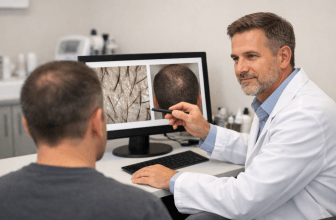
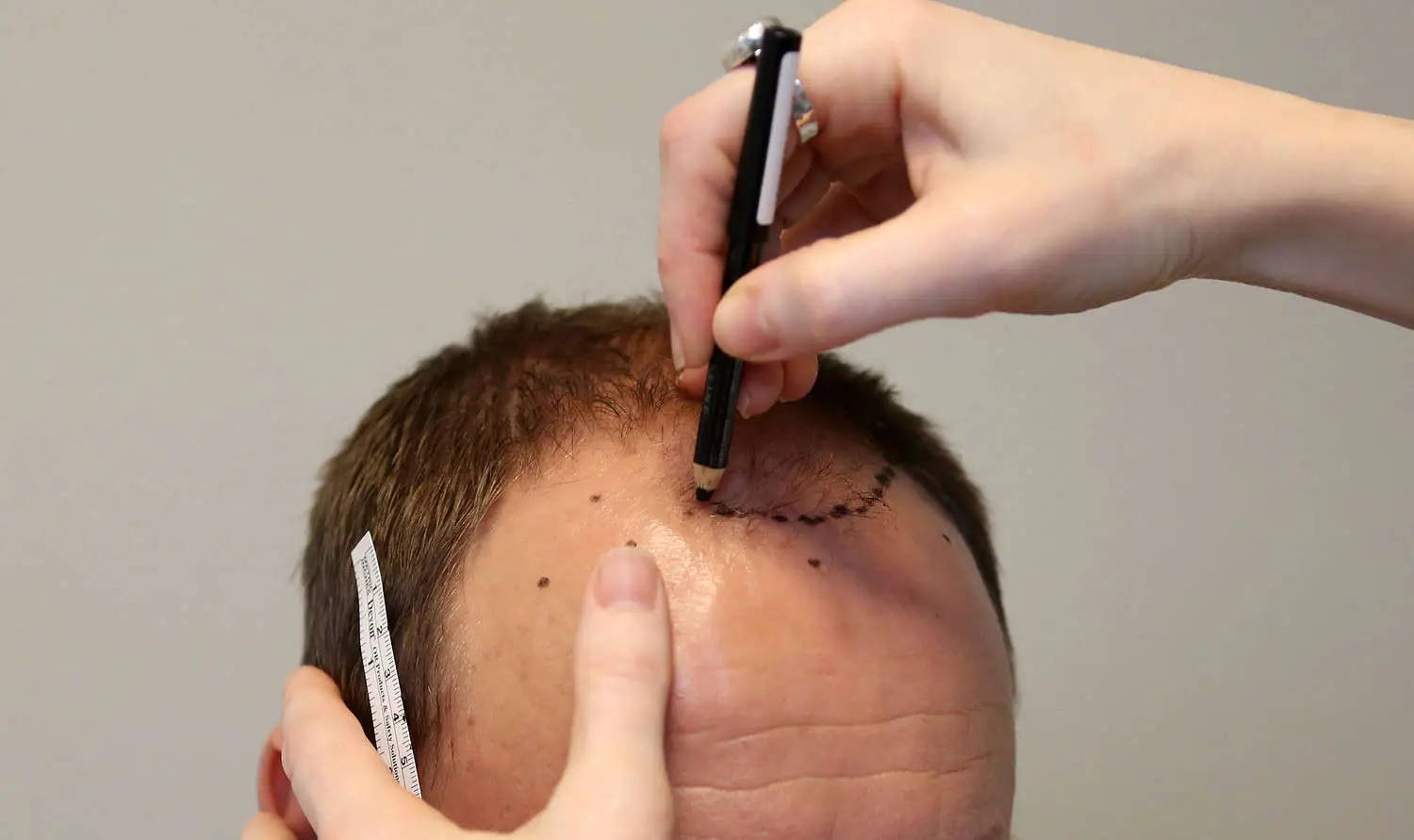
Planning begins with a medical consultation and examination of the scalp. The clinician should review the history of hair loss, previous procedures, medical conditions, medications, and relevant family patterns. The donor area and recipient areas are assessed, and the proposed hairline may be discussed using photographs or markings.
The planned design may include the central hairline, widow’s peak, transition zone, temporal points, and frontal-temporal angles. Hair direction is mapped so that grafts follow the surrounding growth pattern. Appropriate follicular-unit grafts are selected for different zones, with finer units generally useful near the leading edge.
During transplantation, grafts are harvested from a suitable donor area and inserted into the recipient sites. The exact technique and sequence depend on the patient’s anatomy, graft characteristics, and the clinician’s assessment. Correct angulation and direction are essential. Grafts placed too vertically, too densely, or in an inconsistent pattern may produce an unnatural appearance even when hair growth occurs.
The procedure should be performed in an appropriate clinical setting by a qualified medical team. Patients considering treatment in Turkey or another country should verify the responsible physician’s credentials, the clinic’s licensing and standards, who performs each stage of the operation, and how follow-up care will be provided after returning home.
Preparation Before Hairline Lowering
Preparation depends on the diagnosis and the planned procedure. The physician may recommend addressing active or progressive hair loss before surgery. Medical management can be important in androgenetic alopecia because transplanted hair does not prevent the patient’s existing non-transplanted hair from thinning.
Patients should provide accurate medical information and disclose previous scalp procedures, inflammatory conditions, allergies, medications, and any history of abnormal scarring. They should also discuss their preferred hairline shape and whether preserving a widow’s peak is important to them.
International patients should plan enough time for consultation, treatment, and early follow-up according to the clinic’s guidance. They should receive written information about postoperative care, warning signs, communication after returning home, and what to do if concerns develop.
Recovery and Aftercare
Recovery instructions vary according to the technique and the individual patient. The clinic should explain how to care for the recipient and donor areas, when washing can begin, and which activities should be avoided during the early healing period. Patients should follow the treating team’s instructions rather than relying on general online advice.
It is normal for the appearance of the transplanted area to change during healing. The final visual assessment should not be based on the immediate postoperative appearance. Hair growth and maturation take time, and the result may develop gradually. The clinic should provide an individualized follow-up plan and explain when progress can be assessed.
Ongoing monitoring is particularly important for patients with progressive pattern hair loss. The transplanted hairline may remain in place while surrounding native hair changes. Continued medical review can help identify future thinning and guide decisions about long-term management.
Possible Risks and Limitations
As with any surgical procedure, hair transplantation has potential risks. These may include infection, bleeding, scarring, unpredictable healing, poor graft growth, graft loss, and dissatisfaction with the result. Some patients may require revision surgery, especially if hair loss progresses or the original design does not remain harmonious.
Technical problems can also affect appearance. Incorrect hair direction or angulation may make the grafts look unnatural. Excessive density, a sharply demarcated border, blunted temporal angles, or an overly low hairline can be difficult to correct. Donor hair is limited, so poorly planned graft use may reduce options for future treatment.
Patients should also understand that transplantation does not guarantee a specific density or hairline shape. The result depends on biological growth, donor quality, scalp characteristics, surgical planning, and future hair loss. A qualified physician should explain the expected benefits, limitations, and alternatives for the individual patient.
Hairline Lowering Compared With Maintaining the Existing Hairline
Some patients may benefit from restoring only the temples or reinforcing the existing frontal hairline rather than lowering it substantially. This approach may require fewer grafts and preserve more donor hair for possible future needs. It can also reduce the risk of creating a low frontal border that becomes disproportionate over time.
Other patients may have a genuinely high hairline and enough donor supply to support a modest lowering procedure. The appropriate option depends on the diagnosis, facial proportions, hair-loss stability, and priorities discussed during consultation. A staged or limited design may sometimes be more responsible than attempting a dramatic change in one session.
The decision should be based on long-term planning rather than on the lowest possible hairline. A natural, stable frame is usually more important than achieving an exact measurement or copying another person’s hairline.
Questions to Ask During a Consultation
- What is the confirmed cause of my hair loss?
- Is my hair loss stable, or could it continue behind the transplanted hairline?
- How much lowering or temple restoration is realistic with my donor supply?
- Can a widow’s peak be created or preserved naturally?
- How will the frontal-temporal angles and hair direction be designed?
- What are the risks of using more grafts for a lower hairline?
- Who will perform the medical assessment, graft harvesting, and placement?
- What follow-up will be available if I travel internationally for treatment?
Conclusion: Can the Hairline Be Lowered Safely?
A hair transplant can selectively lower or reshape the frontal hairline, restore receding temples, and create or preserve a widow’s peak in carefully selected patients. Safety depends less on achieving the lowest possible position and more on accurate diagnosis, conservative design, appropriate graft placement, adequate donor reserves, and planning for future hair loss.
Patients with progressive androgenetic alopecia may need ongoing medical management, while active scarring or inflammatory alopecias require proper evaluation before transplantation. Because there is no universal measurement for safe hairline lowering, an individualized consultation with a qualified physician is essential.
For international patients considering treatment in Turkey, reviewing the clinic’s medical credentials, treatment responsibilities, aftercare arrangements, and long-term plan is an important part of informed decision-making.
Medical References
- Hair Transplant: Patient Candidacy, Medical Optimization, and Surgical Considerations — International Society of Dermatology; PubMed.
- Hair Transplant Practice Guidelines — Journal of Cutaneous and Aesthetic Surgery.
- Complications in Hair Transplantation — International Journal of Trichology; PubMed Central.
- Hairline Design and Frontal Hairline Restoration — Facial Plastic Surgery Clinics of North America; PubMed.
- Hair Transplant Risks and Safety — American Society of Plastic Surgeons.