Written by: Estexper Medical Editorial Team
Medically reviewed by: Dt. Sibel Gokceer
When several missing teeth are replaced with an implant-supported full-arch prosthesis, the choice of material can affect appearance, comfort, maintenance, durability and cost. Two commonly discussed options are metal-acrylic and metal-zirconia restorations.
In Short
Zirconia may offer less prosthetic wear and may have fewer complications in some comparative studies, but it is usually more expensive initially and is not automatically the best option for every patient. Acrylic remains an established option that may be more practical when initial cost, repairability or adjustability is important. The appropriate material and design should be determined after a qualified dental assessment of the bite, implants, oral tissues and maintenance needs.
Current research does not identify one universally superior material for every patient. Zirconia may offer lower prosthetic wear and potentially fewer biological or technical complications, while acrylic remains an established, clinically acceptable option that can be more affordable and easier to adjust or repair.
The most suitable choice depends on factors such as your oral condition, implant design, bite forces, aesthetic expectations, budget, ability to attend follow-up appointments and the type of prosthesis recommended by your qualified dental team.
What Are Full-Arch Implant Teeth?
A full-arch implant prosthesis replaces most or all of the teeth in one dental arch. It is supported by dental implants and may be fixed in place rather than removed by the patient, depending on the treatment plan and design.
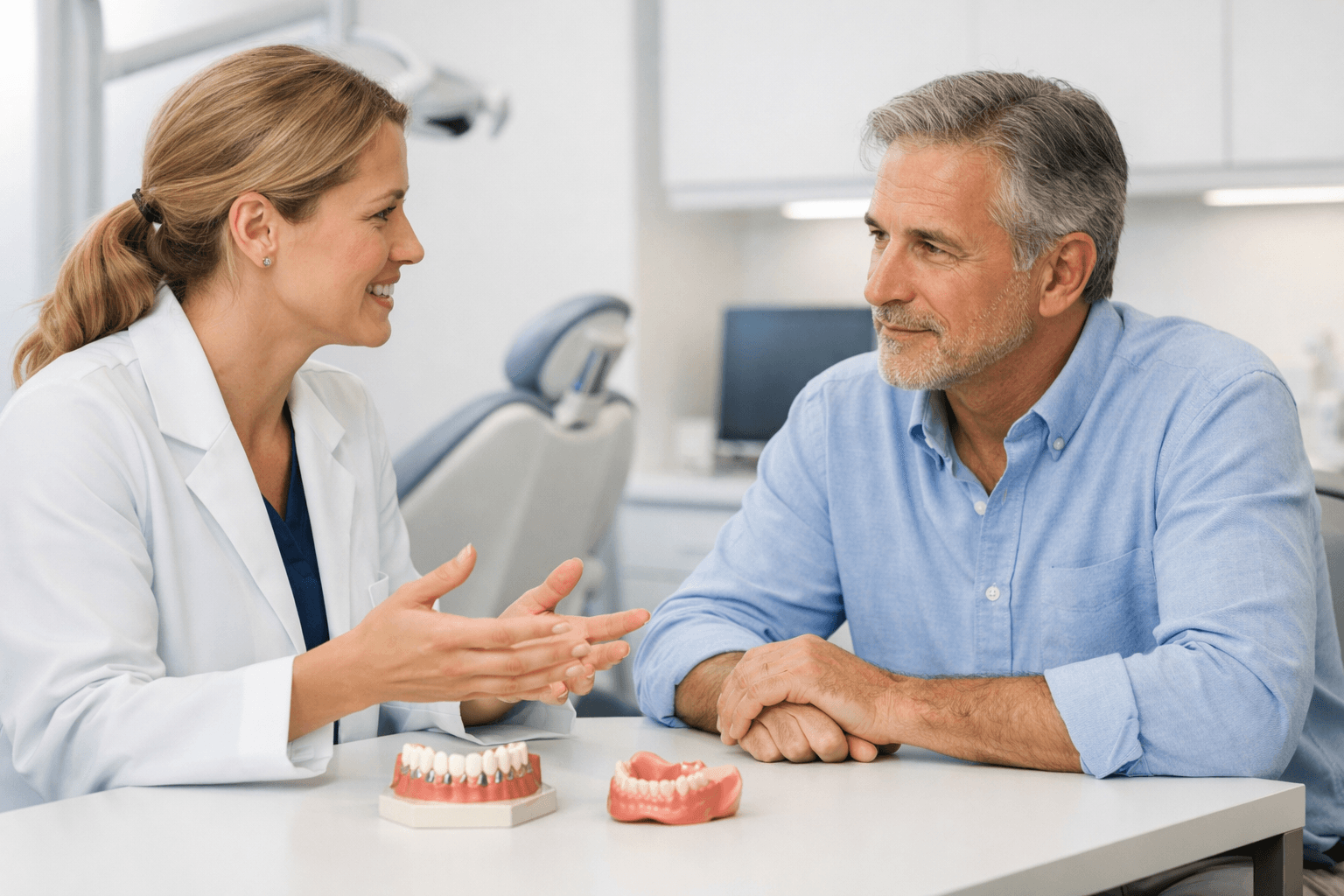
The visible teeth and supporting framework can be manufactured from different materials. In a conventional metal-acrylic restoration, acrylic teeth and gingival-colored acrylic are attached to a metal framework. In a metal-zirconia restoration, a zirconia-based prosthesis provides the tooth and supporting structure, sometimes with additional porcelain layering for aesthetic effects.
Material selection is not separate from the rest of treatment. Implant position, framework design, bite alignment, prosthesis thickness, cleaning access and the quality of laboratory work can all influence the long-term result.
Zirconia vs Acrylic Full-Arch Implants: Quick Comparison
| Factor | Zirconia full-arch prosthesis | Metal-acrylic full-arch prosthesis |
|---|---|---|
| Wear | Generally associated with less prosthetic wear in current comparative evidence | May show more prosthetic wear over time |
| Technical complications | Monolithic or minimally veneered designs may reduce chipping compared with extensively veneered designs | Established option, with repairs or adjustments often considered more straightforward |
| Biological outcomes | Some comparative evidence suggests a lower peri-implantitis risk, although study limitations remain | Clinically acceptable, but comparative studies have reported more biological complications in some groups |
| Cost | Usually requires a higher initial fabrication investment; the amount varies by case and provider | Often selected when controlling initial treatment cost is important |
| Adjustability and repair | Can be less convenient to modify after fabrication, depending on design | Often considered more adjustable and repairable |
| Evidence | Promising, but long-term randomized comparative evidence remains limited | Long-established and clinically accepted, although it may require maintenance |
Potential Advantages of Zirconia Full-Arch Teeth
Lower prosthetic wear
The most recent direct comparative systematic review and meta-analysis found significantly less prosthetic wear with metal-zirconia full-arch prostheses than with metal-acrylic prostheses. Lower wear may be relevant for patients concerned about the gradual alteration of tooth anatomy or the need for prosthetic maintenance.
However, lower wear does not mean that a zirconia restoration is maintenance-free. The long-term result still depends on the accuracy of the prosthesis, bite management, oral hygiene and regular professional reviews.
Possible reduction in some complications
In the same comparative review, metal-zirconia restorations were associated with a lower risk of peri-implantitis and less marginal bone loss than metal-acrylic restorations. These findings are important, but they should be interpreted carefully because the included studies were comparative non-randomized studies. Differences between patient groups, implant systems, cleaning routines and treatment protocols may have influenced the results.
The review did not find significant differences in implant survival, framework fracture, aesthetics or speech outcomes. This means zirconia should be viewed as a potentially advantageous option in selected situations, not as an automatic replacement for acrylic.
Structural rigidity and appearance
Zirconia is a rigid ceramic material that can support a solid, tooth-colored design. Some patients prefer its appearance and surface characteristics. The final aesthetic result, however, is influenced by more than the material alone. Tooth arrangement, gum-colored areas, facial proportions, lip support and laboratory customization are also important.
Potential Advantages of Acrylic Full-Arch Teeth
Lower initial cost in many cases
Acrylic restorations are often considered when initial treatment cost is a major factor. In one long-term retrospective comparison, the zirconia restoration cost approximately $7,829 more per arch than the metal-acrylic alternative. This figure came from that particular study and should not be treated as a universal price. Treatment costs in Turkey and other countries vary according to the clinical plan, implant system, laboratory, design and included services.
Repairability and adjustability
Acrylic can be a practical material when the dental team expects that adjustments, repairs or changes may be needed. The ease of repair depends on the type of damage and the prosthesis design, but acrylic is commonly valued for being relatively convenient to modify compared with some ceramic constructions.
This may be particularly relevant for patients whose bite is still being evaluated, who have complex functional requirements or who want a more economical long-term prosthetic option. A qualified clinician must determine whether the design is suitable for the individual case.
A well-established conventional option
Metal-acrylic full-arch prostheses remain clinically acceptable and widely used. Choosing acrylic does not mean choosing an inadequate treatment. It may be a reasonable decision when cost, adjustability and repair considerations are more important than minimizing prosthetic wear.
What Does the Research Say About Zirconia Designs?
Not all zirconia restorations are the same. A key distinction is whether the zirconia is monolithic or heavily covered with veneering porcelain.
Systematic-review evidence indicates that zirconia full-arch prostheses can have high short-term survival, but extensively veneered designs may experience clinically important porcelain chipping or fracture. More recent evidence suggests that monolithic zirconia, or zirconia with veneering limited to nonfunctional or gingival areas, may have fewer technical complications than fully veneered zirconia.
Monolithic does not mean risk-free. Technical complications remain possible, and the available evidence has limitations involving follow-up duration, study design and evidence certainty. Your dentist should explain which zirconia configuration is being proposed and why it suits your bite, aesthetic goals and implant arrangement.
Who May Be a Candidate for Each Material?
Material selection should be personalized rather than based only on age, destination or preference. Zirconia may be considered when reduced wear and structural rigidity are priorities and the proposed design is appropriate for the patient. It may also appeal to patients who prefer a predominantly ceramic appearance and are prepared for a higher initial fabrication cost.
Metal-acrylic may be considered when affordability, adjustability or repairability is especially important. It can also be appropriate when the dental team believes that a conventional, serviceable design is the best match for the patient’s functional and maintenance needs.
Suitability depends on a clinical assessment that may include the condition of the gums and remaining teeth, implant position and stability, bite forces, available space, aesthetic expectations and cleaning ability. A qualified dentist or oral rehabilitation team must make the final recommendation.
Questions to Discuss Before Treatment
Patients considering treatment in Turkey or another country should request a clear, written treatment plan before agreeing to care. Useful questions include:
- Is the proposed restoration metal-acrylic, monolithic zirconia or veneered zirconia?
- Why is this material suitable for my implant positions, bite and aesthetic goals?
- Which parts of the prosthesis can be repaired or adjusted if needed?
- What complications are included in the quoted treatment plan, and what may require an additional fee?
- What follow-up and maintenance appointments are recommended after returning home?
- What happens if the prosthesis chips, fractures, loosens or requires adjustment?
- Are laboratory, temporary and final prostheses clearly identified in the plan?
International patients should also confirm the qualifications of the treating clinicians, the implant and prosthesis brands, the proposed timeline and how records will be shared with a dentist at home if follow-up is needed.
Preparation, Treatment and Recovery Considerations
Before a full-arch implant prosthesis is made, the dental team evaluates the mouth, implants, bite and desired appearance. Digital scans, photographs or other records may be used to plan the restoration. The final material and design should be selected before fabrication, although the precise workflow varies by case.
During treatment, the prosthesis must be designed to fit the implant framework accurately and provide appropriate tooth contacts. The laboratory and clinical team should coordinate the framework, tooth position, bite and cleaning access. These factors can affect comfort and maintenance regardless of whether zirconia or acrylic is chosen.
After delivery, patients may need time to adapt to the new teeth. Speech, chewing comfort and bite contacts should be reviewed by the treating team. Because individual healing and prosthetic schedules vary, a dentist should provide personalized instructions rather than relying on a standard recovery timetable.
Risks and Maintenance
Both zirconia and acrylic full-arch prostheses can develop biological or technical complications. These may include prosthetic wear, chipping, fracture, loosening, difficulty cleaning, gum inflammation or problems around implants. The comparative evidence does not show that one material eliminates these risks.
Extensively veneered zirconia has a particular concern related to porcelain chipping or fracture. Acrylic may experience more prosthetic wear, and repairs or replacement may eventually be required. In a long-term retrospective study, zirconia showed higher five-year prosthetic survival than metal-acrylic, but no difference was observed in peri-implantitis or implant failure. The study design means the findings cannot prove that zirconia alone caused the difference.
Good daily cleaning and professional maintenance are important for either material. Patients should follow the instructions provided by their dentist and attend recommended reviews. Contact the dental team if the prosthesis feels loose, the bite changes, cleaning becomes difficult, or pain, swelling or bleeding develops around an implant.
So, Which Material Is Better?
Zirconia may be the better choice when the main priorities are lower prosthetic wear, structural rigidity and the potential for fewer complications in some comparative studies. Monolithic or minimally veneered zirconia may be preferable to extensively veneered designs when reducing porcelain chipping is a priority.
Acrylic may be the better choice when initial cost, adjustability and repairability are more important. It remains an established and clinically acceptable option, and selecting acrylic does not automatically mean accepting an inferior result.
The most accurate answer is conditional: the better material is the one that fits the patient’s clinical situation, functional demands, aesthetic expectations, maintenance capacity and budget. Current evidence is encouraging for zirconia, but long-term randomized comparisons remain limited, and no material guarantees a complication-free outcome.
Frequently Asked Questions
Does zirconia last longer than acrylic?
Some comparative evidence suggests higher prosthetic survival for zirconia in a long-term retrospective study, while other outcomes were similar. Zirconia may also show less wear. However, survival depends on many factors, and current research does not establish a guaranteed lifespan for either material.
Is zirconia always more expensive?
Zirconia often requires a higher initial fabrication investment. One study reported an approximately $7,829 higher cost per arch, but prices vary substantially between cases, laboratories, countries and treatment providers.
Can zirconia full-arch teeth chip?
Yes. Chipping or fracture can occur, particularly in extensively porcelain-veneered zirconia designs. Monolithic and minimally veneered configurations may have fewer technical complications, but they are not risk-free.
Is acrylic a poor choice for full-arch implants?
No. Acrylic remains a clinically acceptable and established option. It may be especially reasonable when affordability, repairability or adjustability are important.
Can I choose the material without an examination?
No. A qualified dentist must assess your implants, bite, oral tissues, aesthetic requirements and ability to maintain the prosthesis before recommending a material and design.
Medical References
- Prosthetic and Biological Complications of Metal-Zirconia versus Metal-Acrylic Implant-Supported Screw-Retained Complete-Arch Prostheses: A Systematic Review and Meta-Analysis. Journal of Clinical and Experimental Dentistry; PubMed Central.
- Long-term Clinical Outcomes and Cost-Effectiveness of Full-Arch Implant-Supported Zirconia-Based and Metal-Acrylic Fixed Dental Prostheses: A Retrospective Analysis. International Journal of Oral & Maxillofacial Implants; PubMed.
- Clinical Outcomes of Full Arch Fixed Implant-Supported Zirconia Prostheses: A Systematic Review. European Journal of Oral Implantology; PubMed.
- Clinical Outcomes of Partial and Full-Arch All-Ceramic Implant-Supported Fixed Dental Prostheses: A Systematic Review and Meta-Analysis. Clinical Oral Implants Research; PubMed.
- Are Monolithic Zirconia Complete Arch Implant-Supported Prostheses Reliable? A Systematic Review and Meta-Analysis. Journal of Prosthetic Dentistry; PubMed.
This article is for general education and does not replace an examination or individualized advice from a qualified dental professional.