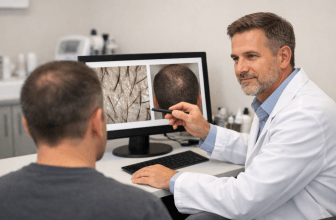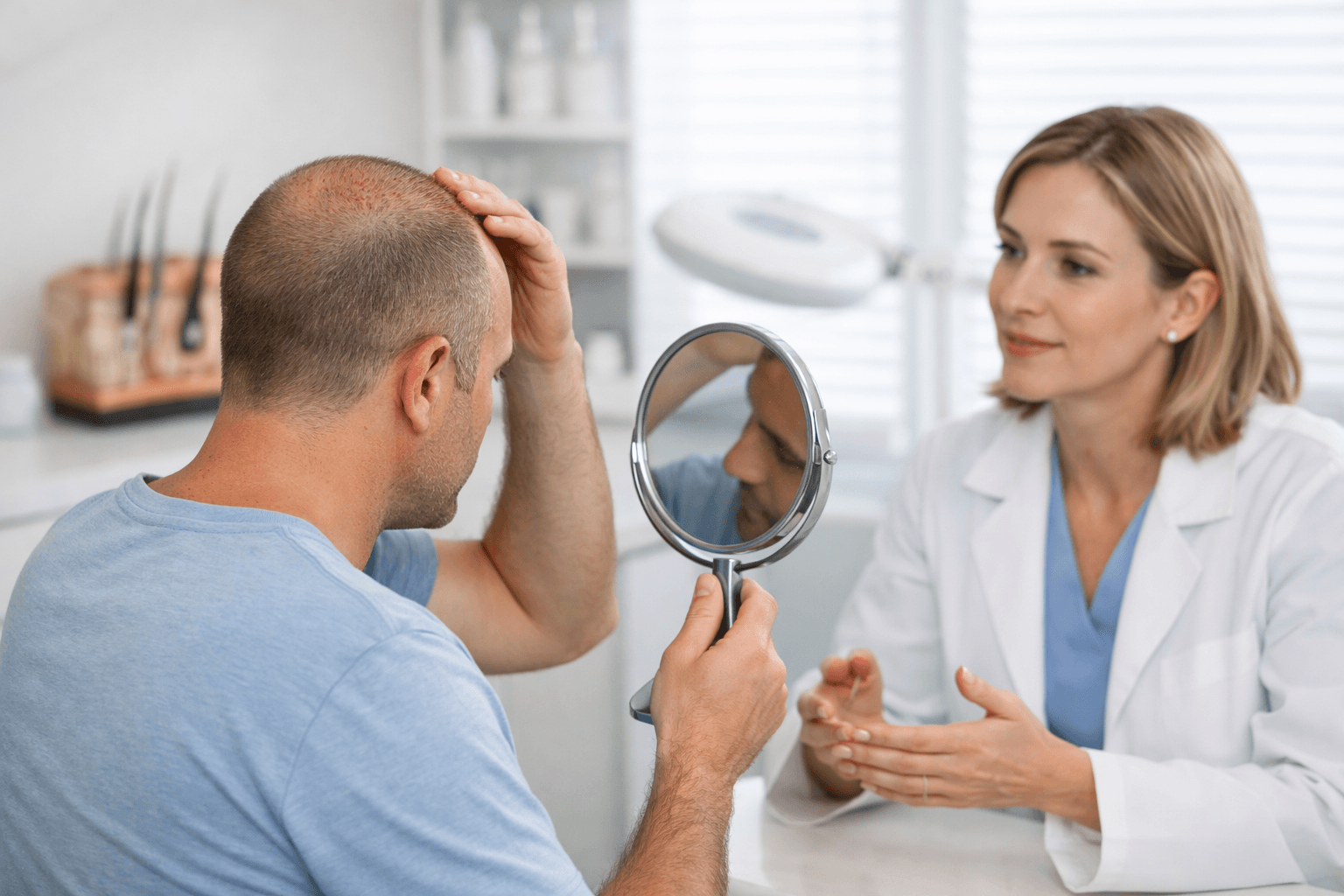
Small pimples, crusts and itching after a hair transplant can be worrying, especially when you are carefully watching the newly implanted area. In many patients, these symptoms are part of the healing process. However, similar-looking changes can also occur with folliculitis, contact irritation or infection, so symptoms should be assessed in context rather than judged by appearance alone.
This guide explains what may be normal after hair transplantation, what can increase the risk of postoperative folliculitis, and which symptoms should prompt contact with your transplant surgeon. It is general information and does not replace an examination. Your operating clinician or another qualified physician should determine whether a symptom requires treatment.
Why Do Pimples, Crusting and Itching Occur After a Hair Transplant?
Hair transplantation involves creating recipient sites and placing grafts into the scalp. The skin then has to repair itself around the transplanted follicles. During this process, several temporary reactions may occur:
- Crusting: Small scabs or crusts may form from dried blood, wound fluid and surface skin cells around the recipient sites.
- Itching: Itching may be associated with crust formation, scalp dryness and epithelial healing. It can also be triggered by inflammation or sensitivity to a topical product.
- Small pimples or pustules: These may reflect sterile folliculitis, an ingrown hair, a foreign-body reaction or local inflammation. They do not automatically mean that the scalp is infected.
- Redness: Mild redness around treated areas may occur after the procedure, although worsening or spreading redness is more concerning.
A scoping review of complications in modern hair transplantation reported recipient-site crusting in up to 54.8% of cases and sterile folliculitis in up to 53.3%. These figures should not be interpreted as a universal prediction for every patient. The review noted that published rates are difficult to compare because researchers use different definitions and follow-up methods.
What Is Usually Considered Part of Healing?
Mild itching
Mild, manageable itching is commonly associated with scalp healing. Crusts can make the skin feel tight or irritated, and dryness may add to the sensation. Itching often improves as the scalp heals, but there is no single recovery timeline that applies to every patient.
Try not to scratch, pick or scrape the recipient area. Scratching can traumatise healing skin and may introduce bacteria from the hands or fingernails. Follow the washing and product-use instructions provided by your clinic rather than adding products without approval.
Small, localised crusts
Crusting around the grafts can be an expected early finding. The appearance and duration may vary according to the technique used, the number of grafts, individual healing, postoperative care and the instructions provided by the surgical team.
Crusts should not be forcibly removed unless your clinician has specifically instructed you how to do so. Aggressive rubbing, picking or pressure may irritate the scalp. During washing, use only the method recommended by the transplant team.
A few small bumps
One or several small bumps may occur as the follicles settle and the skin heals. Some are described as sterile folliculitis, meaning inflammation around a follicle without confirmed bacterial infection. Ingrown hairs and foreign-body inflammation can also resemble pimples.
The important question is not simply whether a bump is present, but whether it is becoming more painful, increasingly red, warm, swollen or filled with cloudy or purulent drainage. A clinician may need to examine the area to distinguish normal inflammation from an infection or another complication.
When Could Pimples Indicate Folliculitis?
Folliculitis means inflammation involving the hair follicles. After transplantation, it may be related to healing inflammation, ingrown hairs, occlusion, surgical technique, a foreign-body reaction or bacterial infection. Because the causes differ, treatment cannot be chosen reliably from a photograph or a general online description.
Sterile folliculitis may present as small red bumps or pustules without the broader features of infection. Bacterial folliculitis may be more concerning when lesions are increasingly painful, warm, surrounded by spreading redness or associated with pus and systemic symptoms. Even then, visual appearance alone cannot confirm the cause.
A multicenter retrospective study involving 1,317 hair-transplant patients reported associations between postoperative folliculitis and factors including larger procedures, higher graft density, surgery during summer and delayed first nursing. Younger age and pre-existing acne have also been reported as possible risk factors in other research. These are associations, not a guarantee that a particular patient will develop folliculitis.
Warning Signs That Need Medical Review
Contact your transplant surgeon or a qualified clinician promptly if you notice symptoms that are worsening, intense or spreading. Important warning signs include:
- Increasing redness, pain or tenderness rather than gradual improvement
- Scalp warmth or worsening swelling
- Cloudy, thick or purulent drainage
- Foul odour from the treated area
- Many painful pimples or pustules, especially if they are spreading
- Fever, chills or feeling generally unwell
- Persistent or intense itching that interferes with sleep or daily activities
- A widespread rash or strong irritation after using a new shampoo, lotion or other product
- Skin changes that concern you or do not appear to be settling according to your clinician’s instructions
These signs do not prove that an infection is present, but they should not be ignored. Surgical-site infections can require timely evaluation, and persistent inflammation may affect healing. Do not wait for a routine follow-up if symptoms are rapidly worsening or you feel systemically unwell.
What Treatment Might Be Needed?
Management depends on the cause, severity and appearance of the scalp. A clinician may recommend observation and tailored wound care when symptoms are mild and consistent with normal healing. Other cases may require a specific topical or oral treatment prescribed after assessment.
For example, a clinician may need to distinguish among sterile folliculitis, bacterial folliculitis, contact dermatitis, an ingrown hair and a more significant surgical-site infection. These conditions can look similar but do not necessarily require the same approach. Antibiotics should not be started automatically or shared from a previous prescription. They should be used only when a qualified clinician considers them appropriate.
Do not squeeze or pop pimples, apply harsh antiseptics, use exfoliating products or begin medicated creams without checking with the operating clinic or another qualified physician. Unapproved products may irritate healing skin, cause contact dermatitis or interfere with the postoperative plan.
Safe Aftercare While You Are Monitoring Symptoms
Aftercare should follow the written instructions from the clinic that performed your transplant. General precautions may include:
- Wash your hands before touching the scalp.
- Clean the scalp only as instructed by your clinic.
- Avoid picking crusts or scratching itchy areas.
- Use only products that your clinic has approved during early healing.
- Avoid activities or environmental exposures that your surgeon has advised you to limit during early healing.
- Take photographs in consistent lighting if your clinic asks you to monitor changes.
- Contact the clinic if symptoms are worsening rather than relying only on self-care.
Aftercare advice may differ according to the procedure, graft number, scalp condition and the surgeon’s technique. For international patients travelling to Turkey, ask for clear written instructions before returning home and confirm how to contact the medical team after travel. If you develop concerning symptoms after returning to your country, seek local medical care while also informing the transplant clinic.
How Can Patients Prepare Before a Hair Transplant?
Before surgery, discuss your medical history, current medicines, allergies, scalp conditions and previous reactions to topical products with the qualified physician assessing you. Tell the clinic if you have active acne, recurrent folliculitis or other scalp symptoms. Individual suitability for hair transplantation, the number of grafts and the treatment plan must be determined by a physician after an appropriate assessment.
Ask the clinic how it defines normal healing, when it expects the first follow-up and which symptoms require urgent contact. You should also understand the washing routine, restrictions, approved products and arrangements for postoperative communication. This preparation is particularly important for patients travelling internationally, because follow-up may take place remotely or with a local clinician if symptoms arise after returning home.
Does Itching Always Mean Infection?
No. Mild itching is often associated with crust formation, dryness and normal epithelial healing. Itching alone does not establish that an infection is present.
However, persistent or intense itching may have other causes, including folliculitis, contact dermatitis or an inflammatory reaction to a topical product. It becomes more concerning when it occurs with worsening redness, warmth, pain, swelling, drainage, foul odour or fever. A clinical review can help identify whether the symptom is expected healing or needs treatment.
Does Every Pimple Need Antibiotics?
No. A pimple after a hair transplant may be sterile folliculitis, an ingrown hair or another inflammatory reaction rather than a bacterial infection. Antibiotics are not automatically appropriate and should not be recommended without clinical assessment.
If a clinician suspects infection, they can decide whether treatment is needed and which approach is suitable. If the bumps are mild and not worsening, the clinic may instead recommend observation and specific wound-care measures. The evidence does not support one universal treatment plan for every case.
When Should You Contact Estexper Clinic?
Contact Estexper Clinic or the surgeon responsible for your procedure if you are unsure whether your symptoms are within the expected healing process. Send clear photographs only through the clinic’s approved communication channel and describe when the symptoms started, whether they are spreading, and whether you have pain, drainage or fever.
Seek urgent medical attention if you have rapidly worsening swelling, severe pain, spreading redness, significant drainage, fever, chills or a marked feeling of illness. If you are abroad, do not delay local medical assessment while waiting for a reply from the transplant clinic.
Key Takeaways
- Mild itching, limited redness and crusting are common early healing findings after hair transplantation.
- Small pimples may be sterile folliculitis, ingrown hairs or inflammation and do not automatically indicate infection.
- Increasing pain, warmth, redness, swelling, pus, foul odour, fever or systemic illness needs prompt medical review.
- Do not squeeze lesions or begin antibiotics and other medicated products without professional advice.
- Individual assessment is important because published complication rates and treatment protocols vary.
Medical References
- A Scoping Review on Complications in Modern Hair Transplantation: More than Just Splitting Hairs — Plastic and Reconstructive Surgery; PubMed.
- Complications in follicular unit excision hair transplantation: current evidence and practical approaches — PMC / peer-reviewed medical literature.
- Characterization and Risk Factors of Folliculitis after Hair Transplantation: A Multicenter Retrospective Study — Plastic and Reconstructive Surgery; PubMed.
- Complications of Hair Transplant Procedures-Causes and Management — Indian Journal of Plastic Surgery; PMC.
- Hair transplant — NHS.
- Surgical Site Infection Basics — Centers for Disease Control and Prevention.