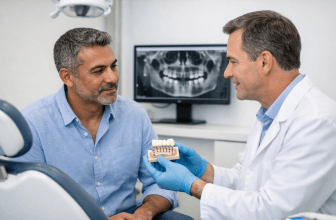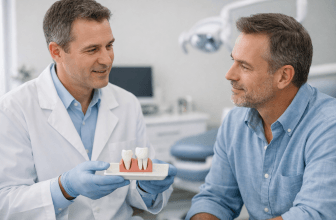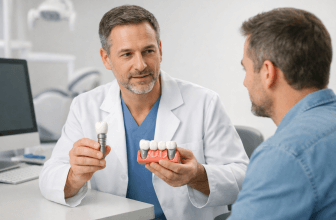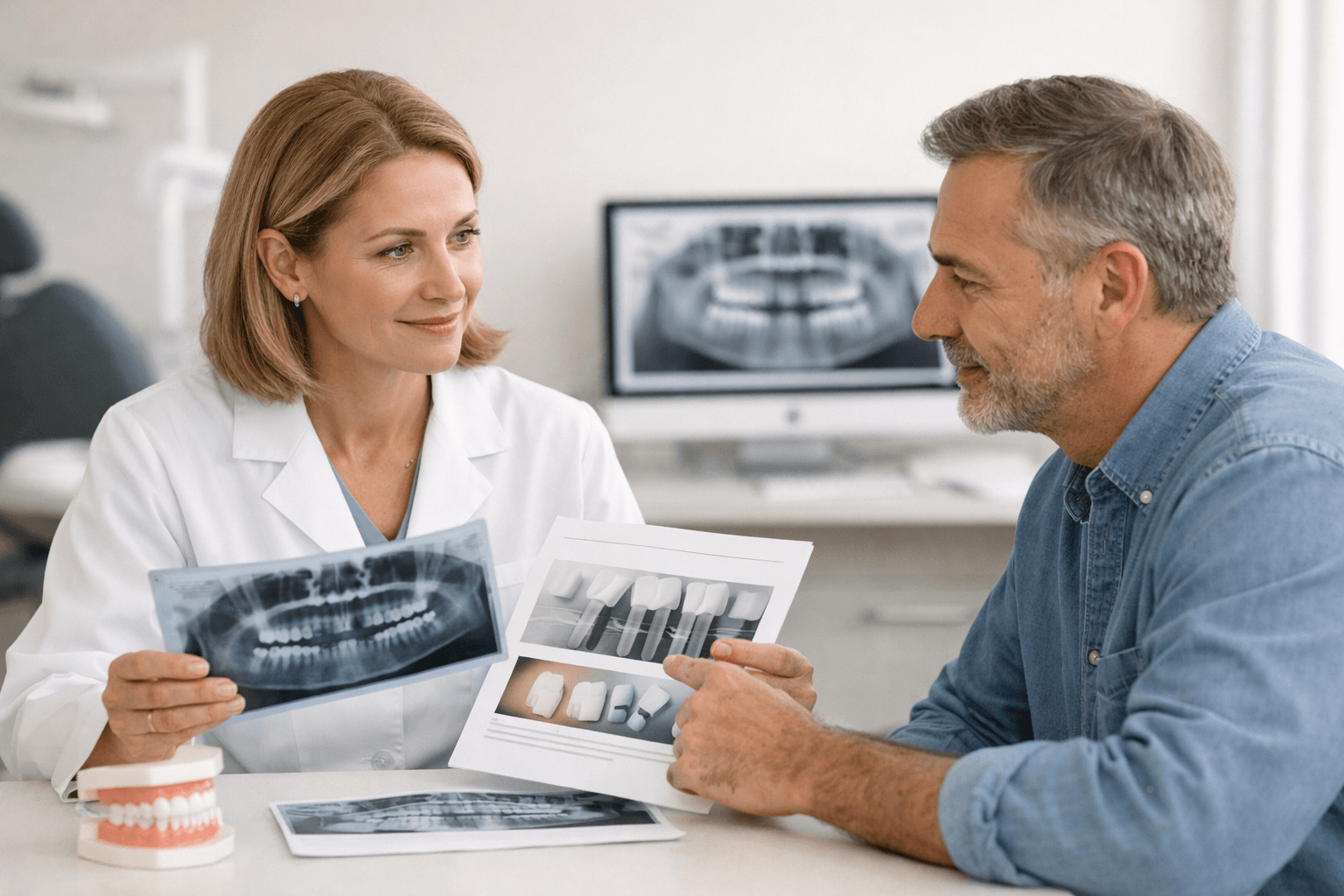
Many people travel to Turkey for crowns, veneers, bridges, root canal treatment or dental implants. After returning home, an important question often arises: can a dentist locally maintain or repair the work?
In many cases, a dentist in your home country can examine the treatment, provide maintenance and complete certain repairs. However, repair is not automatic, and the dentist must first assess the condition of your teeth, gums, restorations and any implants. The country where treatment was performed is only one part of the clinical picture.
Some cases are relatively straightforward, while others require a prosthodontist, periodontist, endodontist, oral surgeon, dental laboratory or clinician familiar with a particular implant system. A careful diagnosis and complete treatment records are especially important when treatment involved multiple implants, full-mouth rehabilitation or complications.
What Can a Dentist at Home Usually Do?
A local dentist may be able to provide preventive care, examinations and maintenance for dental work completed abroad. Depending on the clinical findings, they may also adjust or repair a restoration, treat surrounding teeth and gums, or coordinate specialist care.
Potentially manageable treatments can include:
- Routine examination and monitoring of crowns, bridges and veneers
- Professional cleaning and gum-health maintenance around natural teeth and implants
- Assessment of bite, contact points and comfort
- Repair or replacement of certain crowns, bridges or veneers
- Evaluation of teeth that have received root canal treatment
- Maintenance or repair of implant-supported crowns and bridges when the implant and prosthetic components can be identified
This does not mean that every restoration can be repaired in the same way. The dentist must determine whether the restoration is clinically sound, whether enough natural tooth structure remains, whether the design is suitable, and whether the materials and components can be identified.
A dentist should assess your current condition rather than assume that all overseas dental work must be removed. Equally, they should not assume that a restoration can be repaired without further investigation.
When Is Repair More Complex?
Complexity usually depends on the diagnosis, the extent of the original treatment and the availability of accurate records. Full-mouth rehabilitation and implant-supported bridges may involve several clinicians, components and laboratory stages. If a problem develops, identifying the original design and materials can be essential.
Additional assessment may be needed when there is:
- Persistent or worsening pain
- Swelling, drainage, bleeding or other signs of infection
- A loose, fractured or poorly fitting crown, bridge or veneer
- Difficulty chewing or a significant change in the bite
- Recurrent decay around a restoration
- Problems with a root-canal-treated tooth
- Bleeding, discomfort or bone concerns around an implant
- A loose implant component or fractured prosthetic part
- A failed implant or an implant of unknown brand or model
- Incomplete information about the original treatment
Depending on the problem, a general dentist may refer you to a prosthodontist for complex restorative work, a periodontist for gum or implant-related disease, an endodontist for root canal concerns, or an oral surgeon for surgical assessment. A dental laboratory may also need to identify or reproduce a component or restoration.
Maintenance, Repair, Retreatment and Replacement
These terms describe different levels of care and should not be treated as interchangeable.
Maintenance
Maintenance involves monitoring the condition of the teeth, gums and restorations, along with professional cleaning and preventive advice. For implant patients, maintenance may include assessment of the tissues around the implant and the stability and condition of the prosthetic work.
Repair
Repair aims to correct a local problem without replacing the entire restoration. Examples may include adjustment, replacement of a screw or component, or repair of a damaged prosthetic part. Whether this is possible depends on the restoration and the cause of the problem.
Retreatment
Retreatment may be necessary when the underlying tooth, root canal, gum tissue or implant site has a disease or complication that cannot be resolved by repairing the visible restoration alone.
Replacement
Replacement means removing and remaking part or all of the dental work. It may be considered when a restoration is poorly fitting, fractured, unsuitable, impossible to clean, or no longer compatible with the condition of the tooth or supporting tissues.
A local dentist may be able to offer maintenance even when they cannot guarantee repair or replacement of a particular restoration or implant system. The appropriate option should be based on examination and diagnosis.
Why Dental Records Matter
Continuity of care can be difficult when treatment is completed in another country, particularly if records are incomplete or treatment was performed in several stages. Accurate information helps the dentist understand what was planned, what was placed and how to manage future care safely.
Before leaving Turkey, request copies of:
- The written treatment plan and clinical notes
- Dental radiographs and, where relevant, three-dimensional scans
- Operative notes for implant placement or other surgical treatment
- The implant brand, model, dimensions and connection information
- Details of abutments, screws and other prosthetic components
- Laboratory information and the materials used for crowns, bridges or veneers
- Information about root canal treatment and any temporary restorations
- Aftercare instructions and details of the clinic or laboratory for follow-up questions
Keep these records in a format that can be shared with your home dentist. If documents are not in a language your dentist can easily interpret, ask the treating clinic whether they can provide clear translated or standardized information.
Planning Follow-Up Before You Travel
Home-country follow-up should be planned before or soon after overseas treatment. This is particularly important when treatment is extensive, staged over multiple visits, or involves implant surgery. Complications may only become apparent after you return, and follow-up or emergency care may not be included in insurance coverage.
Before travelling, consider identifying a dentist or relevant specialist who is willing to assess your treatment after you return. The clinician may not agree to take responsibility for every aspect of overseas care, but an early examination can help establish a baseline and identify problems promptly.
Ask the clinic in Turkey how follow-up is handled, who pays for treatment if a complication occurs, and how communication will take place after you return home. These practical arrangements are important because returning to the original clinic may be difficult, especially if you need urgent care or further treatment.
What Happens During a Local Assessment?
A local dentist will usually begin by discussing your symptoms, treatment history and concerns. They may examine your natural teeth, restorations, gums and implants, and review any available radiographs or treatment records.
The assessment may consider:
- Whether the restoration is intact and properly supported
- Whether the bite and contacts are comfortable and functional
- Whether there is decay, inflammation or disease around the restoration
- Whether an implant is stable and whether the surrounding tissues are healthy
- Whether a root-canal-treated tooth has signs of ongoing disease
- Whether the restoration can be accessed, adjusted or removed safely
- Whether the original implant and prosthetic systems can be identified
Additional imaging or specialist assessment may be recommended. Treatment should normally be planned after the cause of the problem is understood, rather than based only on the appearance of a crown, bridge, veneer or implant restoration.
Risks and Complications to Watch For
Dental work completed abroad can experience the same types of biological, mechanical and technical complications as dental work completed elsewhere. The available literature specifically measuring outcomes of treatment performed in Turkey is limited, so findings should not be generalized to every Turkish clinic or treatment.
Possible concerns include infection, recurrent decay, gum disease, peri-implant disease, poor fit, bite problems, loosening, loss of retention, component fracture, prosthetic fracture and aesthetic or functional dissatisfaction. An implant problem may relate to the surrounding tissues, the implant itself, a screw or abutment, or the prosthetic restoration attached to it.
Do not delay professional assessment if you develop swelling, fever, worsening pain, drainage, difficulty swallowing or other signs of infection. Infections after invasive dental procedures can be local or systemic and may require prompt care.
Can Any Dentist Repair an Implant from Turkey?
Not necessarily. A dentist with relevant implant-care experience may be able to maintain or repair the restoration if the implant brand, model and prosthetic connection are known and compatible components are available. Without this information, identifying the correct tools or replacement parts may be difficult.
Some implant-related problems can be managed by adjusting or replacing a prosthetic component. Others may require periodontal treatment, replacement of the prosthesis or surgical care. A failed implant or a complicated implant-supported bridge should be assessed by a clinician with relevant experience, such as a periodontist, prosthodontist or oral surgeon.
Patients should not attempt to force, cement or modify a loose implant restoration themselves. Temporary measures that hide a problem may make diagnosis and future treatment more difficult.
How to Prepare for Your Appointment at Home
Bring all records from Turkey, including scans, radiographs, implant identification documents and laboratory information. Write down when the treatment was completed, which symptoms started first, and whether the problem is changing.
It can also help to bring photographs showing how the restoration looked before the problem developed. Tell the dentist about any medications, relevant medical conditions and previous dental complications. If you had treatment in several clinics, provide information from each provider.
Be open to a staged plan. The first appointment may focus on diagnosis, infection control and stabilisation rather than immediate replacement of all dental work. Complex care may require coordination between several dental professionals.
Is It Better to Return to Turkey or Stay Local?
There is no single answer for every patient. Returning to the original clinic may provide access to the treating dentist, laboratory and implant records. However, travel may be difficult when there is pain, infection or a problem requiring urgent attention. Local assessment is often important so that a problem can be diagnosed and managed without unnecessary delay.
The decision should take into account the urgency of the problem, the availability of complete records, the clinic’s proposed follow-up arrangements, travel requirements and the opinion of a qualified dental professional. Treatment should not be delayed solely because the original work was completed abroad.
Frequently Asked Questions
Will a dentist at home automatically refuse to treat overseas dental work?
No. Dentists do not universally refuse or universally accept responsibility for treatment completed abroad. A dentist may provide examination and maintenance while explaining that complex repair or replacement requires specialist assessment.
Does dental work from Turkey always need to be removed?
No. A restoration should not be removed solely because it was completed in Turkey. Removal may be considered if examination shows poor fit, disease, fracture, an unsuitable design or another clinical reason.
Can my dentist repair veneers or crowns from Turkey?
Sometimes. Feasibility depends on the condition of the restoration, the underlying tooth, the material, the design and whether repair is clinically appropriate. In some situations, replacement may be more suitable.
What if I do not have my implant records?
Tell the dentist what information is missing. They may be able to identify the system from existing documents, radiographs or examination, but this is not guaranteed. Unknown components can make maintenance and repair more complicated.
Can a local dentist guarantee the result?
No responsible clinician can guarantee treatment without examining you and understanding the underlying problem. Your dentist should explain the findings, available options, limitations and whether specialist referral is needed.
Key Takeaway
A dentist in your home country can often examine and maintain dental work completed in Turkey, and some restorations can be repaired. The feasibility depends on your current oral health, the design and condition of the restoration, the materials used, the availability of records and, for implants, identification of the implant system.
Arrange follow-up care early, keep complete treatment records and seek prompt assessment for pain, swelling, drainage, fever or worsening symptoms. If your case involves full-mouth rehabilitation, implant complications, infection or an uncertain diagnosis, a relevant dental specialist may be the safest next step. Individual suitability must always be determined by a qualified dental professional after an examination.
Medical References
- Medical Tourism — Centers for Disease Control and Prevention, CDC Yellow Book.
- Medical Tourism: Travel to Another Country for Medical Care — Centers for Disease Control and Prevention.
- Dental tourists: treat, re-treat or do not treat? — British Dental Journal.
- Complications in implant dentistry — Peer-reviewed review article indexed in PubMed Central.
- Global Tourist Guide to Oral Care: A Systematic Review — Journal of International Society of Preventive & Community Dentistry; PubMed Central.
- Dental Record Keeping: Standards and Guidance — NHS England.