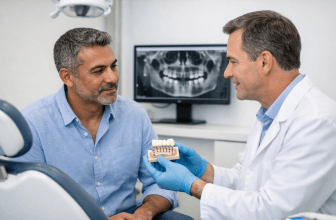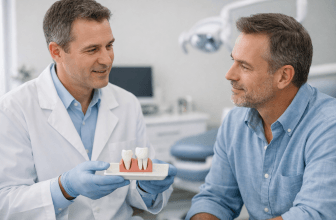
When a tooth is badly damaged or infected, patients are often asked to consider two different treatment pathways: root canal treatment followed by restoration, or extraction followed by replacement with a dental implant. The important point is that these are not simply two versions of the same procedure. Root canal treatment aims to preserve the natural tooth, while extraction and implant treatment removes the tooth and replaces it with an artificial tooth supported by the jawbone.
So, which is better: a root canal or a dental implant? Current evidence does not identify one universally superior option. If a tooth can be predictably restored, root canal treatment may be a reasonable way to retain it. If the tooth cannot be restored or has a poor long-term prognosis, extraction and implant replacement may be more appropriate. The right decision depends on the tooth, surrounding tissues, general health, treatment goals, and personal preferences.
This guide explains the differences between the two options and outlines the questions to discuss with a qualified dentist or dental specialist at Estexper Clinic.
What Is the Difference Between a Root Canal and a Dental Implant?
Root canal treatment
A root canal treats infection or inflammation inside a tooth. During treatment, the diseased tissue is removed from the tooth’s internal canals, the canals are cleaned and sealed, and the tooth is then restored. The purpose is to eliminate the infection while retaining the natural tooth in the mouth.
A root canal is usually only one part of the treatment plan. The remaining tooth may need a strong definitive restoration to protect it and return it to function. The suitability and type of restoration depend on how much healthy tooth structure remains, the tooth’s location, its function, and the condition of the surrounding tissues.
Extraction and dental implant treatment
Extraction removes the damaged or infected tooth. A dental implant is then used to replace the missing tooth by placing an implant fixture in the jawbone, followed by prosthetic treatment to create the visible replacement tooth. This is a multi-stage pathway rather than a single procedure.
Implants can provide a predictable way to replace a missing tooth, but they require surgical and prosthetic planning. The jawbone and gums must be assessed, and the replacement must be maintained over the long term. Implant treatment can also involve biological or technical complications, including soft-tissue problems, bone loss around the implant, or issues affecting the prosthetic restoration.
When Is Root Canal Treatment Usually Considered?
Root canal treatment may be considered when the natural tooth is restorable and there is a reasonable chance of maintaining it after treatment and definitive restoration. The assessment may include:
- The amount and quality of remaining tooth structure
- The presence and extent of infection or apical disease
- The tooth’s position and role in chewing
- The condition of the gums and supporting bone
- The quality of the existing restoration, if present
- Occlusal forces and the level of protection the restored tooth may need
Long-term studies show that root canal-treated teeth can remain functional for many years. However, prognosis varies considerably between patients and teeth. Factors such as the tooth type, pre-existing disease around the root, periodontal condition, quality of disinfection and restoration, and regular maintenance can influence the outcome.
Preserving a natural tooth may be attractive because it avoids extraction and retains the patient’s own tooth structure. Nevertheless, root canal treatment is not appropriate for every tooth. A tooth with inadequate remaining structure, a vertical root fracture, severe loss of periodontal support, or unfavorable anatomy may have a poor prognosis even if treatment is technically possible.
When May Extraction and an Implant Be More Appropriate?
Extraction followed by implant replacement may be considered when the tooth is non-restorable or when its expected prognosis is poor. Possible reasons include:
- A vertical root fracture
- Insufficient remaining tooth structure to support a predictable restoration
- Severe loss of periodontal support
- Unfavorable root or canal anatomy
- Persistent problems that cannot be predictably managed
- Damage that makes long-term retention unrealistic
The decision should not be based on the assumption that an implant is automatically better than a natural tooth. An implant may be an appropriate replacement when preserving the tooth is not realistic, but it is not free of complications. Patients may need surgical and prosthetic stages, appropriate healing time, and continuing professional maintenance.
Implant suitability also depends on the condition of the jawbone and gums, the location of the missing tooth, general health, oral hygiene, smoking or other behavioral factors, and the patient’s ability to attend follow-up appointments. A qualified clinician must determine whether implant treatment is appropriate for an individual patient.
Root Canal vs Dental Implant: Main Differences
| Consideration | Root canal and restoration | Extraction and dental implant |
|---|---|---|
| Primary aim | Preserve the natural tooth | Replace a missing tooth |
| Nature of treatment | Internal treatment of the existing tooth, followed by restoration | Removal of the tooth, implant surgery, and prosthetic replacement |
| Natural tooth structure | Retained when the tooth is restorable | Removed and replaced with an artificial tooth |
| Key suitability issue | Whether the tooth can be predictably restored and maintained | Whether the tooth should be removed and whether the bone and soft tissues can support replacement |
| Long-term care | Routine dental care and monitoring of the tooth and restoration | Oral hygiene, professional reviews, and peri-implant maintenance |
| Potential concerns | Reinfection, restoration problems, or later tooth fracture may occur | Surgical, biological, soft-tissue, bone, or prosthetic complications may occur |
This comparison shows why there is no universal winner. The most suitable option depends on whether the tooth can be saved predictably and whether the patient is a suitable candidate for implant replacement.
What Does the Evidence Say?
Comparative research generally reports high survival for both endodontically treated teeth and single-tooth implant restorations. However, the evidence is heterogeneous and largely observational. Studies do not consistently show that implants outperform root canal treatment in every situation.
A recent systematic review of directly comparative studies found inconsistent survival results. Some studies reported similar early survival, while others found higher long-term survival for implants or more complications associated with implants. Overall, the authors concluded that it remains unclear whether implant-supported prostheses or endodontically treated teeth are superior. Patients were generally satisfied with both approaches.
Other reviews have also reported high survival for both treatment pathways while emphasizing that the evidence is limited and does not justify a universal treatment preference. This means that a treatment recommendation should be individualized rather than based only on general success figures.
It is also important to understand that survival does not mean the absence of problems. A tooth or implant may remain in place while requiring maintenance, repair, retreatment, or management of complications. Root canal-treated teeth can develop problems related to infection, restoration, or fracture. Implants can develop peri-implant mucositis, peri-implantitis, soft-tissue complications, bone loss, or technical issues affecting the restoration.
How Are Patients Assessed Before Treatment?
A careful consultation should begin with a clinical examination and an assessment of the tooth and surrounding tissues. The dentist may review the tooth’s restorability, periodontal support, bone condition, bite, symptoms, and existing dental work. Imaging may be used when clinically appropriate to evaluate the roots, supporting bone, and anatomy.
For a possible implant, the clinician must also assess the proposed implant site and the practical requirements of the surgical and prosthetic stages. The assessment should include discussion of long-term maintenance and the possibility of complications.
Patients should provide a complete medical and dental history, including relevant systemic conditions, medications, previous dental treatment, smoking or tobacco use, and any concerns about healing or regular maintenance. These factors do not automatically rule out treatment, but they may affect planning and prognosis.
Patients considering care in Turkey should obtain a clear written treatment plan before travelling. It is reasonable to ask which tooth is being assessed, whether it is restorable, what alternatives are available, how many visits may be required, what follow-up is included, and who will manage any concerns after returning home. An independent specialist assessment may be helpful when the choice is uncertain or when extraction is being recommended for a tooth that may be restorable.
What Should Patients Expect During Recovery?
After root canal treatment
After root canal treatment, the tooth generally requires a definitive restoration and ongoing monitoring. The timing and type of restoration depend on the clinical situation. Patients should follow the dentist’s instructions and return for recommended reviews so that the tooth and restoration can be assessed.
A root canal-treated tooth should not be considered permanently protected simply because the internal treatment has been completed. The quality and durability of the final restoration, oral hygiene, bite, and regular dental care all remain important.
After extraction and implant treatment
Implant treatment usually involves more than one stage. The tooth is removed, the site is assessed and managed, and the implant and prosthetic components are planned according to the patient’s anatomy and clinical needs. The exact sequence and timing vary between individuals.
Patients should plan for follow-up appointments and avoid arranging international travel without discussing timing with the treating team. The clinic should explain what symptoms require urgent attention, how temporary teeth will be managed if needed, and how future reviews will be organized. The implant and its restoration require long-term cleaning and professional maintenance even after treatment has been completed.
Risks and Long-Term Maintenance
Both approaches have potential benefits and risks. Root canal treatment may fail to resolve disease, or the tooth may later be affected by fracture or restoration problems. The risk depends on the tooth and the quality of treatment and restoration, among other factors.
Implants may experience surgical, biological, or technical complications. In particular, inflammation around implants can range from peri-implant mucositis to peri-implantitis, which may involve loss of supporting bone. Prevention, early detection, oral hygiene, and regular professional maintenance are important parts of implant care.
Neither option eliminates the need for routine dental examinations. Patients should maintain good oral hygiene, attend recommended reviews, and seek advice if they experience increasing pain, swelling, mobility, bleeding, changes in chewing, or problems with the restoration.
Which Option Is Better for You?
A root canal may be a reasonable first option when the tooth is restorable and has a predictable prognosis. Extraction and implant replacement may be more suitable when the tooth cannot be predictably preserved or when its supporting tissues and structure are severely compromised.
The decision should consider:
- Restorability and remaining tooth structure
- Root fracture risk and tooth anatomy
- Periodontal status and supporting bone
- Tooth location and functional demands
- General health and behavioral factors
- Expected treatment stages and recovery
- Potential complications and maintenance
- Time, travel, cost, and follow-up arrangements
- The patient’s preferences and comfort with each option
Shared decision-making is central to treatment planning. Ask your dentist to explain all reasonable options, including what may happen if treatment is delayed or if the first option does not succeed. When the prognosis is unclear, an assessment by an appropriate endodontic, periodontal, or restorative specialist may provide useful additional information.
Frequently Asked Questions
Is a dental implant always better than a root canal?
No. Current evidence does not establish that implants are universally superior. If the natural tooth is predictably restorable, preserving it with root canal treatment and an appropriate restoration may be reasonable. An implant may be more appropriate when the tooth is non-restorable or has a poor prognosis.
Can every infected tooth be treated with a root canal?
No. The tooth must have enough remaining structure and adequate supporting tissues for a predictable restoration and long-term function. A vertical root fracture, severe periodontal support loss, or unfavorable anatomy may make preservation unsuitable.
Does an implant require less maintenance than a natural tooth?
No. Implants require daily oral hygiene and professional maintenance. They can develop biological and technical complications, including inflammation around the implant and problems affecting the prosthetic restoration.
Should I get a second opinion?
A second opinion can be useful when the treatment choice is complex, the prognosis is uncertain, or extraction has been recommended for a tooth that may be restorable. The decision should be based on an examination and appropriate diagnostic information.
Medical References
- Survival, complications, and patient-reported outcomes of endodontically treated teeth versus dental implant-supported prostheses: A systematic review — Journal of Prosthetic Dentistry; PubMed.
- Comparative outcomes of endodontically treated teeth versus dental implant-supported prostheses: a systematic review — Peer-reviewed systematic review; PubMed.
- AAE Position Statement – Implants — American Association of Endodontists.
- Root canal treatment — NHS.
- Clinical guideline: Prevention and treatment of peri-implant diseases — European Federation of Periodontology.
Important: This article is for general information and does not replace an examination or individualized advice from a qualified dental professional. Suitability for root canal treatment, extraction, or implant replacement must be assessed clinically.