Medical review: Estexper Medical Editorial Team
For people researching hair transplantation in Turkey, the phrase “unlimited grafts” can sound attractive. It may suggest that a clinic can provide as many grafts as necessary to achieve extensive coverage. However, “unlimited grafts” is not a recognized hair-transplant technique, medical classification or safety standard. It is promotional language that should be examined carefully before making a decision.
In Short
An “unlimited grafts” hair transplant should be treated as a marketing claim, not as proof that a procedure is safe or suitable. Every patient has a limited donor supply, and excessive harvesting can cause permanent donor thinning, scarring and reduced options for future treatment. A qualified and legally authorized medical professional should determine an individualized graft plan after assessing the donor area, hair characteristics, expected future hair loss and treatment goals.
The central issue is that every patient has a finite donor supply. Hair follicles are usually taken from areas of the scalp considered more resistant to hair loss, but the amount, density and long-term stability of this donor hair differ from person to person. Removing too many grafts, harvesting them too closely together or failing to plan for future hair loss can permanently thin the donor area and limit future treatment options.
At Estexper Clinic, we believe hair transplantation should be planned around medical suitability and long-term appearance rather than a fixed marketing promise. A qualified physician should assess the scalp, donor area, hair characteristics and expected future hair loss before recommending an appropriate number of grafts.
What does “unlimited grafts” mean?
In most cases, “unlimited grafts” describes a package or advertising claim rather than a specific surgical method. It may be used to suggest that a clinic will extract as many grafts as possible during one visit or across a treatment plan. However, the phrase does not explain whether the number is medically appropriate, how the donor area will be protected or which clinician will perform the procedure.
The International Society of Hair Restoration Surgery identifies claims such as “unlimited grafts,” “no risk” and guaranteed results as potentially misleading marketing messages. No universal number of grafts is safe for every patient, and there is no evidence-based basis for treating “unlimited” extraction as a standard of care.
A graft is a small unit of naturally occurring hair follicles. The number that can be safely harvested depends on factors such as:
- Donor-area density and available hair-bearing surface
- Hair caliber, texture and curl
- The degree of miniaturization in the donor area
- How stable the donor hair is likely to remain
- The size and location of the recipient area
- Expected future hair loss
- Whether treatment may need to be staged over time
Because these factors vary, a responsible treatment plan should provide an individualized estimate rather than promise an unlimited number.
Why is the donor area the main safety limitation?
The donor area is not an infinite source of hair. Although follicular unit extraction, or FUE, can remove grafts without creating one long linear scar, each harvested follicle is permanently removed from its original location. Excessive or poorly distributed harvesting can therefore have lasting consequences.
Overharvesting may lead to permanent donor-site thinning, visible pinpoint scarring or a patchy, “moth-eaten” appearance. The problem can become more noticeable when the hair is cut short. If the donor area is depleted, there may be fewer options available if further hair loss occurs or if a correction procedure is needed.
A safe plan should consider not only how many grafts can be removed today, but also how the donor area may look in the future. This is particularly important for patients whose hair loss may continue after transplantation. The appearance of the donor area and the balance between donor and recipient zones are both part of the long-term result.
What are the risks of excessive graft harvesting?
Hair transplantation is surgery, even when it is performed using minimally invasive techniques. The risks depend on the patient, the procedure, the surgical plan and the quality of medical care. Possible complications include:
- Pain, swelling or bleeding
- Infection
- Reactions related to anesthesia
- Folliculitis or inflammation around the follicles
- Shock loss, or shedding around the treated areas
- Poor or uneven graft growth
- Visible scarring or changes in donor density
- Unsatisfactory hairline design or cosmetic balance
- Rarely, tissue damage or necrosis
When too many grafts are removed from the donor area, the risks include permanent depletion and an uneven appearance. When a very large number of grafts is placed into a recipient area, the condition of the scalp and the density of the planned recipient sites must also be considered. In susceptible patients, large sessions or dense packing may increase concerns such as reduced blood supply, graft failure or, rarely, tissue necrosis.
These risks do not mean that hair transplantation is unsuitable for everyone. They mean that the procedure requires proper patient selection, individualized planning and appropriate medical supervision.
Is there a maximum safe number of grafts?
There is no universally established maximum graft number that applies to every patient. A number that may be reasonable for one person could be excessive for another. Donor density, hair characteristics, scalp condition, the degree of hair loss and long-term expectations all influence the decision.
The appropriate number may also differ depending on whether the goal is to restore a hairline, add coverage to a larger area or improve density in a previously treated region. A physician should assess the available donor supply and determine whether the desired result can be pursued safely.
If extensive coverage is required, a staged approach may be more appropriate than attempting to remove and place a very large number of grafts in one session. Staging does not guarantee a particular result, but it may allow the surgical plan to account for donor limitations and future hair loss. The decision should be made by a qualified physician after a clinical assessment.
Who may be suitable for hair transplantation?
Suitability cannot be determined from a package label or a promised graft number. A qualified physician should first establish the likely cause and pattern of hair loss, examine the donor and recipient areas and discuss the patient’s expectations.
The assessment should include the density and stability of the donor area, hair caliber, miniaturization and the amount of coverage required. Future hair loss should also be considered because transplanted hair does not prevent other non-transplanted hair from thinning.
Some patients may require a more conservative plan, a staged procedure or a discussion about whether transplantation is appropriate at all. Individual suitability should be determined by a properly trained and legally authorized medical professional.
What should happen before an “unlimited grafts” offer is accepted?
Before booking treatment, ask for a medical consultation rather than relying only on an online quote or a sales message. The consultation should address the following points:
1. Who will diagnose and plan the treatment?
Confirm the name and professional credentials of the clinician responsible for assessing you and planning the procedure. Diagnosis, surgical planning and management of complications should be handled by an appropriately trained and legally authorized medical professional, in accordance with local law.
2. Who will perform each surgical step?
Ask specifically who will perform donor harvesting, recipient-site creation and other surgical steps. Patients should be cautious if these responsibilities are routinely delegated to unlicensed technicians. The International Society of Hair Restoration Surgery emphasizes the importance of trained and licensed physicians in hair-restoration surgery, subject to applicable local regulations.
3. How was the proposed graft number calculated?
A responsible provider should be able to explain how the recommendation relates to donor density, hair characteristics, the recipient area and anticipated future loss. The plan should not be based solely on a promotional promise of extracting as many grafts as possible.
4. What is the long-term plan?
Ask how the donor area will be protected and what may happen if additional hair loss occurs. A good plan considers the possibility of staged procedures and the need to preserve options for future management.
5. What authorization does the facility have?
International patients considering treatment in Turkey should verify that the provider is authorized by the Turkish Ministry of Health for international health tourism. Facility authorization is an important verification step, but it does not make an unlimited-graft claim medically appropriate. You should still confirm the clinician’s role, the treatment plan and the medical reasoning behind the proposed graft number.
What happens during and after a properly planned procedure?
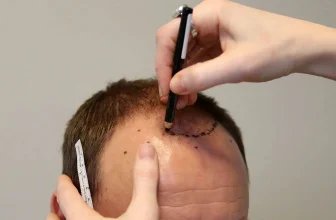
Once a physician has confirmed suitability, the procedure should follow an individualized surgical plan. The donor area and recipient area should be marked and assessed, and the planned extraction and placement should reflect the patient’s available supply and desired coverage.
After treatment, patients commonly receive instructions about scalp care, activity and follow-up. Recovery experiences vary, and possible side effects can include swelling, discomfort, bleeding, infection, scarring, poor graft growth and continued thinning of surrounding hair. Patients should contact their provider promptly if they are concerned about signs of infection, unusual bleeding, worsening pain or unexpected changes during recovery.
Aftercare cannot compensate for excessive harvesting or poor surgical planning. For this reason, choosing a medically responsible provider before the procedure is one of the most important safety decisions.
Are there safer alternatives to an unlimited-graft plan?
The relevant alternative is not necessarily another technique or package. In many cases, the safer approach may be a more conservative, individualized graft plan. If the desired coverage exceeds the available donor supply or if the donor area needs protection, the physician may discuss staged treatment or a different distribution of grafts.
Some patients may also decide not to proceed if the likely cosmetic benefit does not justify the donor-site risks or if expectations cannot be met safely. A consultation should make these limitations clear rather than presenting unlimited extraction as the default solution.
Questions to ask a hair-transplant clinic in Turkey
- Is the facility authorized by the Turkish Ministry of Health for international health tourism?
- Which licensed clinician will examine me and design my treatment plan?
- Who will perform graft harvesting and recipient-site creation?
- How many grafts do you recommend, and what medical findings support that number?
- How will you protect my donor area from overharvesting?
- Could my treatment need to be staged?
- How will future hair loss affect the plan?
- What are the possible complications and how are they managed?
- What follow-up will be available after I return home?
Frequently asked questions
Does “unlimited grafts” mean I will receive unlimited hair?
No. The phrase is marketing language and does not mean that a patient has an unlimited supply of donor hair. Every patient has a finite donor area.
Can a clinic safely remove as many grafts as possible?
Not necessarily. Excessive or concentrated extraction may cause permanent donor depletion, visible thinning and scarring. The number of grafts should be individualized by a qualified physician.
Is an unlimited-graft package automatically unsafe in Turkey?
The package label alone does not establish what will happen medically, but it should be treated as a warning sign requiring careful questions. Verify the facility, the clinician, the surgical roles and the reasoning behind the proposed plan.
Is Turkey safe for hair transplantation?
Safety depends on the individual provider, facility, clinician qualifications, surgical planning and aftercare. Authorization for international health tourism is an important verification step, but it does not guarantee that every advertised package is appropriate for every patient.
Conclusion
An “unlimited grafts” hair transplant in Turkey should not be viewed as a special safety category or a guarantee of better coverage. The donor supply is finite, and excessive harvesting can create permanent thinning, a moth-eaten appearance and fewer options for future treatment. Hair transplantation also carries recognized surgical risks, including infection, bleeding, anesthesia-related reactions, poor growth, scarring, shock loss and, rarely, tissue necrosis.
The safest approach is an individualized medical assessment, realistic planning and clear confirmation of who will perform each surgical step. International patients should verify Turkish Ministry of Health authorization for the provider, but should also look beyond the package name. A qualified physician should determine whether treatment is suitable, how many grafts can reasonably be harvested and whether a staged plan is more appropriate.
Explore our Hair Transplant services in Turkey for an overview of treatment options and individual assessment.
TREATMENT OPTIONS
Explore Your Treatment Options
Find out more about our services and discuss which options may suit your individual needs.
YOUR NEXT STEP
Discuss Your Questions With Our Team
Request an individual assessment or ask our team about treatment planning and follow-up arrangements.
Medical References
- Protect Hair Loss Patients: Read the ISHRS Improper Messaging Warnings — International Society of Hair Restoration Surgery.
- ISHRS Officially Stands: Trained & Licensed Physicians Execute All Hair Restoration Surgery, Inc. FUE Harvesting & Robotics — International Society of Hair Restoration Surgery.
- Complications in follicular unit excision hair transplantation: current evidence and practical approaches — Plastic and Reconstructive Surgery Global Open / PubMed Central.
- Hair Transplant Practice Guidelines — International Society of Hair Restoration Surgery / PubMed Central.
- Complications in Hair Transplantation — Indian Journal of Plastic Surgery / PubMed Central.
- Hair transplant — NHS.