Medical review: Estexper Medical Editorial Team
When planning a hair transplant, one of the most important questions is often whether the hairline or crown should be treated first. The answer is not the same for every patient, but limited donor supply usually requires a long-term strategy rather than trying to restore every thinning area at once.
In Short
When donor grafts are limited, the frontal hairline and frontal forelock are often prioritised because they frame the face and can provide a noticeable cosmetic benefit. Crown restoration can be appropriate in selected cases, but it may require substantial graft allocation and needs careful planning because surrounding native hair can continue to thin. The most suitable sequence depends on donor quality, the pattern and progression of hair loss, hair characteristics, age and personal priorities.
Why donor grafts must be prioritised
A hair transplant uses a finite supply of follicular units from the donor area, usually at the back and sides of the scalp. Although these hairs are generally more resistant to androgenetic hair loss, the available supply is not unlimited.
Safe lifetime harvesting depends on factors including donor-area size, density, hair caliber, scalp characteristics, harvesting method, patient age and the likelihood of future thinning. If too many grafts are removed, the donor area may appear visibly depleted and fewer grafts may remain available for later procedures.
For this reason, responsible planning considers both the areas that need treatment now and areas that may require attention if hair loss progresses. A qualified physician should assess donor-area stability, including possible miniaturisation, and determine how many grafts may be harvested appropriately.
Why the hairline and frontal forelock are often prioritised
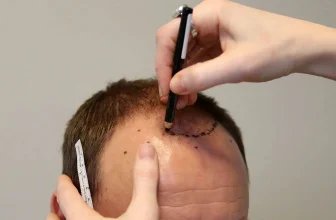
The frontal hairline has a major role in facial framing and is immediately visible in everyday interactions. Even a conservative improvement in the frontal region can improve the perceived balance of the face, particularly when recession or frontal thinning is the main concern.
The frontal forelock, the central frontal area of hair, can also provide useful coverage when donor resources are restricted. In some patients, focusing on the forelock rather than attempting full frontal coverage may create a stronger visual result with fewer grafts.
Hairline design should remain conservative and appropriate for the patient’s age and expected future hair loss. Creating a very low or very dense hairline can use a large number of grafts early and leave fewer resources if further loss develops. A mature, natural-looking design generally preserves greater flexibility for long-term planning.
What makes a natural hairline?
A natural hairline is not perfectly straight. It usually includes irregularity, gradual transitions and appropriate density changes. The design should take account of facial proportions, existing hair and the likely long-term pattern of loss.
Hair caliber, curl or wave, colour contrast between the hair and scalp, and the presence of native hair can all affect how much coverage a given number of grafts appears to provide. These factors should be assessed during a clinical consultation rather than relying on a fixed graft number.
Why the crown can require more careful planning
The crown, also called the vertex, has a circular whorl-like growth pattern. Grafts need to be placed in directions that follow this natural rotation and blend with surrounding native hair, making crown restoration technically demanding.
The crown may also require a substantial number of grafts to create meaningful visual coverage. Because hair grows in different directions around the whorl, the scalp can remain visible when density is limited or when surrounding native hair continues to thin.
Another consideration is that crown hair loss may progress. If the crown is transplanted in isolation and native hair around it later thins, an isolated restored patch can develop. This is sometimes described as a “doughnut” appearance.
For these reasons, vertex-only transplantation is generally approached cautiously when donor supply is limited or future hair loss is uncertain. The decision may differ for a patient with stable donor reserves, a well-defined crown concern and realistic expectations, but this requires individual assessment.
Hairline first does not mean crown treatment is never appropriate
There is no universal rule that every patient must treat the hairline before the crown. Hair-transplant planning should be individualised rather than based on a rigid sequence.
Crown-first or combined treatment may be considered when the frontal area is relatively stable but crown thinning is the main concern, or when the crown is the area that matters most to the patient. Favourable hair characteristics may also improve the appearance of limited crown coverage.
Even in these situations, the physician should consider whether crown treatment could use grafts that may later be needed for frontal or midscalp loss. The aim is to balance personal priorities with the expected course of hair loss and the limits of the donor area.
Factors that influence graft allocation
Donor density and stability
High donor density does not mean that unlimited grafts are available. The physician should evaluate the safe donor area, hair quality and whether miniaturisation is present. A donor area that appears dense but shows signs of weakening may require a more conservative plan.
Pattern and progression of hair loss
Pattern hair loss is progressive for many patients, so the current appearance may not represent the final pattern. Assessment should consider whether loss is concentrated at the temples, hairline, frontal scalp, midscalp or crown, as well as whether diffuse or unstable thinning is present.
Medical treatment may help reduce ongoing native-hair loss in appropriate patients, but it does not remove the need for conservative surgical planning. The suitability, possible benefits and risks of medical treatment should be discussed with a qualified physician.
Age and future planning
Age is one consideration when estimating future progression. Younger patients with an early or rapidly changing pattern may need especially cautious planning because aggressive hairline lowering or early crown treatment could limit future options.
Recipient-area size
A small frontal zone may require a different strategy from extensive loss involving the hairline, midscalp and crown. When the recipient area is large and donor supply is limited, the goal may need to be restricted to a frontal forelock, frontal coverage at lower density or another carefully selected area.
Hair characteristics and personal preferences
Hair thickness, texture, colour and natural growth pattern affect the appearance of coverage. Personal priorities also matter: some patients are most concerned about facial framing, while others are more troubled by an exposed crown. These preferences should be discussed alongside the medical limitations of the donor supply.
Common long-term strategies when grafts are limited
Depending on the clinical assessment, planning approaches may include:
- Frontal hairline and forelock priority: Concentrating grafts in the frontal region may provide visible improvement while preserving options for later treatment.
- Frontal and midscalp coverage: Some patients may benefit from connecting the hairline to the midscalp rather than treating the crown early.
- Lower-density wider coverage: Grafts may be distributed across a larger area when the aim is improved overall balance rather than dense coverage in one location.
- Staged treatment: Surgery may be planned in stages so future hair loss and changes in native hair can be reassessed before further grafts are allocated.
- Crown treatment in selected cases: The crown may be included when donor stability, hair-loss pattern and expectations support this decision.
There is no single graft-allocation formula that applies to everyone. The appropriate strategy should be based on examination findings rather than a promise of complete coverage.
Can beard or body hair help?
In selected patients, beard or body hair may be considered as supplementary donor sources, particularly when scalp donor reserves are limited. These hairs can differ from scalp hair in texture, growth characteristics and appearance, so they are not automatically interchangeable.
Non-scalp donor hair should be discussed as a supplementary option rather than a replacement for a stable scalp donor area. A qualified physician can explain whether it may be appropriate in an individual case.
What to expect during the consultation
A thorough consultation should focus on long-term planning, not only on the number of grafts that may be transplanted in one session. The assessment may include:
- Review of the diagnosis and pattern of hair loss.
- Examination of donor density, donor-area stability and possible miniaturisation.
- Assessment of the hairline, frontal forelock, midscalp and crown.
- Discussion of age, family history and the likelihood of future progression.
- Evaluation of hair characteristics that affect the appearance of coverage.
- Discussion of medical treatment where relevant.
- Agreement on realistic priorities and an appropriate hairline design.
International patients considering treatment in Turkey should provide accurate medical and hair-loss information before travelling and allow enough time for an in-person assessment. Photographs may support an initial discussion, but they cannot replace examination of the donor and recipient areas by the responsible physician.
Procedure, recovery and aftercare
If surgery is recommended, the clinic should explain the planned extraction and implantation approach, the intended recipient areas and the estimated graft allocation. The final plan should be confirmed by the responsible physician after scalp examination.
Patients should receive individual postoperative instructions about protecting the recipient and donor areas, washing, activity and follow-up. International patients should also confirm how postoperative communication will be managed after returning home and who to contact if they have concerns.
The immediate postoperative appearance does not determine the final cosmetic result. The treating team should provide realistic information about the expected course and the limits of the planned procedure.
Risks and limitations
Hair transplantation is a surgical procedure and cannot guarantee a particular cosmetic result. Potential concerns include visible donor depletion if harvesting is excessive, an unnatural hairline design, insufficient coverage, uneven density, progression of native-hair loss and the possible need for further treatment.
Crown transplantation has additional planning challenges because of the whorl pattern and the possibility that surrounding hair may continue to thin. A transplanted crown can remain visually separated from nearby hair if future loss is not considered.
A transplant redistributes available follicles; it does not create an unlimited new supply of hair. The final decision about suitability, graft numbers and treatment sequence should be made by a qualified physician after assessment.
Frequently asked questions
Is the hairline always treated before the crown?
No. The hairline is often prioritised when donor supply is limited because it frames the face, but there is no universal rule. Donor stability, pattern of loss, age, hair characteristics and personal priorities all influence the sequence.
Why can crown restoration use more grafts?
The crown has a circular whorl pattern and often requires careful blending with surrounding hair. Limited density may not provide the desired visual coverage, so a meaningful crown result can require substantial planning and graft allocation.
What happens if I treat only the crown?
If frontal or midscalp loss continues, an isolated restored crown may develop as surrounding native hair becomes thinner. This is one reason vertex-only transplantation is approached cautiously in patients with limited or uncertain donor supply.
Can one transplant cover the hairline and crown?
It may be possible in selected cases, but this depends on the available donor supply and the size of the recipient areas. When resources are limited, trying to cover everything at once may result in low density and fewer options if hair loss progresses.
How do I know which area should come first?
A qualified physician should examine the donor and recipient areas and discuss the expected future pattern of hair loss. The recommended priority should balance visible benefit, donor preservation and personal goals.
Conclusion
When donor grafts are limited, the key question is not simply whether to choose the hairline or crown first. It is how to use a finite donor supply to maintain visual balance over time.
The frontal hairline and forelock are commonly prioritised because they frame the face and may provide a strong cosmetic improvement with careful graft allocation. Crown restoration may be appropriate for some patients, but its whorl pattern, graft demands and risk of future surrounding loss require individualised planning.
A conservative hairline, realistic coverage goals and consideration of future progression can help preserve long-term options. An appropriate treatment sequence should be determined after a detailed medical evaluation and an honest discussion of what the donor supply can support.
Explore our Hair Transplant services in Turkey for an overview of treatment options and individual assessment.
TREATMENT OPTIONS
Explore Your Treatment Options
Find out more about our services and discuss which options may suit your individual needs.
YOUR NEXT STEP
Discuss Your Questions With Our Team
Request an individual assessment or ask our team about treatment planning and follow-up arrangements.
Medical References
- Hair Transplant Practice Guidelines, Journal of Cutaneous and Aesthetic Surgery.
- Is Every Patient of Hair Loss a Candidate for Hair Transplant?—Deciding Surgical Candidacy in Pattern Hair Loss, Indian Journal of Plastic Surgery / Association of Plastic Surgeons of India.
- Approach to Hair Transplantation in Advanced Grade Baldness by Follicular Unit Extraction: A Retrospective Analysis of 820 Cases, Journal of Cutaneous and Aesthetic Surgery.
- Hair Transplantation, StatPearls Publishing / National Center for Biotechnology Information.
- Management of the Crown, PubMed-indexed review article.