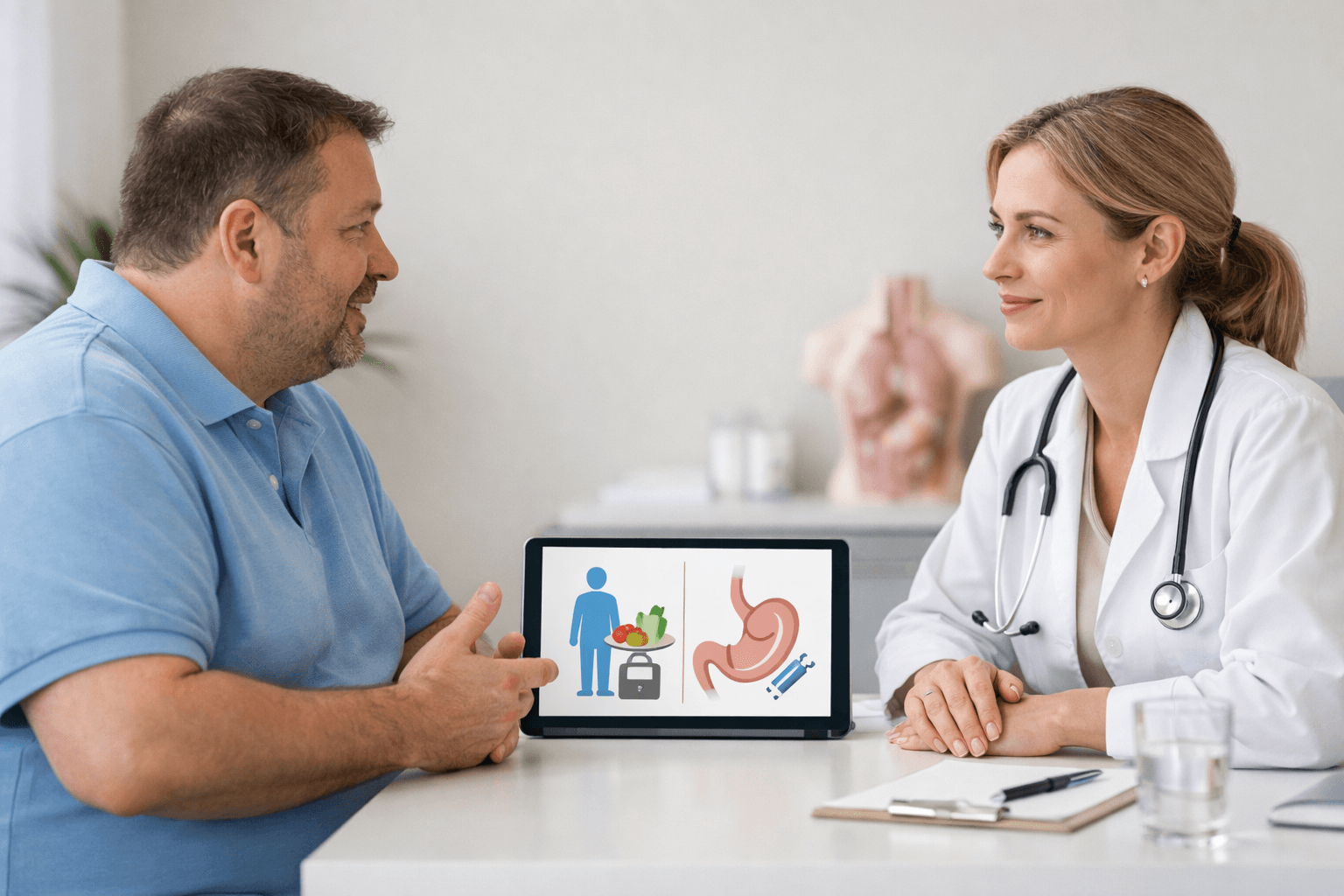
When lifestyle changes alone have not produced sufficient weight loss, medical and surgical treatments may be considered. Two options that are often compared are laparoscopic sleeve gastrectomy and intragastric balloon treatment. Although both can reduce stomach capacity and support weight loss, they are very different approaches.
A gastric sleeve is a permanent operation that removes most of the stomach. A gastric balloon is a temporary device placed inside the stomach, usually as part of a broader plan involving nutrition, physical activity, and behavioral support. The best choice depends on your health, weight-related conditions, previous treatment attempts, expectations, and willingness to undergo permanent surgery and long-term follow-up.
This guide explains the main differences between gastric sleeve surgery and gastric balloon treatment for patients considering care at Estexper Clinic or elsewhere in Turkey. A qualified physician must assess your individual suitability before any treatment decision is made.
What Is Gastric Sleeve Surgery?
Laparoscopic sleeve gastrectomy is a metabolic and bariatric operation in which approximately 80% of the stomach is removed. The remaining stomach has a narrow, sleeve-like shape. Because the stomach is smaller, patients generally feel full after eating less food. The procedure may also influence appetite-related physiology.
Sleeve gastrectomy does not involve intestinal bypass. However, it is still major surgery performed under anesthesia and permanently changes the stomach. The removed portion of the stomach cannot be replaced, so the decision requires careful consideration and informed consent.
Current professional guidance recognizes metabolic and bariatric surgery as an effective treatment for appropriately selected patients with obesity and obesity-related disease. Eligibility is based on a complete clinical assessment rather than a desired weight-loss percentage alone.
What Is a Gastric Balloon?
An intragastric balloon is a weight-management device placed inside the stomach. Many balloon systems are placed during an endoscopic procedure, although the exact placement method depends on the specific device protocol. Once positioned and filled according to that protocol, it occupies space in the stomach and may help you feel full sooner.
Unlike sleeve surgery, a gastric balloon does not remove part of the stomach. It is temporary, and the removal process or natural passage depends on the device used. Balloon treatment is intended to work alongside dietary changes, exercise, and behavioral support rather than replace them.
There are different balloon systems, and their approved indications, placement methods, monitoring requirements, and duration may vary. Patients should ask which device is being offered, how it is removed or passed, and what follow-up is included.
Gastric Sleeve vs Gastric Balloon: Main Differences
| Feature | Gastric sleeve | Gastric balloon |
|---|---|---|
| Type of treatment | Surgical procedure | Temporary weight-management device |
| Effect on the stomach | Approximately 80% of the stomach is removed | The stomach remains intact while the device occupies space |
| Duration | Permanent | Temporary, depending on the device |
| Weight-loss durability | Generally greater and more durable in available evidence | Weight loss may decrease after removal, particularly without ongoing lifestyle support |
| Recovery and risks | Requires recovery from surgery and monitoring for surgical complications | Avoids stomach surgery but commonly causes short-term gastrointestinal symptoms |
| Long-term care | Nutritional monitoring and lifestyle follow-up are important | Continued diet, exercise, and behavioral support are important after removal |
Direct, high-quality trials comparing modern sleeve gastrectomy with current intragastric balloon systems are limited. Much of the comparison comes from separate studies or older observational research. For this reason, neither option should be described as universally best for every patient.
Which Treatment Usually Produces More Weight Loss?
In general, available evidence indicates that sleeve gastrectomy produces greater and more durable weight loss than intragastric balloon therapy. This difference is partly related to the permanent reduction in stomach size and the fact that the sleeve remains in place indefinitely.
Randomized-trial evidence shows that intragastric balloons can produce more weight loss than lifestyle intervention alone. However, the amount of weight loss varies according to the balloon type, treatment duration, follow-up period, and the patient’s participation in lifestyle changes.
A systematic review reported mean 12-month total weight loss of approximately 10.35% with intragastric balloons. It also found that weight loss was significantly reduced at 18 to 24 months compared with six months, suggesting that regain may occur after balloon removal. This does not mean that balloon treatment cannot be useful; it means that the treatment should be understood as a temporary tool that requires a long-term weight-management plan.
Older direct observational research comparing sleeve surgery with balloon treatment reported continued weight loss after sleeve gastrectomy and weight regain after balloon removal. Because that study was nonrandomized and based on older treatment protocols, it should be interpreted as historical context rather than definitive proof for every current device or patient.
Who May Be Considered for Each Treatment?
Potential candidates for sleeve gastrectomy
Sleeve surgery may be considered for adults with obesity, particularly when excess weight is affecting health or when structured non-surgical approaches have not provided adequate results. Current ASMBS and IFSO guidance has expanded the circumstances in which metabolic and bariatric surgery may be considered compared with older criteria.
Assessment may include body mass index, obesity-related diseases, previous weight-loss attempts, eating patterns, reflux symptoms, surgical risk, medications, psychological readiness, and the ability to attend long-term follow-up. The presence of severe reflux or other gastrointestinal concerns is especially relevant because sleeve surgery may contribute to or worsen acid reflux in some patients.
Potential candidates for a gastric balloon
A gastric balloon may be considered by people seeking a non-surgical or temporary approach and who are able to commit to dietary, physical-activity, and behavioral changes. It may be discussed when a patient does not wish to undergo permanent stomach surgery or when a physician believes a temporary device is clinically appropriate.
Balloon indications vary by device and jurisdiction. A physician must review your medical history, digestive health, medications, previous procedures, and ability to follow the required monitoring and removal protocol. A balloon is not a risk-free alternative simply because it does not involve stomach surgery.
How Are the Procedures Performed?
Sleeve gastrectomy procedure
Sleeve gastrectomy is performed laparoscopically through small abdominal incisions while the patient is under general anesthesia. Most of the stomach is removed, and the remaining section is closed to create the sleeve. Before surgery, your clinical team will explain the preparation process, anesthesia considerations, expected hospital care, and warning signs that require medical attention.
Because the operation permanently changes the stomach, the surgical team must also discuss possible complications, nutritional needs, reflux concerns, and the importance of follow-up.
Gastric balloon procedure
The placement technique for a gastric balloon depends on the selected device. Many balloon systems are placed during an endoscopic procedure rather than through abdominal surgery. Some balloons require removal by endoscopy, while other systems have different passage or monitoring protocols.
Temporary nausea, vomiting, abdominal discomfort, reflux, or cramping may occur, particularly soon after placement. Your provider should explain how symptoms are managed and which symptoms may indicate a serious complication.
Recovery and Aftercare
Recovery after sleeve gastrectomy involves a gradual return to eating and drinking, careful hydration, dietary progression, and activity guidance from the clinical team. Long-term nutritional monitoring is important because vitamin and iron deficiencies can occur. Follow-up appointments help assess weight change, symptoms, nutrition, and any concerns such as reflux.
After gastric balloon placement, the early adjustment period may include gastrointestinal symptoms. Patients need clear instructions about hydration, prescribed medicines, diet progression, activity, and follow-up. When the balloon is removed or passes, maintaining the habits developed during treatment is essential. Without continued support, some weight regain may occur.
International patients traveling to Turkey should plan their journey around the clinic’s recommended follow-up schedule. Before treatment, ask whether follow-up can be completed remotely, who should be contacted in an emergency, what medical documents you will receive, and how complications will be managed after returning home.
Risks and Important Safety Considerations
Risks associated with sleeve gastrectomy
As with any major operation, sleeve gastrectomy carries surgical risks. Potential complications include bleeding and leakage from the stomach closure. Nutritional deficiencies and acid reflux are also recognized concerns. The procedure is irreversible, so the benefits and risks should be discussed carefully with a qualified bariatric surgeon.
Risks associated with gastric balloons
Gastric balloons commonly cause short-term gastrointestinal symptoms. The U.S. Food and Drug Administration has also reported serious potential complications associated with some liquid-filled intragastric balloons, including acute pancreatitis, spontaneous hyperinflation, gastric perforation, obstruction, and deaths in adverse-event reports.
These reports do not mean that every patient will experience a serious complication, but they demonstrate why appropriate patient selection, monitoring, and counseling are important. Seek urgent medical advice for severe or persistent abdominal pain, repeated vomiting, difficulty drinking fluids, marked abdominal swelling, breathing problems, or other symptoms identified by your medical team.
Which Option May Be Right for You?
A gastric sleeve may be more appropriate when a patient is seeking greater and more durable weight loss, accepts permanent surgery, and is medically suitable for an operation and lifelong follow-up. It may be particularly relevant when obesity-related disease is a major concern, although suitability must be assessed individually.
A gastric balloon may be more appropriate when a patient prefers a temporary and less invasive approach, understands that weight loss may be less durable, and is willing to maintain structured lifestyle support after the device is removed or passes.
Your decision should also take account of reflux or other gastrointestinal conditions, previous weight-loss treatments, surgical and anesthesia risk, expectations, available support, and the specific balloon device being proposed. A consultation should include a balanced discussion of benefits, limitations, alternatives, costs, follow-up arrangements, and emergency care.
Questions to Ask Before Treatment in Turkey
- Which treatment is medically suitable for my BMI, health conditions, and previous weight-loss history?
- What type of gastric balloon is being used, and how long will it remain in place?
- How is the balloon removed or passed, and what monitoring is required?
- What are the possible risks of sleeve surgery in my individual case?
- How will reflux, nutritional needs, and other health concerns be monitored?
- What follow-up will be available after I return to my home country?
- Which symptoms require urgent medical attention?
- What written treatment records and aftercare instructions will I receive?
Conclusion
When comparing gastric sleeve vs gastric balloon, sleeve gastrectomy generally offers greater and more durable weight loss, but it is permanent surgery with nutritional, reflux, and surgical risks. A gastric balloon avoids stomach surgery and is temporary, but it commonly causes early gastrointestinal symptoms and may be followed by weight regain after removal.
The right treatment is not determined by convenience or weight-loss claims alone. A qualified physician should evaluate your medical history, obesity-related conditions, digestive health, goals, risk profile, and ability to participate in long-term follow-up before making a recommendation.
Medical References
- 2022 ASMBS and IFSO: Indications for Metabolic and Bariatric Surgery — American Society for Metabolic and Bariatric Surgery and International Federation for the Surgery of Obesity and Metabolic Disorders.
- Types of Weight-loss Surgery — National Institute of Diabetes and Digestive and Kidney Diseases, National Institutes of Health.
- Efficacy of Intragastric Balloons for Weight Loss in Overweight and Obese Adults: A Systematic Review and Meta-analysis of Randomized Controlled Trials — PubMed-indexed peer-reviewed study.
- Intragastric Balloon Versus Endoscopic Sleeve Gastroplasty for the Treatment of Obesity: A Systematic Review and Meta-analysis — Obesity Surgery; PubMed Central.
- Weight-Loss and Weight-Management Devices — U.S. Food and Drug Administration.
- Laparoscopic Sleeve Gastrectomy versus Intragastric Balloon: A Case-Control Study — PubMed-indexed peer-reviewed study.