Medical review: Estexper Medical Editorial Team
Sudden, widespread hair shedding can be distressing, especially when hair appears thinner across the scalp rather than in a clearly defined pattern. One possible cause is telogen effluvium (TE), a temporary, nonscarring condition that can occur after illness, significant stress, nutritional problems, medication changes, or hormonal disturbances.
In Short
A hair transplant is usually not appropriate for active or isolated telogen effluvium because TE is often temporary and surgery does not correct the underlying hair-cycle disturbance. The priority is to assess the cause of sudden diffuse shedding and allow regrowth and the longer-term pattern of hair loss to be evaluated. Transplantation may be considered later if TE has resolved and a separate, stable form of permanent hair loss is confirmed by a qualified physician.
Many people with telogen effluvium ask whether a hair transplant can restore lost density. In most cases, an active or isolated episode of TE is not an indication for transplantation. The affected hairs may regrow naturally once the contributing factor has been identified and addressed.
Some people with diffuse shedding may also have an underlying permanent hair-loss condition, such as androgenetic alopecia. For this reason, a careful diagnosis is essential before considering surgery. Individual suitability should be assessed by a qualified physician after reviewing the history of hair loss, scalp findings, donor density, general health, and expectations.
What Is Telogen Effluvium?
Telogen effluvium is a diffuse, nonscarring form of hair shedding. It occurs when a higher-than-usual number of hairs enter the resting phase of the hair cycle and are later shed. The triggering event may happen several weeks or months before the shedding becomes noticeable, so the cause is not always immediately obvious.
Potential contributing factors include a recent illness, physical or emotional stress, nutritional problems, hormonal changes, or the effect of certain medications. In some cases, more than one factor may be involved. Unlike scarring hair-loss disorders, TE does not usually permanently destroy the hair follicles.
The British Association of Dermatologists notes that shedding commonly lasts around three to six months, although visible regrowth and restoration of hair volume can take longer. The course varies between individuals, and ongoing shedding may require further evaluation to clarify the diagnosis.
Can You Have a Hair Transplant for Telogen Effluvium?
If telogen effluvium is active and occurs on its own, hair transplantation is generally not recommended. The main reasons are:
- The condition is often temporary: Hair may regrow naturally after the triggering factor has been addressed.
- Transplantation does not treat the cause: A transplant redistributes follicles to selected areas but does not correct an ongoing disturbance in the hair cycle.
- The final pattern is not yet clear: During active shedding, it can be difficult to determine how much density will return naturally or whether another hair-loss condition is present.
- Existing hairs may continue to shed: A transplant cannot prevent ongoing loss of non-transplanted hair.
- Surgery may add temporary shedding: Postoperative effluvium can affect native recipient-area hair or donor-area hair.
There is no strong trial evidence establishing hair transplantation as a treatment for active telogen effluvium. Current recommendations are mainly based on the usual natural history of TE and established principles for selecting hair-transplant patients.
When Might Hair Transplantation Be Considered?
A previous episode of telogen effluvium does not necessarily prevent someone from having a hair transplant in the future. Surgery may be considered when the following factors apply:
- The shedding episode has resolved or is no longer actively progressing.
- The diagnosis has been reviewed and confirmed as accurately as possible.
- A separate, stable form of permanent hair loss, such as pattern hair loss, is present; in selected cases, a carefully evaluated area of permanent scarring-related loss may also be relevant.
- The donor area contains enough suitable hair for the proposed treatment.
- The likely result, limitations, and possibility of future hair loss are understood.
- The patient is considered suitable for the procedure following medical assessment.
Waiting until TE has settled allows the physician to assess baseline density, natural regrowth, and any underlying permanent disorder more accurately. This is particularly important when hair appears thin throughout the scalp or when the donor area is also affected.
Why Diagnosis Must Come Before Surgery
Sudden diffuse shedding does not always have a single explanation. Chronic telogen effluvium can resemble diffuse androgenetic alopecia, particularly in women. These conditions may also occur together, which can make the overall pattern difficult to interpret without a detailed assessment.
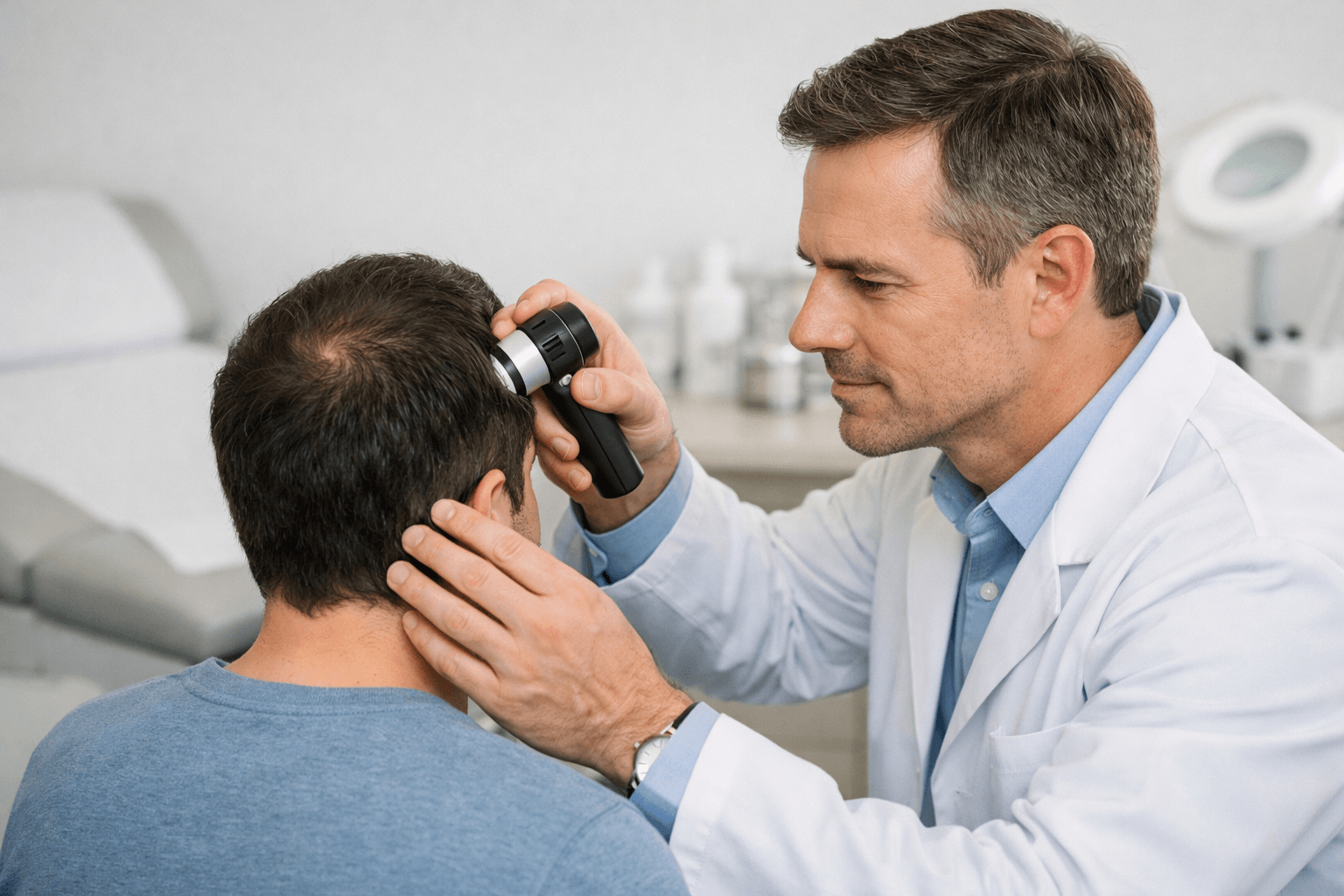
A consultation may include questions about the timing of shedding, recent illness, stress, dietary changes, medication use, hormonal events, family history, and previous hair-loss episodes. The physician may examine the scalp and hair shafts and use dermoscopy to assess follicle openings, hair calibre, and signs that may support one diagnosis over another.
Laboratory testing may be considered when the medical history or examination suggests a nutritional, hormonal, systemic, or other contributing problem. In uncertain cases, a scalp biopsy may occasionally be needed. The appropriate evaluation depends on the individual findings; not every patient requires every test.
It is also important to distinguish nonscarring TE from scarring alopecia and other disorders that may require different management. A hair transplant should not be planned solely because a person notices increased shedding or reduced hair volume.
Hair Transplant Candidacy After Telogen Effluvium
Hair-transplant candidacy depends on more than the amount of hair currently being shed. A physician should consider whether the diagnosis is established, whether hair loss is stable, and whether the donor supply is adequate.
Stable hair loss
Unstable or actively progressing hair loss can make surgical planning unreliable. If surrounding native hair continues to thin, the transplanted area may later look uneven or require further management. A period of observation may therefore be appropriate before a final decision is made.
Adequate donor hair
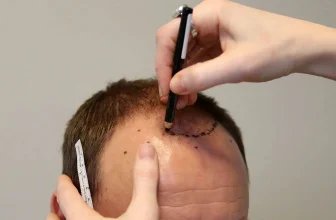
Hair transplantation moves follicles from a donor area to a recipient area. When thinning is diffuse, the donor area may not provide enough suitable follicles for predictable redistribution. Donor density, hair calibre, available scalp area, and the pattern of loss should be assessed individually.
Realistic expectations
A transplant can improve density in selected areas, but it does not recreate unlimited original density or guarantee that future hair loss will stop. Patients should understand which areas may benefit, how much coverage may be feasible, and whether non-surgical management may also be relevant.
Postoperative Shedding and Counseling
Temporary postoperative effluvium, sometimes called shock loss, can occur after hair transplantation. It may affect native hairs in the recipient region or hairs in the donor area. This possibility is relevant when counseling someone who has recently experienced sudden diffuse shedding, as additional temporary shedding may be emotionally difficult and can complicate assessment of early changes.
Follow-up should include review of healing, any ongoing shedding, and whether further assessment is needed. International patients should discuss how follow-up will be arranged after returning home and who to contact if concerns arise.
What Should You Do If You Are Currently Shedding Suddenly?
- Arrange a medical assessment: A dermatologist or qualified physician can investigate the pattern of shedding and possible contributing factors.
- Record the timing: Note when shedding began and whether an illness, stressor, dietary change, medication, or hormonal event occurred weeks or months beforehand.
- Avoid rushing into surgery: Active diffuse shedding makes it harder to estimate future density and transplant requirements.
- Follow recommended investigations: Testing should be guided by your history and clinical examination.
- Monitor the course: Changes in shedding and regrowth can help clarify whether the condition is temporary or whether another diagnosis may be present.
Do not stop prescribed medication or begin supplements without discussing this with an appropriate healthcare professional. Nutritional supplementation is not automatically suitable for every person, and the underlying cause should be evaluated rather than assumed.
Frequently Asked Questions
Can an active episode of telogen effluvium be treated with a hair transplant?
Usually, no. An active isolated episode of TE is generally not considered a suitable indication because it is often temporary and transplantation does not correct the underlying hair-cycle disturbance.
How long should I wait before considering a transplant?
There is no single waiting period suitable for everyone. A qualified physician should determine whether shedding has settled, whether regrowth can be assessed, and whether a separate permanent hair-loss diagnosis is present.
Can telogen effluvium permanently damage the donor area?
TE is usually nonscarring, meaning the follicles are not typically permanently destroyed. However, diffuse shedding may reveal or coexist with another condition, so the donor area should be examined before surgery.
Can a hair transplant cause more shedding?
Temporary postoperative effluvium can occur after transplantation and may affect native recipient-area or donor-area hair. This possibility should be discussed during the consent process.
Can international patients be assessed for treatment in Turkey?
International patients can contact the clinic for an initial review, but final suitability should be determined by a qualified physician after appropriate medical assessment. Photographs and medical history may assist with preliminary planning, but they may not replace an in-person examination.
Conclusion
A hair transplant is usually not the right first treatment for active telogen effluvium or unexplained sudden diffuse shedding. Because TE is commonly temporary, the priority is to identify possible triggers, confirm the diagnosis, and allow time for recovery and regrowth to be assessed.
Transplantation may become appropriate later if shedding has resolved and a stable, separate condition causing permanent hair loss is confirmed, with sufficient donor hair and realistic expectations. A consultation with a qualified physician is essential before making a decision about surgery.
Explore our Hair Transplant services in Turkey for an overview of treatment options and individual assessment.
TREATMENT OPTIONS
Explore Your Treatment Options
Find out more about our services and discuss which options may suit your individual needs.
YOUR NEXT STEP
Discuss Your Questions With Our Team
Request an individual assessment or ask our team about treatment planning and follow-up arrangements.
Medical References
- Telogen effluvium — British Association of Dermatologists.
- Telogen Effluvium: A Review — International Journal of Trichology; PubMed Central.
- Is Every Patient of Hair Loss a Candidate for Hair Transplant?—Deciding Surgical Candidacy in Pattern Hair Loss — Indian Journal of Plastic Surgery; PubMed Central.
- Hair Sciences, May/June 2020 — International Society of Hair Restoration Surgery.
- Beware of the Impostors—Scalp Pathology Primer for the Hair Transplant Surgeon — International Society of Hair Restoration Surgery; PubMed Central.
- Complications in Hair Transplantation — Indian Journal of Plastic Surgery; PubMed Central.