Written by: Estexper Medical Editorial Team
Medically reviewed by: Dt. Sait Gezer
When comparing dental implant treatment in Turkey, many international patients begin by asking which implant brand a clinic uses. Brand information is relevant, but it is only one part of a much larger system. A dental implant restoration depends on the precise compatibility of the implant body, abutment, fixation screw and final crown or prosthesis.
In Short
There is no single dental implant brand proven to be best for every patient. Before treatment, ask for the exact manufacturer, product line, model, platform and connection type, and keep these records for future maintenance. Compatible components and accessible professional follow-up are as important as the brand name.
This is why the exact manufacturer, product line, model, platform and connection type should be identified before treatment. Clear documentation can make future examinations, repairs and replacement of components easier, whether care takes place in Turkey or in your home country.
At Estexper Clinic, the discussion about implant treatment should include not only the proposed implant brand, but also the complete system, the planned restoration and the arrangements for long-term maintenance. Individual suitability must be assessed by a qualified dental professional after reviewing your oral health, medical history and treatment needs.
What is a dental implant system?
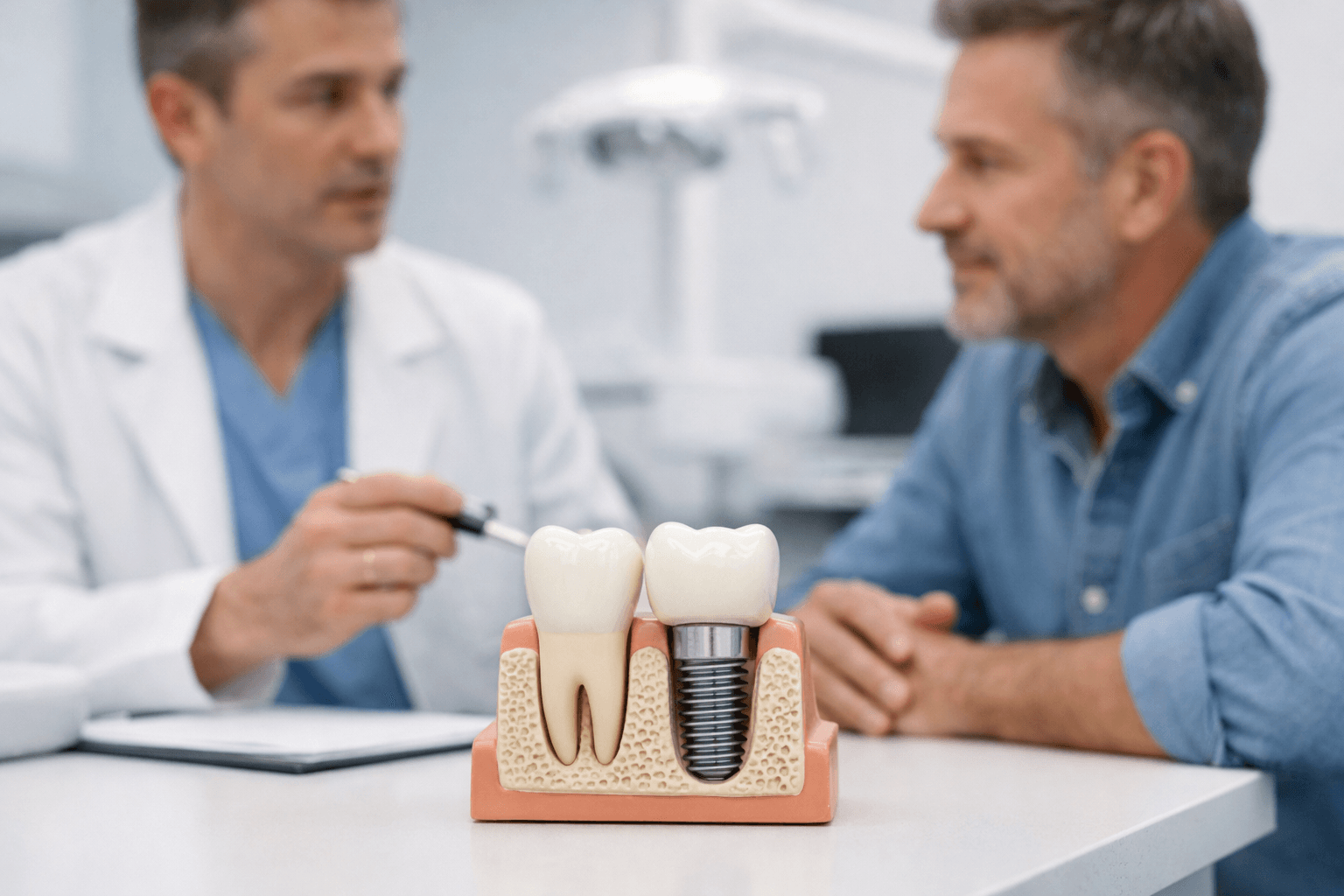
A dental implant is not simply a single screw placed in the jaw. It is part of a coordinated restorative system. The main elements may include:
- Implant body: the component placed in the jawbone.
- Abutment: the connector between the implant body and the restoration.
- Abutment or prosthetic screw: the screw used to secure the abutment or restoration, depending on the design.
- Restoration: the visible crown, bridge or other implant-supported prosthesis.
The implant body and abutment are designed to connect in a particular way. That connection may involve specific internal or external geometry, platform dimensions, screw dimensions and instruments. The parts are therefore not universally interchangeable simply because they look similar or have similar names.
The U.S. Food and Drug Administration describes a dental implant system as including the implant body and abutment, and it may also include an abutment fixation screw. It advises patients to ask for the brand and model and retain this information in their records.
Why the exact implant brand and model matter
Replacement parts are system-specific
If a screw, abutment or other component is lost, worn or damaged, a dental professional needs to know what was originally placed. The manufacturer and product line alone may not be enough. The precise model, platform diameter, connection type, component design and screw specification may also be required.
Using an apparently similar part without confirming compatibility can create problems with fit or assembly. The correct driver and the manufacturer-recommended torque may also vary between systems. For this reason, a complete implant passport or treatment record is more useful than a general statement such as “premium implants were used.”
Connection design influences maintenance
Implant-abutment connections can have different designs, including internal and external connections. A systematic review found high five-year survival rates for implant-supported crowns and fixed prostheses with both types of connection in the studies examined. However, complication patterns differed. Abutment or occlusal screw loosening was more prominent with external connections in the analyzed evidence.
This does not mean that one connection type is automatically suitable for every patient. The choice may depend on the planned restoration, available anatomy, functional demands, prosthetic design and the clinician’s assessment. It does mean that the connection type should be documented because it may be relevant to future troubleshooting and maintenance.
Fit affects mechanical performance
The interface between the implant and abutment must be assembled as intended by the manufacturer. Laboratory research summarized in a systematic review generally found better mechanical outcomes, marginal accuracy and microleakage results for original and manufacturer-certified abutments than for nonoriginal compatible abutments.
These findings should be interpreted carefully. Most of the available evidence was in vitro, and the review reported limitations including moderate or high risk of bias. The findings do not prove that every generic component causes clinical failure, nor do they establish that every original component will perform perfectly. They support a practical principle: component compatibility and documented design matter.
Is one dental implant brand best?
Current evidence does not support declaring one universal dental implant brand as the best choice for every patient. Treatment outcomes depend on several factors, including:
- the diagnosis and condition of the mouth;
- the quantity and quality of available bone;
- implant positioning and surgical planning;
- the design and fit of the final restoration;
- the clinician’s training and experience;
- individual risk factors and oral hygiene;
- professional follow-up and long-term maintenance.
A well-known manufacturer can offer established documentation, product support and access to replacement parts. However, a brand name on its own is not a guarantee of treatment success. Conversely, the absence of a familiar brand name does not by itself prove that treatment is inappropriate. The clinically important question is whether the exact system is suitable, correctly placed, restored with compatible components and properly documented.
What international patients should confirm before treatment in Turkey
Patients travelling for dental care should request clear information before agreeing to treatment. The following questions may help you compare options:
- Which manufacturer and product line are being proposed?
- What is the exact implant model and platform size?
- Is the connection internal or external, and what is its specific design?
- Which abutment and prosthetic screw will be used?
- Will the restoration be screw-retained or cement-retained, if relevant to the planned design?
- Are the components original or manufacturer-certified for the implant system?
- What documents will be provided after treatment?
- How can a dentist in another country identify the system if future care is needed?
- What follow-up and maintenance arrangements are recommended?
Ask for the information in writing rather than relying only on a verbal explanation. Product labels, implant cards, treatment records and restorative details should be retained securely. If several implants are placed, the records should identify the system and relevant details for each implant whenever possible.
Planning implant treatment in Turkey
Assessment and treatment planning
Before placement, a qualified dental professional should assess your oral condition and determine whether implants are appropriate for your particular situation. The assessment should include the proposed number and position of implants, the planned prosthesis and the factors that may affect maintenance.
Patients should also discuss existing restorations, previous dental treatment, medical conditions and any medications that may be relevant. Suitability cannot be determined from photographs or brand comparisons alone. A personal clinical assessment is necessary.
Understanding the planned components
Ask the clinic to explain how the implant body, abutment and restoration will work together. It is reasonable to request the intended manufacturer and model before treatment, while also understanding that the final selection may need to be confirmed after clinical assessment and planning.
The goal is not to choose a product based solely on marketing language. The goal is to understand the complete system and ensure that the proposed components are designed to work together. This is particularly important for international patients who may need care outside Turkey in the future.
Receiving your treatment records
At the end of treatment, request a complete record that identifies the implant system and the components used. Keep copies in both paper and digital formats. Useful documentation may include the manufacturer, product line, model, platform, connection type, abutment information, prosthetic screw details and restoration design.
These records can help another dentist identify compatible drivers, screws or abutments if maintenance is required. They may also reduce unnecessary delays when a restoration needs to be examined or removed.
Aftercare and long-term maintenance
Implant treatment does not eliminate the need for professional dental care. Long-term maintenance should include examination of the implant-supported restoration and its prosthetic components. The frequency and content of follow-up should be determined by your dental team according to your clinical situation.
Professional guidance recommends using cleaning instruments that are compatible with the implant and restoration materials. Prosthetic design should also allow appropriate access for hygiene. During maintenance visits, the dentist may examine the restoration, component fit, function and condition of the surrounding tissues.
If a restoration is removed and replaced, professional guidance states that new prosthetic screws should be considered rather than assuming that every screw can be reused indefinitely. A dentist should decide whether a component is suitable for reuse, repair or replacement. Do not purchase a visually similar screw or abutment without professional confirmation of compatibility.
Patients treated in Turkey should plan how follow-up will be managed after returning home. Your local dentist may need the original treatment records to identify the system and communicate effectively with the treating clinic. A structured maintenance plan is an important part of treatment planning, not an optional extra.
Potential problems when the system is not documented
Incomplete records may make future care more difficult. A dentist may be unable to identify the correct replacement part, driver or torque specification without knowing the original system. This can complicate repair of a loose or damaged restoration and may require additional investigation.
Using incompatible components can affect fit, screw engagement or mechanical performance. However, not every complication is caused by the implant brand or by the use of a nonoriginal component. Problems may also relate to implant positioning, occlusion, restoration design, hygiene, individual risk factors or normal wear over time.
If you experience discomfort, movement, damage to the restoration or any other concern, arrange an examination with a qualified dental professional. Do not attempt to tighten or replace implant components yourself.
Frequently asked questions
Should I choose treatment based only on the implant brand?
No. Brand information is useful, but it should be considered alongside diagnosis, implant positioning, restoration design, clinician experience, component compatibility and maintenance arrangements. No single brand is proven to be universally best for every patient.
Are generic compatible abutments always unsafe?
No. The available systematic-review evidence does not prove that every nonoriginal component causes clinical failure. However, laboratory evidence generally found better results for original and manufacturer-certified abutments in several tested outcomes. Your dentist should assess whether a component is appropriate and compatible with the specific implant system.
What should I do if I do not know which implant was placed?
Contact the clinic that performed the treatment and request your implant passport or complete treatment records. If the clinic is unavailable, a dentist may be able to investigate using existing records, radiographs or other clinical information, although identification may not always be straightforward.
Can a dentist in my home country maintain implants placed in Turkey?
Often, a local dentist can provide assessment and maintenance, but this depends on the nature of the care required and whether the implant system can be identified. Providing accurate manufacturer and component information can make communication and future treatment easier.
Key takeaway
When considering dental implant brands in Turkey, look beyond the brand name. Ask for the exact manufacturer, product line, model, platform, connection type, abutment and screw information. Confirm that the planned components are compatible, request complete records and discuss long-term maintenance before treatment.
The most responsible choice is not necessarily the product with the strongest marketing claim. It is a treatment plan that is clinically appropriate, carefully executed, accurately documented and supported by accessible professional follow-up. Your individual suitability must be determined by a qualified dental professional.
Explore our Cosmetic Dentistry services in Turkey for an overview of treatment options and individual assessment.
TREATMENT OPTIONS
Explore Your Treatment Options
Find out more about our services and discuss which options may suit your individual needs.
YOUR NEXT STEP
Discuss Your Questions With Our Team
Request an individual assessment or ask our team about treatment planning and follow-up arrangements.
Medical References
- Dental Implants: What You Should Know — U.S. Food and Drug Administration.
- Mechanical Outcomes, Microleakage, and Marginal Accuracy at the Implant-Abutment Interface of Original versus Nonoriginal Implant Abutments: A Systematic Review of In Vitro Studies — BioMed Research International; indexed in PubMed and available through PMC.
- A Systematic Review of the Influence of the Implant-Abutment Connection on the Clinical Outcomes of Ceramic and Metal Implant Abutments Supporting Fixed Implant Reconstructions — Clinical Oral Implants Research.
- Clinical Practice Guidelines for Recall and Maintenance of Patients with Tooth-Borne and Implant-Borne Dental Restorations — American College of Prosthodontists, American Dental Association, Academy of General Dentistry, and American Dental Hygienists’ Association.
- Position Statement: Maintenance of Full-Arch Implant Restorations — American College of Prosthodontists.