Written by: Estexper Medical Editorial Team
Medically reviewed by: Dt. Sait Gezer
Preparing for a dental consultation in Turkey is easier when you know which information may help the dentist understand your needs. A clear, current clinical record can support a more focused consultation and help the dental team assess whether additional examinations or imaging are appropriate.
In Short
- Bring a current medical and dental history, including medicines, allergies, relevant conditions and previous treatment.
- Share recent X-rays, scans, treatment plans and relevant photographs so the dentist can decide whether they are adequate.
- You do not need every possible test before travelling; the records needed depend on your concerns and the treatment being considered.
- Request copies of records created during care and plan how follow-up information will be shared with your dentist or doctor at home.
You do not necessarily need every possible test before travelling. The records required depend on your symptoms, dental history and the treatment being considered. Implant, oral-surgical, orthodontic, endodontic and cosmetic consultations may involve different combinations of clinical examinations, photographs, radiographs, scans or other diagnostic information.
This guide explains what international patients should gather before travelling to Turkey, how to share medical information carefully and what to ask about continuity of care after returning home.
Why preparation matters before a dental consultation in Turkey
A consultation is not only a discussion about the treatment you may want. It is an opportunity for a qualified dental professional to review your concerns, examine your oral health, consider your medical background and decide which diagnostic records are clinically useful.
The American Dental Association states that an accurate and current medical and dental history is important before diagnosis or treatment. Previous dental records can provide information about earlier findings, proposed procedures, restorations, infections, orthodontic treatment or other relevant care. They may also reduce the need to repeat information during your appointment.
For international patients, preparation has an additional purpose: it can support communication between the dental team in Turkey and healthcare professionals in your home country. Keeping copies of relevant records and requesting documentation from the clinic can make follow-up care more organised if it is needed later.
What dental records should you bring?
Before travelling, contact your current dentist or dental practice and ask for copies of records relevant to your consultation. You may not need your complete lifelong dental file, but a concise and recent set of documents can be helpful.
Useful dental documents may include:
- Previous dental examination notes
- Existing treatment plans or written estimates
- Records of previous dental treatment
- Referral or consultation letters
- Radiographs and related imaging reports
- Intraoral or facial photographs, when available
- Relevant laboratory results
- Follow-up records from recent dental care
- Information about ongoing dental problems or unresolved symptoms
Ask for the documents in English where possible, especially if your usual records are written in another language. If an English version is unavailable, keep the original documents and consider arranging an accurate translation of information that may affect diagnosis or treatment.
Digital copies are often convenient for international travel. Save files in an accessible format on your phone or another device, and keep a backup in an account or folder you can access securely. You may also wish to carry printed copies of the most important information.
How to prepare your medical history
Your dental team should know about medical conditions or medicines that could be relevant to an examination or planned treatment. Prepare a short, up-to-date medical summary rather than relying on memory during the appointment.
Include the following information:
- Current medical conditions
- Previous illnesses and surgeries
- Previous dental procedures and any complications
- Current medicines, including names, doses and how often you take them
- Prescription medicines, over-the-counter medicines and relevant supplements
- Known allergies or previous reactions to medicines or materials
- Any condition or treatment that may affect your dental care
- The contact details of your physician or specialist when appropriate
Do not stop, change or omit prescribed medicines simply because you are travelling for dental care. Instead, provide the full list to the dental team and discuss any questions with the relevant healthcare professional.
Also write down the main reason for seeking care. Mention pain, sensitivity, swelling, bleeding, changes in your bite, difficulty chewing, concerns about appearance or any previous diagnosis. Note when the problem began, whether it is getting worse and what makes it better or worse. These details can help the dentist understand your priorities.
Should you bring previous X-rays?
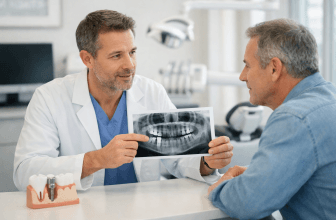
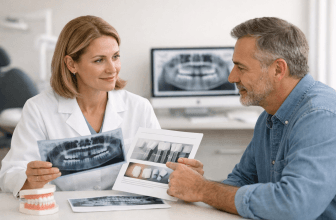
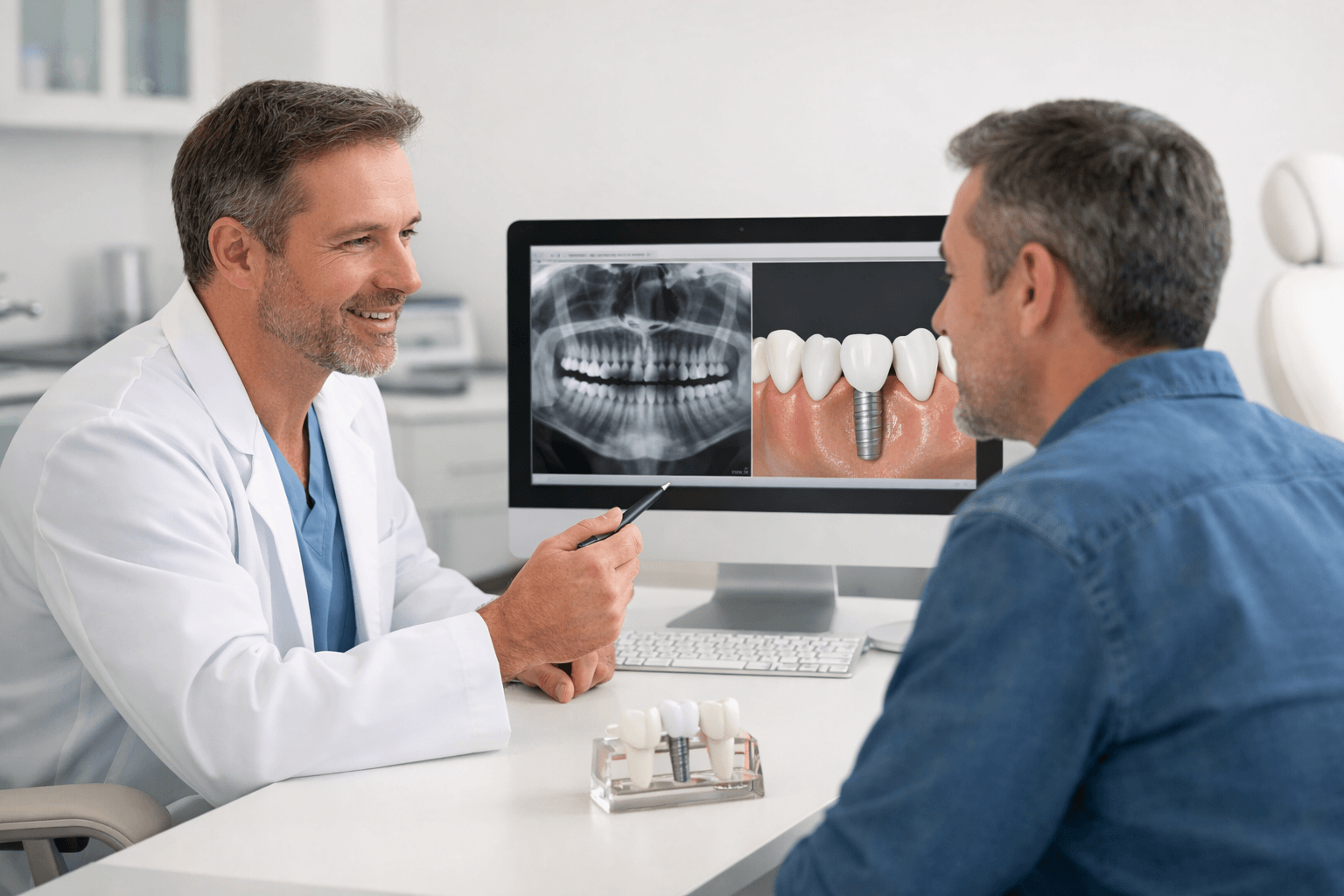
Yes. If you have recent dental X-rays, scans or imaging reports, share them with the dentist in Turkey before agreeing to repeat the examination. The receiving dentist can assess whether the images are clear, recent and relevant to the proposed consultation.
The U.S. Food and Drug Administration advises that dental radiographs should be selected according to the patient’s individual clinical circumstances. The benefits of an X-ray should be considered alongside exposure to radiation, and imaging should not be repeated automatically when existing records may be adequate.
However, bringing an old X-ray does not guarantee that no new imaging will be needed. The dentist may recommend additional or updated imaging if the existing record does not answer the clinical question, does not cover the relevant area or is not sufficiently clear. That decision should be based on your examination and proposed care.
How to organise your X-rays
- Request the original digital image files where possible, rather than only a photograph of the screen.
- Ask for any written radiology or dental report connected with the image.
- Label files with the date and type of examination if this is not already clear.
- Bring images from different dental practices if they relate to the problem being assessed.
- Tell the clinic in advance which imaging you have available.
If you are unsure whether a file can be opened, send it to the clinic before your appointment or ask your previous dentist for a commonly used digital format. Do not arrange unnecessary repeat X-rays solely because you are travelling abroad.
Are dental photographs useful?
Photographs can provide additional information before or during a consultation, particularly when the concern involves tooth appearance, gum visibility, alignment, facial symmetry or the smile. Intraoral photographs may show the teeth and gums from different angles, while facial photographs can help document the appearance of the smile and surrounding features.
Photographs are also used in treatment planning for some orthodontic and aesthetic cases. A systematic review of orthodontic diagnostic records identified dental models, facial and intraoral photographs and two-dimensional radiographs as traditional components of diagnosis and planning. However, the evidence did not establish one universally necessary set of records for every patient or case.
This means photographs may be helpful, but they do not replace a clinical examination. If you take your own images, use good lighting, avoid filters and do not rely on photographs to determine whether treatment is suitable. The dental team will decide which records are clinically relevant.
If the clinic asks for photographs before your visit
Follow the clinic’s instructions about image type, angles and file size. Usually, clear images are more useful than heavily edited pictures. Take them in a well-lit setting and make sure the relevant teeth or areas are visible. Do not include unnecessary personal information in the image file if it is not required.
Ask how your images will be transferred and stored. Use the clinic’s recommended communication method where available, and check that you are communicating with the correct clinic contact before sharing sensitive health information.
Do you need dental models or digital scans?
Dental models, intraoral scans and other digital records can contribute to diagnosis and treatment planning in selected cases, including some orthodontic and restorative consultations. They may help the clinician assess tooth position, the bite or the shape of the dental arches.
However, you should not assume that you need to obtain a model or scan before travelling. The appropriate records depend on the proposed treatment and the information already available. Ask the clinic whether a scan should be completed before your appointment or whether it can be performed during the consultation if clinically indicated.
A practical preparation checklist
Use the following checklist several days or weeks before travelling:
- Confirm the consultation purpose. Write down the treatment or concern you want to discuss and any questions you have.
- Contact your current dentist. Request relevant notes, treatment plans, referral letters, imaging and photographs.
- Prepare a medical summary. List conditions, surgeries, allergies, medicines, doses and relevant healthcare contacts.
- Organise files. Use clear file names and keep digital and printed backups of important documents.
- Ask about language. Request English documentation where possible and clarify whether interpretation is available.
- Send records carefully. Follow the clinic’s instructions for sharing X-rays, photographs and medical information.
- Check whether new tests are requested. Ask why a test is needed and whether existing records can be reviewed first.
- Plan follow-up communication. Find out how you will receive treatment records, reports and post-consultation instructions.
Questions to ask during the consultation
Preparing questions can help you make better use of your appointment. Consider asking:
- Which of my existing records are useful for assessing my case?
- Do I need new X-rays, photographs, scans or other examinations?
- Why is each additional test being recommended?
- What findings are confirmed, and what still needs to be assessed?
- Are there medical or dental factors that may affect my options?
- What records will I receive after the consultation?
- How will follow-up information be shared with my dentist or doctor at home?
- Who should I contact if I have questions after returning to my country?
A consultation should give you an opportunity to understand the proposed diagnostic process, not just the treatment options. If the information is unclear, ask for an explanation in language you understand before making a decision.
Records and follow-up after treatment in Turkey
Before returning home, request copies of the records created during your care. Depending on your treatment and the clinic’s documentation, this may include consultation notes, radiographs, photographs, treatment-plan information, consent documentation and follow-up instructions.
The CDC advises people seeking healthcare abroad to bring medical records, test results, medication lists, prescriptions and allergy information; disclose their complete medical and treatment history; request copies of overseas records before returning home; and arrange follow-up care in their home country.
Ask the clinic how your home dentist can contact the treating team if clarification is needed. Keep records of dates, procedures and any advice you were given. If you develop a concern after travelling, contact the dental provider or an appropriate healthcare professional promptly and explain that care was provided abroad.
Important points about suitability and safety
Records and photographs can support a consultation, but they cannot establish suitability for a particular dental procedure on their own. A qualified dentist must assess your individual oral and medical circumstances, review the available records and decide whether further examination or testing is appropriate.
Do not conceal medical conditions, allergies, medicines or previous treatment because you are concerned that they may affect your options. Complete information helps the dental team make safer, more individualised decisions. If your records are incomplete, tell the dentist what is missing rather than guessing.
Frequently asked questions
Do I need every dental record from my previous dentist?
Not always. Request records relevant to your current concern and proposed consultation, including recent imaging, treatment plans, referrals and information about previous treatment. The clinic can tell you if additional documentation is needed.
Can I have new X-rays taken before travelling?
Only when clinically appropriate and requested by a qualified dental professional. Existing X-rays should be reviewed first where possible, because repeating imaging without a clinical reason may expose you to unnecessary radiation.
Are mobile-phone photographs enough for a consultation?
They may provide preliminary information, but they cannot replace a dental examination. If photographs are requested, follow the clinic’s instructions and understand that further records may still be needed.
What if my records are not in English?
Keep the original documents and ask whether the clinic accepts them. Request English versions where possible, or arrange an accurate translation of information that may affect medical or dental decisions.
Should I share my records with my dentist at home?
Yes, when follow-up care or continued monitoring is relevant. Ask the Turkish clinic for copies of your consultation and treatment records so they can be shared with healthcare professionals in your home country.
Medical References
- Medical Tourism — CDC Yellow Book, Centers for Disease Control and Prevention.
- Medical/Dental Health History — American Dental Association.
- Documentation/Patient Records — American Dental Association.
- The Selection of Patients for Dental Radiographic Examinations — U.S. Food and Drug Administration.
- Records needed for orthodontic diagnosis and treatment planning: a systematic review — PubMed / European Journal of Orthodontics.