Written by: Estexper Medical Editorial Team
Medically reviewed by: Yahya Ozel, MD
Weight regain after gastric bypass can be confusing and discouraging, particularly when surgery initially produced meaningful weight loss. It does not necessarily mean that the operation has failed, but it does warrant a careful assessment of the possible causes and treatment options.
In Short
Medication, endoscopic transoral outlet reduction (TORe) and revisional surgery can all help selected patients with weight regain after gastric bypass. The appropriate option depends on whether behavioral, metabolic, nutritional or anatomical factors are contributing. A multidisciplinary bariatric assessment is important before choosing treatment, because no single option is suitable for everyone.
After Roux-en-Y gastric bypass, some patients experience recurrent weight gain after an initially adequate response. Others may not achieve an adequate initial weight-loss response, sometimes described as a suboptimal clinical response. These situations are not identical, and the distinction can influence evaluation and treatment planning.
Current expert guidance supports individualized, multidisciplinary care. Depending on the findings, treatment may include nutritional and behavioral support, anti-obesity medication, an endoscopic procedure such as transoral outlet reduction, or revisional surgery. The most suitable option depends on health, weight history, eating patterns, medications, nutritional status, anatomy and the previous operation.
Why can weight return after gastric bypass?
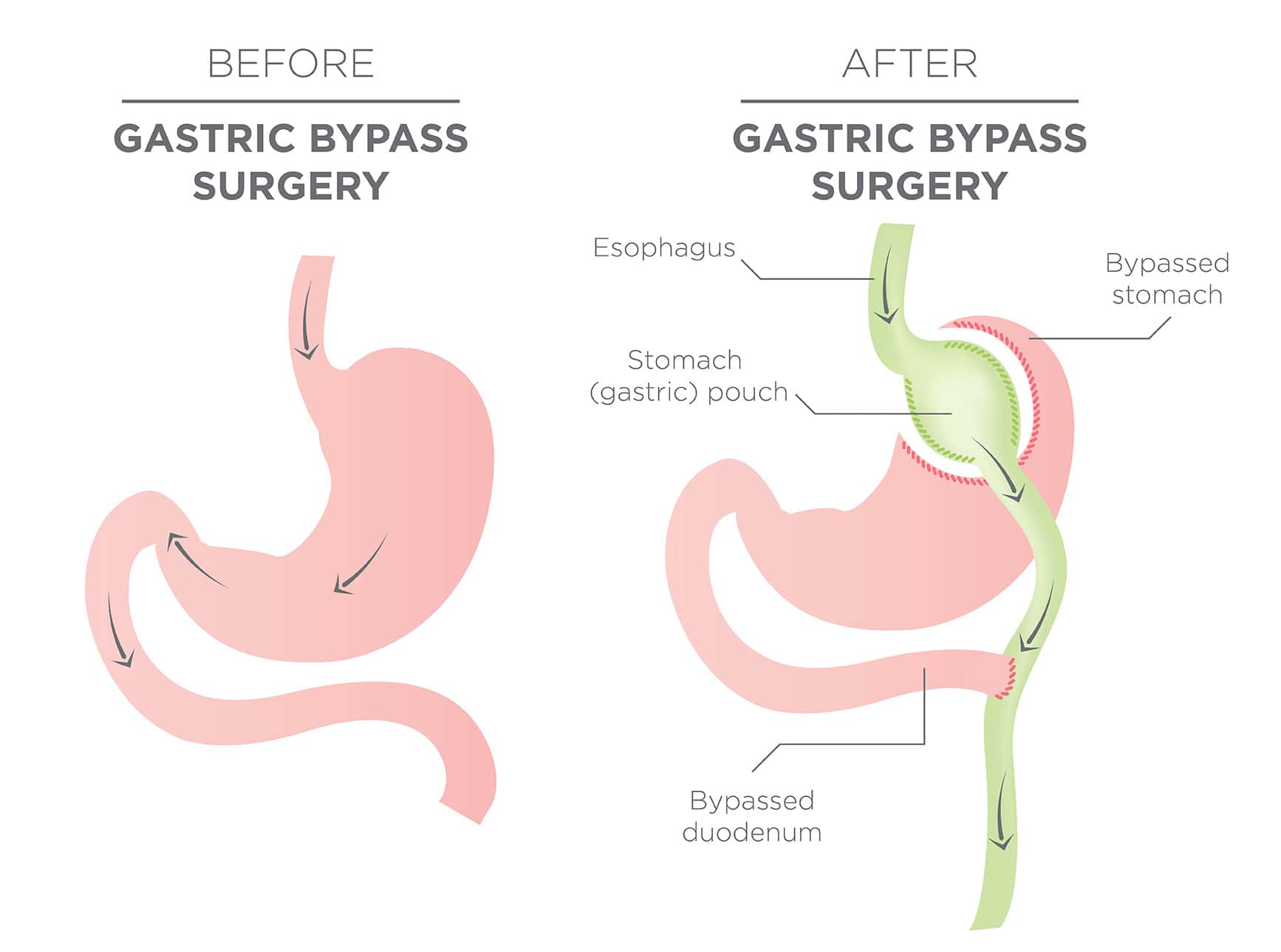
Weight regulation is influenced by many interacting factors. Changes in appetite, eating behavior, physical activity, sleep, emotional wellbeing, metabolic adaptation and other medical issues may contribute to weight recurrence. Some patients may also have anatomical changes involving the gastric pouch or the gastrojejunal anastomosis, the connection between the pouch and small intestine.
An enlarged gastric pouch or gastrojejunal outlet may be relevant in selected patients, but anatomy is only one possible explanation. Not every person with weight regain has an anatomical problem, and an anatomical finding does not automatically mean revision is required.
A specialist assessment may review the original surgical records, weight trajectory, dietary habits, hunger and satiety, current medications, obesity-related conditions and nutritional status. It should also consider whether weight was never adequately lost or returned after an initial response. This distinction is emphasized by the International Federation for the Surgery of Obesity and Metabolic Disorders (IFSO).
First step: a comprehensive assessment
Before choosing medication, endoscopy or revision surgery, the treating team should assess the likely contributors to weight regain. A bariatric physician, surgeon, dietitian and other relevant healthcare professionals may work together as part of a multidisciplinary team.
The assessment may include:
- A review of weight history, including the lowest post-surgery weight and the timing of regain.
- Discussion of eating patterns, hunger, emotional eating, grazing and tolerance of different foods.
- Review of physical activity, sleep, psychological wellbeing and factors affecting adherence.
- Assessment of obesity-related medical conditions and current medications.
- Evaluation of nutritional status and the need for ongoing bariatric supplementation.
- Review of the original bypass technique and any previous complications or procedures.
- Investigation of possible anatomical contributors when clinically appropriate.
This process is particularly important for international patients travelling for treatment. Before arranging care, ask whether the clinic can review previous operative reports, arrange appropriate investigations and coordinate follow-up after return home. A remote consultation may help with initial planning, but it does not replace an in-person assessment when one is needed.
Can medication help with weight regain after gastric bypass?
Anti-obesity medication may be appropriate for some people after gastric bypass. It may be considered when increased appetite, metabolic factors or persistent obesity contribute to weight regain, and it may be used alongside nutritional and behavioral support. The choice should be based on medical history, current medicines, contraindications, nutritional status and treatment goals.
Evidence for GLP-1 receptor agonists
GLP-1 receptor agonists are among the better-studied medication options in this setting. In a 56-week randomized, double-blind, placebo-controlled trial involving patients with weight recurrence after Roux-en-Y gastric bypass, liraglutide 3.0 mg produced an adjusted mean total body-weight change of approximately -8.8%, compared with +1.1% with placebo. In that study, 76% of participants receiving liraglutide achieved at least 5% total weight loss, compared with 17% receiving placebo.
A systematic review and meta-analysis of randomized trials also found that GLP-1 receptor agonists can reduce weight and body mass index in people who have undergone bariatric surgery. However, adverse events, particularly nausea, were more frequent, and long-term evidence remains limited.
Newer medicines, including semaglutide and tirzepatide, are promising in obesity treatment generally, but long-term comparative evidence specifically for weight regain after gastric bypass is still developing. Their use should be individualized rather than assumed to be suitable for every post-bypass patient.
What should patients expect from medication?
Medication is not a replacement for assessment or long-term follow-up. It may help reduce appetite and support additional weight loss, but response varies. A physician should explain expected benefits, possible side effects and how progress will be monitored. Medication may need to be continued to maintain its effect, and stopping or changing treatment should be discussed with the prescribing clinician.
Nutritional health also needs protection after gastric bypass. Appetite reduction, nausea or reduced food intake can make it more difficult to obtain adequate protein, fluids, vitamins and minerals. The care team should consider this when prescribing and monitoring treatment.
Can endoscopy help?
Endoscopic treatment may be considered when assessment suggests that the gastrojejunal outlet has become enlarged and is contributing to weight recurrence. The best-known option is transoral outlet reduction, commonly called TORe. This procedure is performed through the mouth using an endoscope and aims to reduce the size of the gastrojejunal outlet, sometimes with the use of argon plasma coagulation.
By changing the outlet, TORe may support renewed portion control. It is less invasive than revisional abdominal surgery, which is one reason it may be discussed for selected patients. However, TORe is not appropriate for everyone and should not be viewed as a universal solution for weight regain.
Effectiveness and limitations of TORe
Systematic reviews and meta-analyses report modest to moderate short-term weight loss after TORe, with generally low short-term adverse-event rates. However, the available studies are heterogeneous. They differ in patient selection, technical methods, follow-up periods and definitions of success. Durability beyond one year is less certain than the initial response.
TORe may be most useful when an enlarged outlet is confirmed and the patient can participate in accompanying nutritional and behavioral support. The procedure does not address every cause of weight regain, and additional treatment may be needed if weight returns later.
When is revision surgery considered?
Revisional bariatric surgery may be considered when there is a clear anatomical or clinical reason and other options are unlikely to provide sufficient benefit. Depending on the individual situation, revision may address a problem with the existing bypass or modify the surgical anatomy. The exact procedure cannot be selected safely without reviewing the original operation, current anatomy, medical conditions and nutritional risks.
Systematic-review evidence suggests that revisional surgical procedures can produce clinically relevant and potentially more sustained weight loss than endoscopic procedures in selected patients. However, this potential benefit comes with greater technical complexity and a higher complication risk than endoscopic approaches. Revision surgery may also have nutritional consequences that require careful long-term monitoring.
Revision should not be selected solely because weight loss has slowed or because a faster result is desired. The expected benefit needs to be balanced against operative risk, previous abdominal surgery, comorbidities, nutritional status and the availability of long-term follow-up.
Medication, endoscopy or revision: how are they compared?
There is no single best treatment for every patient. The options differ in invasiveness, suitability and evidence strength.
- Medication: Non-surgical and potentially useful when appetite, metabolic factors or persistent obesity are important contributors. Results vary, side effects can occur, and long-term treatment may be needed.
- Endoscopic TORe: May be appropriate when the gastrojejunal outlet is enlarged. It generally avoids abdominal surgery, but weight loss is often modest to moderate and long-term durability remains uncertain.
- Revision surgery: May offer greater or more durable weight loss in carefully selected patients with an appropriate indication. It is technically complex and associated with higher complication and nutritional risks.
In practice, treatment may combine approaches. For example, medication and structured behavioral support may be used before or after an endoscopic or surgical procedure. The plan should be based on the factors contributing to weight regain rather than on the name of the treatment alone.
Preparation and follow-up considerations
Preparation depends on the selected treatment. Before medication, the prescribing clinician should review current medicines, medical conditions, nutritional status and possible side effects. Before endoscopy or revision surgery, the team may need to assess anatomy and review previous operative records. Patients should provide accurate information about prior procedures, complications and supplements.
After any intervention, follow-up is important. Care may include dietary guidance, nutritional supplementation, monitoring of vitamins and minerals, weight reviews and support for eating behavior and physical activity. Follow-up needs differ according to whether treatment is medication, endoscopy or surgery.
International patients should plan how follow-up will be managed after returning home. Ask the treating team which appointments are included, what records will be provided, whom to contact if symptoms develop and how communication with a local doctor can be arranged. Treatment abroad should include a realistic plan for continuity of care, not only the procedure itself.
Risks and important limitations
All treatment options have limitations. Medication may cause side effects such as nausea and may not produce the desired response. Endoscopic procedures can have complications, and effectiveness may decrease over time. Revision surgery has greater operative complexity and a higher risk profile than endoscopic treatment, with possible nutritional consequences.
Evidence is not equally strong for every option. Liraglutide has randomized evidence in post-bypass weight recurrence, while evidence for semaglutide and tirzepatide specifically in this population remains more limited. TORe studies show variable outcomes and uncertain long-term durability. Surgical revision may provide more sustained weight loss in selected patients, but comparisons are affected by differences in patient anatomy and procedure type.
Seek prompt medical assessment for persistent vomiting, severe abdominal pain, difficulty swallowing, dehydration, bleeding or other concerning symptoms. These symptoms should not be attributed to ordinary weight recurrence without evaluation.
Frequently asked questions
Is weight regain after gastric bypass common?
Weight trajectories vary after bypass. Some patients experience recurrent weight gain, while others have an inadequate initial response. The important step is to assess the pattern, timing and possible causes rather than assume that one explanation applies to everyone.
Does weight regain mean my gastric bypass has failed?
No. Weight recurrence may reflect multiple biological, behavioral, metabolic or anatomical factors. A specialist evaluation can help determine whether further treatment is appropriate and which approach has a reasonable balance of benefit and risk.
Is endoscopy safer than revision surgery?
Endoscopic treatment is generally less invasive than revisional abdominal surgery and is associated with generally low short-term adverse-event rates in published studies. However, it may provide less durable weight loss. Individual risks depend on anatomy, health and the exact procedure.
Can medication be used instead of another procedure?
In some patients, medication may provide clinically meaningful additional weight loss without an endoscopic or surgical intervention. Suitability depends on health, previous surgery, nutritional status, medications and treatment goals. A qualified physician should make this decision.
Conclusion
Weight regain after gastric bypass should be approached as a chronic, multifactorial issue. Medication, endoscopic TORe and revisional surgery may all have a role, but they are not interchangeable and none guarantees a particular result.
A multidisciplinary assessment can help clarify whether the main contributors are behavioral, metabolic, nutritional or anatomical. For international patients considering treatment in Turkey, the quality of pre-treatment evaluation and the plan for long-term follow-up are as important as the procedure itself. Discuss options with a qualified bariatric physician or surgeon who can review individual history and explain expected benefits, risks and alternatives.
Explore our Bariatric Surgery services in Turkey for an overview of treatment options and individual assessment.
TREATMENT OPTIONS
Explore Your Treatment Options
Find out more about our services and discuss which options may suit your individual needs.
YOUR NEXT STEP
Discuss Your Questions With Our Team
Request an individual assessment or ask our team about treatment planning and follow-up arrangements.
Medical References
- American Society for Metabolic and Bariatric Surgery statement on the treatment options for patients with non-response and weight recurrence after metabolic and bariatric surgery — American Society for Metabolic and Bariatric Surgery.
- A randomized, double-blind, placebo-controlled trial of weight loss using liraglutide 3.0 mg for weight recurrence after Roux-en-Y gastric bypass — Surgery for Obesity and Related Diseases; indexed in PubMed.
- Efficacy and Safety of Glucagon-Like Peptide-1 Receptor Agonists Following Bariatric Surgery: A Systematic Review and Meta-Analysis — Endocrinology, Diabetes & Metabolism; indexed in PubMed Central.
- Efficacy and safety of revisional treatments for weight regain or insufficient weight loss after Roux-en-Y gastric bypass: A systematic review and meta-analysis — Obesity Reviews; World Obesity Federation.
- Efficacy of transoral outlet reduction in Roux-en-Y gastric bypass patients to promote weight loss: a systematic review and meta-analysis — Endoscopy International Open; indexed in PubMed Central.
- Therapeutic Options for Recurrence of Weight and Obesity Related Complications After Metabolic and Bariatric Surgery: An IFSO Position Statement — International Federation for the Surgery of Obesity and Metabolic Disorders.