Written by: Estexper Medical Editorial Team
Medically reviewed by: Dt. Sibel Gokceer
When replacing a missing tooth, the implant material is an important part of the treatment discussion. The two main options are titanium and zirconia, a tooth-coloured ceramic made from zirconium oxide. Both materials are used in modern implant dentistry, but they are not interchangeable in every situation.
In Short
Titanium remains the most evidence-established dental implant material because it has the longest and broadest clinical record. Zirconia can be a suitable tooth-coloured, nonmetal alternative in selected cases, particularly where appearance or a preference to avoid metal is important. The most appropriate option depends on the implant system, treatment location, restoration plan, bone and gum conditions, clinician experience and individual preferences.
So, which is better: zirconia or titanium dental implants? There is no universal answer. Titanium remains the best-established option because it has the longest and broadest clinical record. Zirconia may be attractive for patients who prefer a metal-free or tooth-coloured solution, particularly when appearance is a major concern. However, the choice should also consider implant design, the location of the missing tooth, bone and gum conditions, the planned restoration, the clinician’s experience and your personal preferences.
This guide from Estexper Clinic explains the current evidence and the practical differences between zirconia and titanium implants, including points that international patients should discuss during a consultation in Turkey.
What Are Dental Implants Made From?
A dental implant is placed in the jaw to support a replacement tooth or dental prosthesis. The implant system may include the part placed in the bone, a connecting component and the visible crown or restoration. Different manufacturers offer different designs, surfaces and components, so the material alone does not determine the entire treatment result.
According to the U.S. Food and Drug Administration, most dental implant systems are made from titanium or zirconium oxide. Marketed systems must demonstrate safety and effectiveness comparable with legally marketed devices, and biocompatibility testing forms part of the evaluation process.
Titanium implants
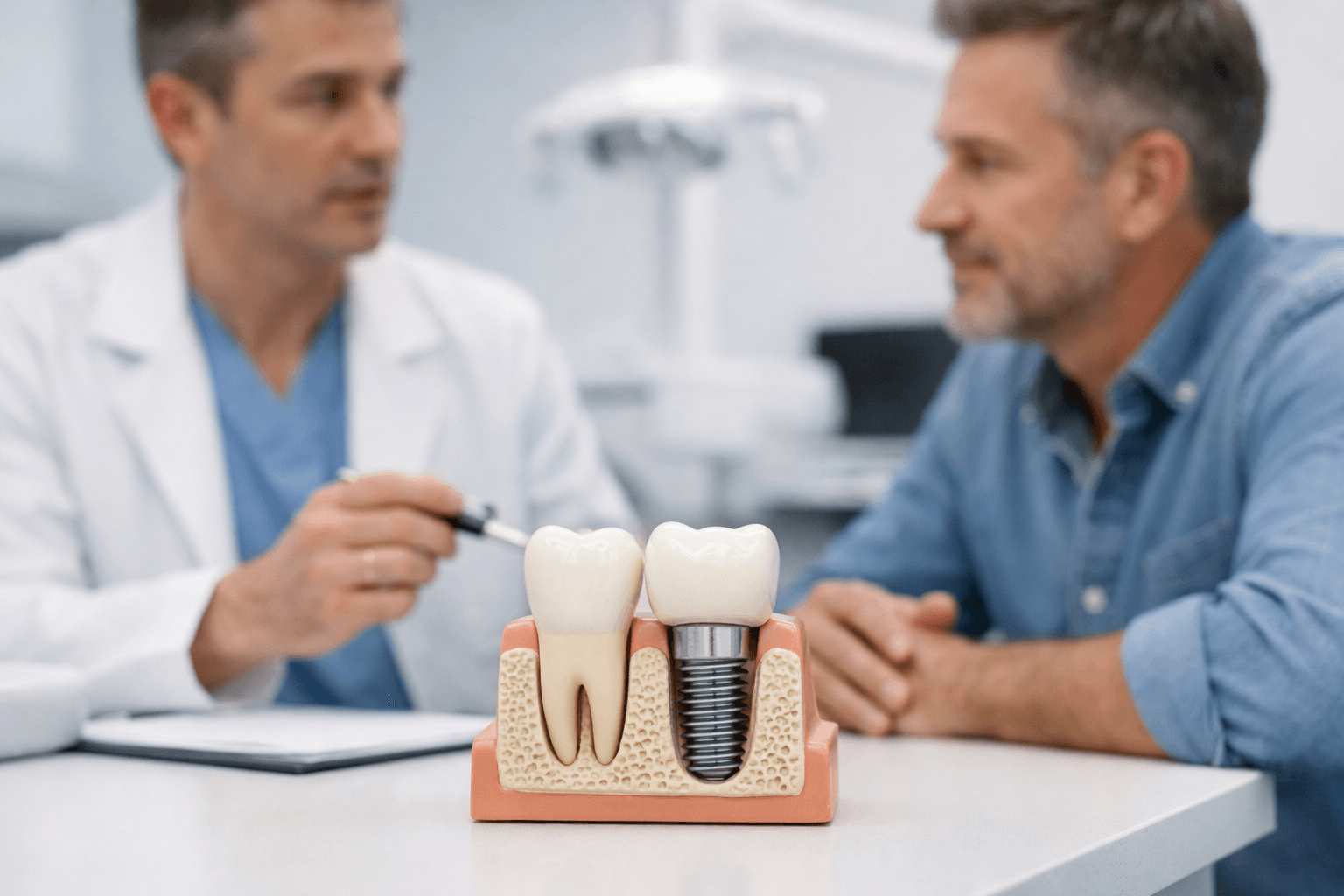
Titanium is a metal that has been used in dental implants for many years. It has the largest and longest clinical evidence base, with extensive experience across different implant designs and treatment situations. This established record is one of the main reasons titanium remains the standard against which newer materials are compared.
Titanium implants may be suitable for a wide range of patients, provided that the person’s general oral and medical assessment supports implant treatment. Their broader evidence base can also give clinicians more documented options when planning complex or highly individualised cases.
Zirconia implants
Zirconia implants are made from zirconium oxide, a ceramic material with a tooth-like white colour. Their appearance may be appealing when the implant or surrounding components could be visible through thin gum tissue, especially in the front of the mouth.
Zirconia is also considered a nonmetal option. This can be relevant to patients who strongly prefer to avoid metal, although the decision should still be based on a clinical assessment rather than on general claims that one material is universally more biocompatible or safer.
Zirconia vs Titanium: What Does the Evidence Show?
Current research does not provide a simple answer that applies to every patient. The available studies differ in implant designs, follow-up periods, patient groups and treatment locations.
A 2023 systematic review and meta-analysis that included only two exclusive randomised or controlled patient populations found no statistically significant short-term difference in survival between zirconia and titanium implants. However, the authors emphasised that the evidence was limited and that longer-term randomised studies are needed.
A 2024 systematic review and meta-analysis of randomised controlled trials reported higher one-year survival with titanium implants and less marginal bone loss with titanium in the included analysis. The researchers also noted that the number of direct comparative trials was small. These results should therefore be interpreted carefully rather than treated as proof that titanium is always the right choice.
An International Team for Implantology, or ITI, consensus review reported that commercially available zirconia implants can provide reliable outcomes comparable with published titanium data through approximately five years. Its pooled estimate for zirconia implants was a 97.2% five-year survival estimate, with mean marginal bone loss of 1.1 mm and mean probing depth of 3.0 mm. The review also cautioned that most of the available evidence involved one-piece zirconia implants and that evidence for newer two-piece systems remains limited.
Overall, titanium has the stronger long-term and broader evidence base, while zirconia can be a reasonable alternative in selected cases. There is currently no strong clinical evidence that zirconia prevents peri-implantitis better than titanium.
Key Differences Between Zirconia and Titanium Implants
Appearance and aesthetics
The most obvious difference is colour. Titanium is metallic, while zirconia is tooth-coloured. A zirconia implant or ceramic component may be considered when the gum is thin or when the treatment area is highly visible. This does not automatically mean that zirconia will produce a better aesthetic result, however. The appearance of the final restoration also depends on implant position, gum tissue, bone support, the crown, the shade and shape of the replacement tooth, and the skill of the dental team.
Clinical evidence and experience
Titanium has been studied for longer and across more implant systems and clinical situations. This gives clinicians a larger body of evidence when choosing designs and planning treatment. Zirconia evidence has grown, but it remains more limited and heterogeneous, particularly for two-piece implants and longer-term outcomes.
Implant design
Many of the zirconia implants included in published research are one-piece designs. In these systems, the implant and connecting component are manufactured as one unit. Two-piece zirconia systems offer different prosthetic possibilities, but the ITI consensus review highlighted that clinical evidence for these newer designs is still limited.
Titanium is available in a broad range of one-piece and two-piece systems. The ability to select from different designs may be important when a case requires specific restorative or surgical planning.
Marginal bone and biological outcomes
Marginal bone levels are monitored around dental implants as part of follow-up care. The 2024 review of randomised trials reported less marginal bone loss with titanium in the studies analysed. At the same time, the ITI review found that commercially available zirconia implants can achieve reliable results through approximately five years.
These findings are not necessarily contradictory. They reflect different groups of studies and research methods. They also show why the material should not be considered separately from implant design, surgical technique, oral hygiene, restoration design and follow-up.
Peri-implantitis
Peri-implantitis is a disease affecting the tissues around an implant. Some promotional claims suggest that zirconia prevents this condition, but current clinical evidence does not establish that zirconia is better than titanium for preventing peri-implantitis. Both options require appropriate planning, professional maintenance and good daily oral hygiene.
Who Might Consider Zirconia Implants?
Zirconia may be discussed when a patient wants a tooth-coloured ceramic or nonmetal option and the proposed treatment is compatible with the available implant system. It may be particularly relevant in visible areas where the colour of an implant component could be a concern.
However, wanting a metal-free implant does not by itself make zirconia the best choice. The dentist must assess the amount and quality of available bone, the gum and soft-tissue condition, the position of the missing tooth, the bite, the restoration planned and the design of the implant system. The clinician should also explain the strength of the evidence for the specific zirconia product being considered.
Who Might Prefer Titanium Implants?
Titanium may be preferred when the priority is the most established evidence base, a broad choice of implant designs or a treatment situation in which the clinician has extensive experience with titanium systems. The material is used in many different clinical contexts and has a long record of documented performance.
Titanium may also be considered when the prosthetic plan requires design flexibility that is not available, or is less well documented, with a particular zirconia system. The final decision should be made after an individual examination rather than from online comparisons alone.
What Happens Before Choosing an Implant Material?
A consultation should begin with a complete assessment of the missing tooth or teeth and the surrounding tissues. Your dentist may discuss the condition of the bone and gums, the desired appearance, the planned crown or prosthesis and how the implant will fit into your overall dental care.
Ask which specific implant system is being proposed and whether it is a one-piece or two-piece design. It is also reasonable to ask about the evidence for that product, the clinician’s experience with it, the expected maintenance requirements and what follow-up will be available after treatment.
International patients travelling to Turkey should request a clear treatment plan before booking travel. This should explain the proposed material, implant design, restorative stages, consultations, imaging requirements and follow-up arrangements. A remote assessment can help with initial planning, but final suitability must be determined by a qualified dental professional through an appropriate clinical examination.
Recovery and Aftercare
Recovery depends on the surgical plan, the number and position of implants, the condition of the bone and soft tissues, and the restoration being provided. Your dental team should give personalised instructions for oral hygiene, eating, appointments and monitoring after placement.
Aftercare is important regardless of whether the implant is titanium or zirconia. Regular professional reviews allow the dental team to check the implant, surrounding tissues, restoration and bite. Daily cleaning and attendance at recommended follow-up appointments are also important parts of long-term care.
Potential Limitations and Risks
No implant material is suitable for every person or every treatment plan. Potential concerns may relate to the surgical procedure, healing, the surrounding tissues, the restoration or the mechanical characteristics of a particular implant design. Zirconia implants may also have limitations related to the smaller evidence base for some newer two-piece systems.
For this reason, patients should be cautious about claims that zirconia is always stronger, more aesthetic, more biocompatible or longer-lasting than titanium. The available evidence is mixed, and outcomes depend on multiple factors beyond the material itself. Your dentist can explain the relevant risks and uncertainties for your specific case.
Which Implant Material Is Better for You?
For many patients, titanium remains the more evidence-established choice. It has the longest clinical record, broad use across implant designs and the most extensive long-term documentation. Zirconia may be a suitable alternative when a tooth-coloured or nonmetal option is important and the chosen system is appropriate for the treatment plan.
The best decision is not based on a simple ranking. It should take into account:
- The location and visibility of the missing tooth
- The available bone and the condition of the gum tissue
- The required implant and restoration design
- The evidence available for the specific product
- The clinician’s training and experience with that system
- Your aesthetic goals, preferences and expectations
- The availability of follow-up care, especially when travelling internationally
At Estexper Clinic, a qualified dental professional can discuss these factors with you and explain why one material may be more appropriate than the other for your circumstances. Neither zirconia nor titanium should be selected solely because of a general marketing claim.
Frequently Asked Questions
Are zirconia implants metal-free?
Zirconia implants are made from zirconium oxide ceramic and are considered a nonmetal implant option. Ask your dental team about the materials used in every part of the proposed implant and restoration, not only the implant body.
Are zirconia implants more aesthetic than titanium implants?
Zirconia has a tooth-like colour, which may offer an aesthetic advantage in selected situations. However, the final appearance also depends on implant placement, gum tissue, bone support and the design of the crown. Zirconia is not automatically more aesthetic in every case.
Do zirconia implants last longer than titanium implants?
There is not enough comparative evidence to claim that zirconia implants last longer. Titanium has the more established long-term clinical record, while zirconia has shown reliable outcomes in selected indications through approximately five years.
Does zirconia prevent peri-implantitis?
Current clinical evidence does not show that zirconia is better than titanium for preventing peri-implantitis. Both materials require professional monitoring and appropriate daily care.
Can international patients receive zirconia or titanium implants in Turkey?
Both materials may be available, but the options depend on the clinic, the implant system, the treatment plan and the patient’s clinical needs. Before travelling, request details about the proposed material, manufacturer, treatment stages and follow-up care.
Medical References
- Dental Implants: What You Should Know — U.S. Food and Drug Administration.
- Survival and success of zirconia compared with titanium implants: a systematic review and meta-analysis — Clinical Oral Investigations; available through PubMed Central.
- Comparative Clinical Behavior of Zirconia versus Titanium Dental Implants: A Systematic Review and Meta-Analysis of Randomized Controlled Trials — Journal of Clinical Medicine; indexed in PubMed.
- Clinical and Radiographic Outcomes of Zirconia Dental Implants: Consensus Statements — International Team for Implantology.
- Clinical and radiographic outcomes of zirconia dental implants—A systematic review and meta-analysis — International Team for Implantology; Clinical Oral Implants Research.