Written by: Estexper Medical Editorial Team
Medically reviewed by: Dt. Sibel Gokceer
For international patients, one of the first questions about dental treatment abroad is often how long crowns or veneers may take in Turkey. The answer depends on the number of teeth, restoration material, laboratory workflow, oral health, bite and whether additional treatment is needed before final restorations can be fitted.
In Short
Conventional laboratory-made crowns and porcelain veneers commonly require a preparation appointment and a later fitting appointment after laboratory fabrication, which may take around two to three weeks or sometimes longer. Selected cases may be completed more quickly when suitable technology and coordination are available, but treatment timing should allow for assessment, temporary protection where needed, try-in, bite checks and possible adjustments. If there is untreated disease, an uncertain tooth prognosis or complex treatment needs, staged care may be more appropriate.
There is no single Turkey-wide timetable for crowns or veneers. Some selected patients may be suitable for an accelerated or same-trip pathway, particularly when the clinic and dental laboratory can coordinate closely. However, a short visit should not remove essential steps such as diagnosis, preparation, aesthetic checks, bite assessment and contingency time.
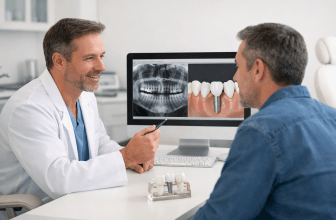
For many conventional laboratory-made restorations, treatment involves at least two clinical appointments. The teeth are assessed and prepared during the first stage, impressions or digital scans are taken, and temporary restorations may be placed. The permanent crowns or veneers are then fabricated before a later appointment for try-in, checking and final fitting.
How long do crowns and veneers usually take?
The laboratory stage is often the main factor affecting the timetable. NHS patient information commonly describes a permanent crown as being ready approximately two weeks after preparation. Other academic medical guidance reports that laboratory-made crowns may take two to three weeks or sometimes longer, depending on the case and laboratory process.
Porcelain veneers generally follow a similar pathway. After examination and preparation, impressions or scans are sent to the laboratory. The veneers are fabricated over a period of weeks, followed by a separate appointment to assess their shape, colour, fit and bite before bonding.
These timeframes are general clinical guidance rather than a guaranteed schedule for treatment in Turkey. A clinic may be able to arrange laboratory work more quickly, but the appropriate timing still depends on the case. The number of restorations, complexity of the design, material selected and need for adjustments can all change the length of the visit.
A typical conventional pathway
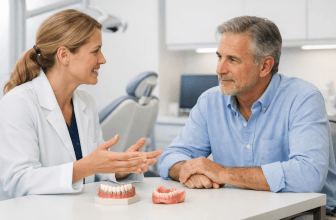
- Assessment and planning: A qualified dentist examines the teeth, gums, bite and overall oral health. The proposed result, material and treatment sequence should be discussed.
- Preparation: If treatment is suitable, the teeth may be prepared for crowns or veneers. Impressions or digital scans are then taken for the dental laboratory.
- Temporary protection: Temporary crowns or veneers may be used while definitive restorations are being made, when clinically necessary.
- Laboratory fabrication: The dental laboratory manufactures the restorations according to the dentist’s prescription and the impressions or scans.
- Try-in and fitting: The dentist checks the restoration’s fit, colour, shape and relationship with the opposing teeth. Adjustments may be needed before final cementation or bonding.
- Review and aftercare: The patient receives care instructions and information about what to do if discomfort, damage or another concern develops.
Can crowns or veneers be completed during one trip?
Same-trip treatment can be feasible for selected international patients when diagnosis, preparation, laboratory fabrication and fitting are tightly coordinated. Some dental clinics use in-office CAD/CAM technology, which can allow certain restorations to be designed and manufactured more quickly, sometimes during the same day.
However, the availability of CAD/CAM equipment does not mean that every crown or veneer case is suitable for same-day treatment. The technology, restoration type, number of teeth, aesthetic requirements and clinical findings must all be considered. Some restorations may still require laboratory finishing or additional checks.
A same-trip schedule may also need more than one appointment. For example, a patient could attend an initial assessment and preparation appointment, return for a try-in or review, and then have final restorations fitted after the dentist is satisfied with the result. The expected number of visits should be confirmed with the clinic before travel.
Why a short trip should not be the only priority
Crowns cover the entire visible portion of a tooth, while veneers generally require less tooth removal in many cases. Nevertheless, both treatments can involve irreversible changes to the teeth. This is why an appropriate assessment should take place before any preparation begins.
Rushing to meet a flight date may create practical problems if an unexpected finding is discovered, the bite needs adjustment, a restoration requires laboratory modification, or the patient is not comfortable with the proposed appearance during the try-in stage. A realistic schedule should include time for these possibilities rather than allowing only the minimum number of treatment days.
When might staged care be preferable?
Staged care means that diagnosis, disease management, preparation, restoration and follow-up are spread over separate visits or, when appropriate, carried out partly in the patient’s home country. This approach may be preferable when the oral health situation is not straightforward or when the treatment plan is extensive.
A dentist may recommend delaying definitive crowns or veneers if there is untreated decay, gum disease, infection or an uncertain prognosis for a tooth. These issues may need to be addressed before a permanent restoration is made. Similarly, complex bite problems or extensive treatment involving many teeth may require careful planning and review rather than a rapid sequence.
Staged treatment can also be considered when a patient needs multidisciplinary care or when the final result depends on information that cannot be confirmed during an initial consultation. The most appropriate schedule must be decided by a qualified dentist after examining the individual patient.
Situations that may increase treatment time
- Untreated tooth decay, gum disease or infection
- A tooth with an uncertain long-term prognosis
- Complex bite or occlusion concerns
- A large number of crowns or veneers
- Detailed aesthetic design requirements
- The need for temporary restorations
- Laboratory changes or remakes after the try-in
- Additional clinical reviews or bite adjustments
- Coordination between the dentist, laboratory and the patient’s dentist at home
Same-trip treatment versus staged care
Neither same-trip treatment nor staged care is automatically the better option for every patient. The more appropriate approach depends on suitability, diagnosis, complexity and the ability to provide appropriate follow-up.
| Consideration | Same-trip treatment | Staged care |
|---|---|---|
| Main advantage | May reduce travel and allow the main treatment to be coordinated within one visit. | Allows more time for diagnosis, laboratory work, review and management of unexpected findings. |
| Potential limitation | There may be less flexibility if the case needs adjustments, extra laboratory time or further treatment. | May require additional appointments, travel or coordination with a dentist at home. |
| May be considered when | The patient is suitable, the treatment plan is clear, the clinic can coordinate laboratory work, and adequate review time is available. | There is disease, uncertain prognosis, complex bite, extensive treatment or a need for multidisciplinary planning. |
| Follow-up planning | Should include contingency time before the return journey and a clear plan for remote or local review. | Follow-up can be built into the treatment sequence, with more time to assess comfort and function. |
This comparison is not a substitute for a clinical examination. A fast schedule should not be presented as suitable simply because a patient is travelling from abroad.
How should international patients prepare?
Before booking flights, ask the clinic for a written treatment plan and a realistic schedule. The plan should explain whether the proposed restorations are crowns, veneers or a combination, how many teeth are involved, which material is recommended and whether temporary restorations will be used.
It is also reasonable to ask who will perform the clinical assessment, where the restorations will be made, whether the laboratory can accommodate adjustments, and how the clinic checks fit, colour and bite before final placement. The dentist remains responsible for diagnosis and prescribing the restoration, while the laboratory fabricates it from the dentist’s instructions and the impressions or digital scans.
Questions to ask before travelling
- How many appointments are expected?
- How many days should I allow, including contingency time?
- Will I have a clinical examination before any irreversible preparation?
- Will temporary crowns or veneers be needed?
- Will there be a try-in appointment before final bonding or cementation?
- What happens if the colour, shape, fit or bite needs changing?
- Who will review me if I develop a problem after returning home?
- What records should be shared with my regular dentist?
Patients should provide accurate information about previous dental treatment, current symptoms, medical conditions and medications. If a clinic proposes treatment solely from photographs without a proper clinical assessment, ask how the suitability of the teeth, gums and bite will be confirmed before preparation.
What happens after crowns or veneers are fitted?
The fitting appointment should include checks of the restoration’s fit, appearance and relationship with the bite. The dentist may make adjustments before the restoration is permanently cemented or bonded. This is particularly important when several teeth are being treated or when appearance is a major part of the treatment goal.
After fitting, patients should follow the clinic’s instructions for cleaning, eating and contacting the dental team. Persistent pain, a restoration that feels high, looseness, damage or significant gum symptoms should be reported promptly to a dentist.
Before returning home, obtain copies of relevant treatment information, including the type and location of the restorations, the date of fitting and the clinic’s contact details. Ask what follow-up is recommended and whether a local dentist may need to assess the result after you return.
Risks of limited follow-up after dental tourism
Evidence specific to dental tourism in Turkey does not establish a standard number of treatment days or prove that one scheduling model is universally safer. Broader research on cross-border dental care highlights potential concerns involving continuity of care, variable regulation and the management of complications after a patient returns home.
For this reason, the time needed to place a restoration is not the same as the time needed for complete care. Patients should consider the availability of adjustments, reviews and support if a problem develops after travel. A clinic should be able to explain how follow-up is handled and what responsibility it accepts for reviewing concerns.
Long-term outcomes depend on more than rapid placement. Material, tooth preparation, bonding, occlusion, oral hygiene, maintenance and follow-up can all influence the performance of crowns and veneers. Research on the long-term survival of porcelain veneers does not compare same-trip treatment with staged care, so it should not be used to claim that either schedule is always superior.
How many days should you plan for?
There is no reliable universal number of days for crowns and veneers in Turkey. A conventional laboratory pathway often requires an initial appointment and a later fitting appointment after the laboratory has completed the restorations. Depending on the laboratory and case, this may involve approximately two weeks or two to three weeks, and sometimes longer.
Selected cases using accelerated workflows may be completed during a shorter trip, but the clinic should confirm this only after reviewing the patient’s records and carrying out an examination. International patients should avoid booking a return flight based on an advertised minimum timeframe alone. The planned visit should allow time for assessment, preparation, temporary protection where needed, try-in, adjustments and unforeseen delays.
Frequently asked questions
Can veneers be fitted in one day in Turkey?
Some selected veneer cases may use an accelerated digital or laboratory workflow, but one-day treatment is not appropriate for every patient. The number of teeth, aesthetic design, material, bite and clinical findings must be assessed first. A separate try-in or review may still be recommended.
Are crowns faster than veneers?
Neither treatment has one fixed timeframe. Both conventional crowns and porcelain veneers commonly involve preparation, impressions or scans, laboratory fabrication and a later fitting appointment. The actual duration depends on the individual treatment plan and laboratory process.
Should I wait before flying home?
Ask the dentist how much time is needed for fitting, bite checks, adjustments and review. Patients should also have a clear plan for contacting the clinic or seeing a dentist at home if a problem occurs after returning.
Can I have treatment if I have gum disease or tooth decay?
Untreated decay, gum disease or infection may need attention before definitive crowns or veneers are considered. A qualified dentist must assess the condition and prognosis of the teeth before recommending irreversible preparation.
Is staged care always more expensive or inconvenient?
Staged care may involve additional appointments or travel, but it can provide more time for diagnosis, laboratory work and follow-up. The most suitable approach should be based on clinical need rather than convenience alone.
Plan the schedule around your oral health
Crowns and veneers in Turkey may be completed during one coordinated trip for selected patients, but there is no standard timetable that applies to everyone. Conventional laboratory-made restorations often require a preparation visit and a later fitting visit, with laboratory fabrication commonly taking around two to three weeks or sometimes longer.
The most important question is not simply how quickly the restorations can be placed. It is whether the teeth are suitable, whether the proposed result has been properly planned, and whether there is enough time for temporary protection, try-in, bite and fit checks, adjustments and follow-up. A qualified dentist should determine whether same-trip or staged care is appropriate for the individual circumstances.
Medical References
- Dental Crowns: Types, Procedure & Care — Cleveland Clinic. Supports the usual crown pathway, temporary restorations, laboratory fabrication timelines and selected same-day CAD/CAM treatment.
- Crowns — Leeds Teaching Hospitals NHS Trust. Describes preparation, impressions, temporary crowns and later permanent fitting, commonly after about two weeks.
- Veneers: What Are Dental Veneers? Cost, Procedure & Advantages — Cleveland Clinic. Describes assessment, preparation, laboratory fabrication, temporary veneers and the later bonding appointment.
- Position Statement: Dental Laboratory and Dentist Relationship — American College of Prosthodontists. Explains the dentist’s diagnostic and prescribing role and the laboratory’s role in fabricating restorations.
- Global Tourist Guide to Oral Care – A Systematic Review — Journal of Clinical and Diagnostic Research, available through PubMed Central. Provides broader background on dental tourism, continuity of care and follow-up concerns.
- Long-Term Survival and Complication Rates of Porcelain Laminate Veneers in Clinical Studies: A Systematic Review — Journal of Clinical Medicine, available through PubMed Central. Summarises long-term veneer outcomes and the importance of maintenance and follow-up.